
Items
Search full-text
Create Ability: A Conference on Creativity and Disability
-
"Commonwealth of Australia (2014) National Arts Disability Strategy Evaluation 2009–2012. Canberra: Meeting of Cultural Ministers: National Arts and Disability Implementation Working Group." Reads, in part "The first evaluation was completed in October 2013 and explores the Strategy's outcomes from October 2009 to December 2012. The Evaluation Report includes input from the Australian, state and territory governments, following targeted consultation with arts and disability stakeholders. The Evaluation Report was endorsed by cultural ministers in October 2014."
-
 "Interview with Simone Flavelle" Simone Flavelle is a producer and consultant to artists with disability and the arts and film sectors. Interview Summary During an in-depth discussion about disability arts, Simone Flavelle outlined their career trajectory, emphasizing early work at Rocky Bay, involvement with Disability in the Arts Disadvantage in the Arts Australia (DADAA), and noted milestones in the field, including the impact of the NDIS on choice and control for artists. She discussed the evolution of public perception towards disability arts and the ongoing challenges with inclusivity and accessibility in various spaces. Simone also touched on the politicization of art by disabled artists, the complexity of identity among these artists, and the spectrum of how disability pride is embraced.
-
"Bree Hadley (2018) Disability, disabled dance audiences and the dilemma of neuroaesthetic approaches to perception and interpretation. In Wood, K, Brown, A, Waelde, C, Harmon, S, Blades, H, & Whatley, S (Eds.) Dance, disability and law: Invisible difference. Intellect Ltd, United Kingdom, pp. 293-315.” "In this chapter, I want to consider one emerging approach to spectatorship – the neuroaesthetic approach – through the lens of disability spectatorship. In the twenty-first century, neuroaesthetics is gaining traction amongst scholars looking to provide accounts of spectatorship in less story-based performing arts such as classical and contemporary dance, as well as in more story-based practices in drama, theatre and performance. ‘It would be fair to say that neuroaesthetics has become a hot field’, as Alva Noë puts it (2011). To date, though, the assumptions that underpin neuroaesthetic approaches to spectatorship have not been brought together with the assumptions that underpin the equally emergent field of disability spectatorship studies. As Carrie Sandahl (2002: 18) has noted, different cognitive, sensory and corporeal abilities result in a range of different phenomenologies, perceptual processes and perceptual preferences that can in turn produce different styles of engagement with experiences, events and objects. These differences impact on how people with disabilities produce and perceive aesthetic performances – somatically, syntactically, symbolically and socially, as disabled people hear with their eyes, see with their fingers, or perceive phenomena vicariously via the intervention of technologies or translators. Accordingly, disability spectatorship, and more detailed attention to the presence of distinctive cognitive, sensory and corporeal processes amongst disabled spectators, has the potential to complicate, extend and challenge assumptions embedded in emerging neuroaesthetic approaches to spectating."
- Kirsten Fishburn
- Kiersten Fishburn
-
"Victoria's Disability Resources Centre (DRC) created" 1981 saw a number of Disability Activists create the first Australian Disability Resources Centre (DRC) for Victorians with disabilities.
-
"International Year of the Disabled Person (IYDP)" In 1976, the General Assembly proclaimed 1981 would be the Year of the Disabled Person. The 1981 International Year of the Disabled Person inspired an increase in awareness and disability arts. While UN theme was “full participation and equality” the theme in Australia was “Break down the Barriers”, raising the prole and issues of people with disabilities. The international year of the disabled persons was a catalyst for connecting Australian disability activists to each other and the international disability rights movement (Royal Commission, 2021, p. 6). Australia saw an increase in disability-themed theatre from 1981 to 1984; however, these performances were largely staged with non-disabled casts. Records of these productions can be found on the AusStage database.
-
"Commonwealth of Australia, 2018. Research Overview: Arts and Disability in Australia. Barton: Department of Communication and the Arts, Cultural Ministers Council. Available from: https://www.arts.gov.au/sites/g/files/net1761/f/research_overview_of_arts_and_disability.pdf." Reads, in part "The Research Overview brings together published and unpublished data and research about arts and disability in Australia, and case studies highlighting arts and disability practice around the country. The Research Overview is part of the evidence base for a renewed National Arts and Disability Strategy. The evidence gathered here will be complemented by submissions and survey during a national consultation in 2018."
-
"Bree Hadley, Clark Crystal (2017) Style, stage presence, and the poetic subversion of stereotypes: A case study of Blue Roo Theatre Company. Social Alternatives, 36(4), pp. 15-21." "In this article, we consider the work of Blue Roo Theatre Company (http://www.bluerootheatre.org.au/), a Brisbane-based theatre company which “creates contemporary performances lead by the artistry, experiences and imaginations of an ensemble of artists with diverse ability and impairment” (http://www.bluerootheatre.org.au/). Writing from a dual insider-outsider perspective – as a scholar of disability theatre and a creator of disability theatre in conversation – we discuss the work done in the training and rehearsal room in the lead up to Blue Roo Theatre Company’s performances, such as the company’s recent sell-out performance of Orpheus and Eurydice in collaboration with Opera Queensland at the Judith Wright Centre for Contemporary Arts, and the way it creates a distinctive performance style, poetics, stage presence, pleasure for the spectators who come along to witness the results of the work, and sense of community. We document moments in which facilitators, collaborators, co-creating artists, audiences and the media alike feel the physical, psychological, and aesthetic focus and force of voice, movement and character work by people with disabilities. We identify ways in which this stage presence can subvert dominant depictions of people with disabilities as innocent, childlike, or inspirational as significantly as the content of a show. In doing so, we provide insights into Blue Roo Theatre Company’s processes, and the aesthetic results it produces, and contribute to a growing body of commentary around disability theatre and performance, which – though increasingly well understood by those working in the form – clearly can still provide surprises for audiences and commentators anticipating conventional representations of people with disabilities onstage."
-
"Bree Hadley, Donna McDonnald (2019) Introduction: disability arts, culture, and media studies - mapping a maturing field. In Hadley, B & McDonald, D (Eds.) The Routledge handbook of disability arts, culture, and media. Routledge, United Kingdom, pp. 1-18.” Reads, in part "In this book, an internationally recognised collection of established and emerging scholars, artists, and activists from across the US, UK, Europe, Asia, and Australasia come together to trace the development of disability arts, culture, and media studies in recent decades, flag current interests, and forecast future concerns."
-
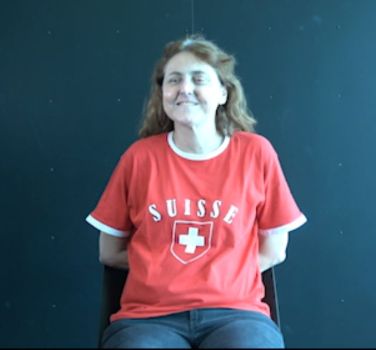 "Interview with Janelle Colquhoun" Janelle Colquhoun is an opera-jazz singer; corporate and community speaker; MC; producer; and writer. Interview Summary Janelle Colquhoun is a passionate and dedicated former opera singer, who in the interview speaks about, starting an entertainment agency to provide professional opportunities for artists with disabilities after losing her sight. She has produced over 1400 events, performed in a variety of concerts, and worked tirelessly to promote inclusivity in the arts, often by showcasing talented disabled artists to mainstream audiences. Janelle talks about how her work challenges the way people think about disability arts and inclusion, and strives to give equal performing opportunities by advocating for the recognition of artists with disabilities as professionals with the same quality of performance as any other artist.
-
"Australia Council for the Arts (2014) A Million Dollar Commitment to Artists with Disability. Australia Council for the Arts. 28 October 2014" Reads, in part "Australia Council Chief Executive Officer Tony Grybowski made the announcement today at the Arts Activated Conference in Chatswood, Sydney. Mr Grybowski said the decision to extend the dedicated arts and disability funding was made after a successful pilot was run earlier this year."
-
“The Bolshy Divas present ‘The Other 100 Conversations’ to Australian governments heads” In 2011, a group of disability activists called the Bolshy Divas presented a 100-page document, ‘The Other 100 Conversations,’ to heads of all Australian governments who had gathered in Canberra for a Council of Australian Governments (COAG) meeting. The document was addressed “to our elected representatives”. ‘The Other 100 Conversations’ comprised of 100 first-person accounts of participants of disability services in Western Australia, highlighting the lack of support and waiting times experienced.
-
"Carriageworks (2015) NSW Arts and Disability Partnership Launched at Carriageworks Including $100,000 Support for Two Major New Works. Carriageworks, 30 January 2015" Reads, in part "Sydney, Australia: The NSW Minister for Disability Services, Minister John Ajaka MLC, today launched an extension of the NSW Arts & Disability Partnership, announcing funding of $475,000 for 2015 to support four programs that promote social inclusion through the arts and disability sector. The Partnership includes $100,000 support for Carriageworks to commission two major new works developed by artists with disability in collaboration with NSW arts companies and artists."
-
 "Accessible Arts - ACE Arts Creativity Expression - Helen Meekosha, Leanne Dowse and Andrew Jakubowicz - Article: Exposing Mass Culture To Disability Issues - Iss15" Accessible Arts - ACE Arts Creativity Expression - Helen Meekosha, Leanne Dowse and Andrew Jakubowicz - Article: Exposing Mass Culture To Disability Issues - Iss15 -analysis of TV Series 'House Gang'
-
"Chris Brophy, Kim Dunphy, Nick Hill, Petra Kuppers, Indrani Parker, John Smithies, John Toumbourou (2008) Picture This: Increasing the cultural participation of people with a disability in Victoria, Office for Disability in partnership with Arts Victoria and Disability Services Division" Reads, in part "The Cultural Development Network undertook a research project examining ways that the participation of people with a disability in the arts, as artists and as audience members, can be increased. The project was commissioned by the Office for Disability and partners, Arts Victoria and Department of Human Services. The report and literature review have now been published."
-
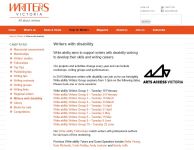 "Writeability website, captured 2015" Webpage reads, in part "Write-ability aims to support writers with disability wishing to develop their skills and writing careers. Our projects and activities change every year and can include workshops, writing groups and performances. In 2015 Melbourne writers with disability can join us for our fortnightly Write-ability Writers Group sessions from 1-3pm on the following dates. Please book one or more sessions."
-
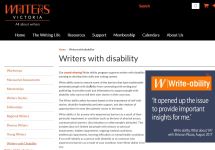 "Writeability website, captured 2018" Webpage reads, in part "Write-ability aims to remove some of the barriers that have traditionally prevented people with disability from connecting with writing and publishing. It provides tools and information to support people with disability who want to tell their own stories in their own way. The Write-ability ethos has been based on the importance of self-told stories, disability-leadership and peer support, and the creation of opportunities for even the quietest voices to be heard."
-
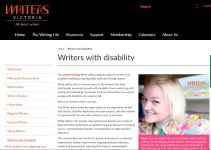 "Writeability website, captured 2019" Webpage reads, in part "Write-ability aims to remove some of the barriers that have traditionally prevented people with disability from connecting with writing and publishing. It provides tools and information to support people with disability who want to tell their own stories in their own way. The Write-ability ethos has been based on the importance of self-told stories, disability-leadership and peer support, and the creation of opportunities for even the quietest voices to be heard."
-
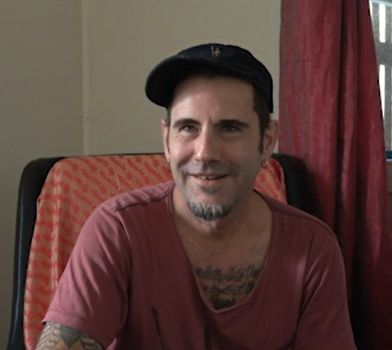 "Interview with Jeremy Hawkes" Jeremy Hawkes is a multidisciplinary artist working in sculpture, drawing, painting and photography as well as being a writer, educator and disability arts leader. Interview Summary Jeremy Hawkes, a visual artist, opened up about his life and identity during his interview. After a debilitating workplace accident, he had to reimagine his sculptural practice due to his acquired disability and ventured into drawing, which helped him cope with multiple operations and diagnoses. Jeremy's art explores themes of identity and the interconnectedness between the macro and the micro, drawing inspiration from neurobiology and medical imagery. Despite his struggles, Jeremy commits to his studio daily, aims for success without fear, and advocates for greater visibility and opportunities for artists with disabilities.
-
 "Australia Council - Annual Report 2001-02" Australia Council Annual Report 2001-2002 - discusses letter from chair of council, corporate overview, year in review, financial statements, analysis of funding and grants for projects, initiatives, new work, programs, presentation and promotions including funding for implementing the Commonwealth Disability Strategy by evaluating current and changing needs of people with disabilities in the arts sector and reflecting this in funding and policies, arts marketing and audience development and triennial grants to disability arts organisations in NSW, South Australia and Victoria as well as an image from Crossroad Arts for the exhibition “Shades of White” and the publication “Making the Journey”
-
"Bree Hadley (2022) A ‘Universal Design’ for audiences with disabilities? In Reason, Matthew, Connor, Lynne, Johanson, Katia, & Walmsley, Ben (Eds.) Routledge Companion to Audiences and the Performing Arts. Routledge, Abingdon, Oxon, pp. 177-189.” “Understanding of how to create inclusive performance experiences for spectators with disabilities remains nascent in research, policy, and practice. In this chapter, I survey the state of knowledge in this field – or, as it turns out, fields, given that specialist knowledge of sign language interpretation for d/Deaf spectators, audio description for blind spectators, and relaxed performance for neurodiverse spectators, has developed separately, without intersection. I then investigate recent efforts to create inclusive aesthetics that incorporate accessibility features into performance work, as an integral part of the aesthetic, rather than as interpretations, captions, or descriptions alongside the work. I examine why this ‘Universal Design’ approach has been embraced with enthusiasm, both by disabled producers and spectators, and by non-disabled producers and spectators.”
-
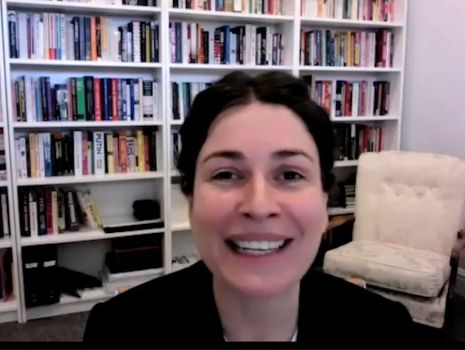 "Interview with Astrid Edwards" Astrid Edwards is a writer, publisher, lecturer, podcast host and disability advocate. Interview Summary Astrid Edwards, a former teacher and policy consultant, discusses in the interview how she pivoted her career towards writing and literature after being diagnosed with multiple sclerosis at 32, inspiring her to focus on work she loves. Astrid talks about writing at RMIT University, working with a diverse cohort of students, (many of whom have disabilities or are writing about trauma), which she finds rewarding. Though her work includes advocacy roles and a focus on disability, she does not wish to be defined solely by her illness, emphasizing the importance of allowing disabled individuals the freedom to explore and create beyond their disabilities. Currently, Astrid says she is a judge for the Stella Prize and discusses exploring a potential PhD about publishing and climate fiction, expressing a passion for addressing climate change within her work.
-
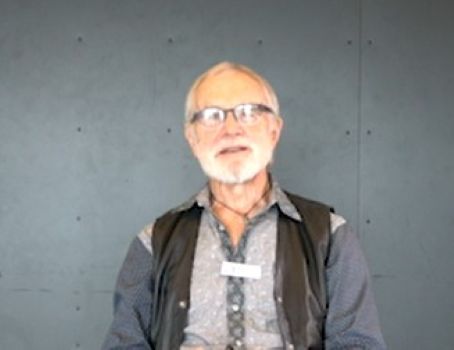 "Interview with Peter Vance" Peter Vance is a singer, songwriter, musician, performer, facilitator and disability arts advocate. Interview Summary: Peter Vance is a songwriter, performer, musician and singer. Peter suggested disability arts in the last 20 years has become more visible and popular reflecting a positive shift in how society views disability as part of the rich tapestry of human experience. This is reflected in how the arts now tell the stories of individuals with disabilities, not simply as artists with a disability, but as whole people whose varied experiences - visible and invisible - inform and enrich their creative expression. However, there are still challenges with funding and accessibility and ongoing struggles for recognition and support of disability art. Changes in how organisations operate to suit new funding such as the NDIS have potentially limited the spontaneity and personal touch that smaller, community-driven organizations once offered. Peter said it is essential to continue to push for better understanding, support, and visibility for people with all kinds of disabilities in every aspect of life, including the arts, to truly embrace inclusivity.
-
 "Interview with Patricia Wozniak" Patricia Wozniak is a neurodivergent visual arts coordinator at Tutti Arts and is a disability arts advocate and ally. Interview Summary Patricia Wozniak, a visual arts coordinator at Tutti Arts with 14-15 years of experience, initially volunteered while studying for her master's and found joy and liberation in making art with the organisation. Tutti Arts has grown from offering two days to five days of visual arts each week and supports artists to enjoy creating, access quality materials, and earn income. While faced with challenges like NDIS funding intricacies and the need for easy-to-understand contracts, Patricia emphasizes the importance of artist-driven practice and equal opportunities. She observes a shift toward digital art and commercial endeavours among artists and asserts the vitality of educating artists about their rights and the political aspect of disability art in cultivating change and expression of identity.