Items
Search full-text
Create Ability: A Conference on Creativity and Disability
- David Doyle
- No Strings Attached Theatre of Disability
- Madeleine Little
-
“Studio A established in 2000” Studio A (NSW) was established in 2000 to create access and opportunities for visual artists with intellectual disabilities; their in-house artists’ “practices range from painting and drawing to sculpture, textiles and digital media”. In their own words, “At Studio A, we are dedicated to professionally empower artists with disability and have their voices heard within contemporary Australian culture.”
-
“Creative Australia’s National Arts and Disability Awards are awarded to their inaugural recipients in 2019” Creative Australia’s National Arts and Disability Awards were first awarded to their inaugural recipients in 2019. The three awards go to an emerging or early career artist, and established artist, and someone who’s proven themselves as a leader in disability arts. From 2019 to 2023, the recipients span across artforms and the country.
-
“Commonwealth Disability Strategy launched in December 1994” The Commonwealth Disability Strategy was launched in December 1994. The strategy was meant to ensure compliance by Commonwealth Departments with the Disability Discrimination Act (DDA) (passed in 1992). The Museum of Australian Democracy at Old Parliament House reports that “Results have been uneven, especially in employment, but the Act has made some breakthroughs on education and disability access in new buildings.”
-
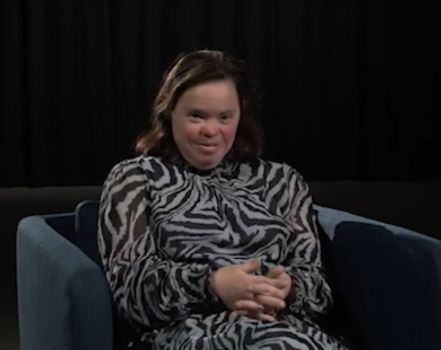 "Interview with Tina Fielding" Tina is a writer, actor, film maker and disability advocate Interview Summary Tina is an actress with Down Syndrome who identifies strongly with her art form, viewing her disability as an ability that enhances her talent and quality in storytelling through acting. She enjoys the process of acting and finds joy in watching her family perform, which inspired her to pursue the craft; however, she acknowledges that there are difficult moments that can be challenging but ultimately rewarding. Her artistic journey has involved working with various local companies in Perth and her work has evolved by adapting to new roles, with the aim of authenticity in her performances. Tina's influence and acknowledgment in the field are growing, noted by positive media attention, and she encourages other artists with disabilities to embrace and identify with their unique abilities.
-
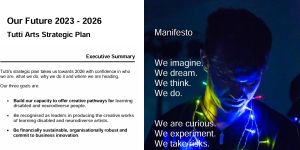 "Tutti Arts - Website - Strategic Plan 2023-2026 captured 2023" Tutti Arts Annual Reports 2023-2026, captured 2023 - reads, in part "Established in 1997, Tutti Arts is South Australia’s only multi-arts organisation where learning disabled, and neurodiverse artists create visual art, theatre, music, screen, dance and experiment with art and technology. Tutti Arts has grown, changed, rearranged, and developed over time. Tutti now works with more than 200 learning disabled and neurodiverse artists, with over 340 artist engagements every week across 3 Creative Hubs (Brighton, Port Adelaide, and the Barossa), and online. Tutti is the home for renowned disability-led collectives The Sisters of Invention, Company AT and Sit Down Shutup and Watch Film & Media Festival and has supported the career paths of many disabled artists. The Tutti Arts Centre was opened in Brighton 2020. In 2022 Tutti opened a new Regional Hub in Nuriootpa."
-
“Arts Access Australia releases the report Making the Journey: Arts & Disability in Australia” In 2005, Arts Access Australia commissioned a survey of the disability arts sector nationally. This survey resulted in the report, Making the Journey: Arts & Disability in Australia. The report was written by Mary Hutchison. It details 12 case study disability arts organisations.
-
"Australia Council for the Arts (2022) Australia Council releases Towards Equity: a research overview of diversity in Australian arts." Reads, in part "The Australia Council for the Arts have released their critical new report Towards Equity: A research overview of diversity in Australia’s arts and cultural sector. This overview gathers published and unpublished data and research on representation within the arts and cultural sector in Australia."
-
"Bree Hadley, Donna McDonald, Sarah Austin, Kath Duncan, Gerard Goggin, Lachlan MacDowall, Veronica Pardo, Eddie Paterson, with collaborators Dave Calvert, Jori De Coster, Shawn Goh, Alice Fox, Ann M. Fox, Andy Kempe, Petra Kuppers, Justin Lee, Alex Lubet, Sarah Meisch Lionetto, Ann Millett-Gallant, Laura Misener, Bronwyn Preece, Megan Strickfaden, Joanne Tay, Matthew Reason, Nancy Quinn, and Sarah Whatley (2019) Conclusion: practicing interdependency, sharing vulnerability, celebrating complexity - the future of disability arts, culture, and media research. In Hadley, B & McDonald, D (Eds.) The Routledge handbook of disability arts, culture, and media. Routledge, United Kingdom, pp. 362-372." "In this chapter, the authors conclude The Routledge Handbook of Disability Art, Culture, and Media studies by reflecting on the past, present, and potential future of disability art practice debated throughout the book. Based on research currently underway in the work of many of the Australian contributors, and including reflections from the global contributors, this concluding chapter reflects on what the disability arts, culture, and media practice and research of the future might look like, do, and achieve in the public sphere."
-
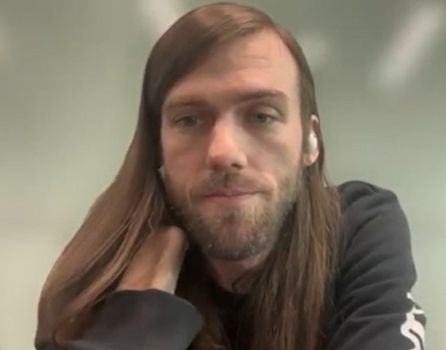 "Interview with Daniel Savage" Daniel Savage is an artist and disability advocate working in mediums of photography, video and performance. Interview Summary: Daniel discussed his background as a disabled contemporary artist primarily focused on photography, with additional interests in video and performance. Daniel detailed the journey through his artistic career, highlighting significant experiences such as art school education, early influences, and the impact of acquiring a disability. He also explored the evolution of his style and interests, particularly his shift towards digital technology and his involvement in advocacy for accessibility in the arts. Daniel also shared his perspectives on the challenges and achievements within the disability arts scene in Australia, including public awareness and integration with contemporary art.
-
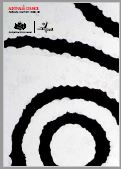 "Australia Council - Annual Report 2005-06" Australia Council Annual Report 2005-2006 - discusses letter from chair of council, letter from CEO, corporate overview, year in review, goals, financial statements, analysis of funding analysis and grants list, including various artistic and community projects - “Stickybricks” – exploring the history of a Sydney Housing Estate where 95% of residents receive aged or disability benefits were traumatised by by murders, suicides, assaults and drug and alcohol-related crimes and they partnered with Big hART to tell their story at the Sydney Festival, “Small Metal Objects” by Back to Back Theatre presented at the Melbourne international arts festival, and the DADAA (WA) regional collaborative “Bridging the Gap” project in Bunbury and publication of “Making the Journey: Arts and disability in Australia”
-
 "Arts Project Australia - Contemporary Outsider Art Conference 2014 Program" Arts Project Australia - Contemporary Outsider Art Conference 2014 Program
- Anne Townsend
- Kim Townsend
-
“Arts Access Australia CEO encourages other non-disabled CEOs of disability organisations to step down” In 2012, Kate Larsen stepped down from role as CEO of Arts Access Australia. In a Ramp Up article, she explained “Now, I love my job. I'm good at it. I think that I've been useful here. But on the same day I accepted the position last February I also did something else. I gave notice of my resignation, and undertook to hand over the organisation by the end of 2012. The reason? Because I believe that Arts Access Australia should be led by a person with disability.” Upon her resignation, she encouraged other non-disabled CEOs of disability organisations to step aside to make space for disabled people to take up these leadership roles.
-
“The South Australian Film Corporation announces their disability screen strategy” The South Australian Film Corporation launched their disability screen strategy. First, their Diversity and Inclusion Strategy 2022-2032, which they say “breaks new ground nationally,” defines quantifiable 10-year targets. In addition, the SAFC has developed a Disability Equality Plan, Targeted Diversity Attachments, the FULL TILT Short Documentary Initiative, and Film Lab: New Voices, a feature film development program presented by SAFC with Adelaide Film Festival and Mercury CX.
-
“Australia Council grants funding for projects about disability or for disabled participants throughout the 1970s” The 1974/75 Australia Council annual report states $1,350 in funding granted to Spectrum Films (NSW) to "develop a screenplay for a feature film of the social pressures on a deaf mute”, as well as a $4,500 travel/study grant to Lloyd Nickson (QLD) "to attend summer schools in children's theatre and theatre for deaf children (USA and UK) for six months". In the same year, the Council reported Bryan Gracey as one of numerous individuals in receipt of Experimental Film funding for his short film ‘The World of a Blind Child’ (1975) about the emotional and physical difficulties 10-year-old Peter faces and how he navigates his disability. In the 1974/75 financial year, Australia Council’s crafts board awarded $1,288 to the Wheelchair and Disabled Association (NSW) for "Jewellery making tools and equipment". The 1979/1980 Australia Council annual report describes the following funding: "As in previous years, a grant was given to the Braille and Talking Book Library for its Braille Book of the Year.”
-
"Jung Hyoung Yoon, Caroline Ellison, Peggy Essl (2020). Shifting the perspective from ‘incapable’ to ‘capable’ for artists with cognitive disability; case studies in Australia and South Korea. Disability & Society, 36(3), 443–467. https://doi.org/10.1080/09687599.2020.1751079" Reads, in part "This study examined four inclusive arts organisations in Australia and South Korea, providing creative services for artists living with cognitive disability, including autism, intellectual and mental disability. This research study focused on exploring what support inclusive arts organisations and society have provided for artists living with cognitive disability to pursue professional careers."
-
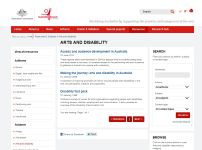 "Australia Council - Making the Journey: Arts and Disability in Australia" Reads, in part "A collection of inspiring examples of how to include people with disabilities in the arts, as participants, creators and organisers"
-
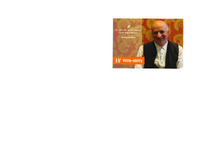 "Writers Victoria profile postcards of Write-ability Fellows - Giovanni di Mase" Writers Victoria profile postcards of Write-ability Fellow Giovanni di Mase
-
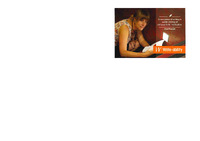 "Writers Victoria profile postcards of Write-ability Fellows - Heidi Everett" Writers Victoria profile postcards of Write-ability Fellow Heidi Everett
-
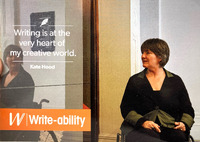 "Writers Victoria profile postcards of Write-ability Fellows - Kate Wood" Writers Victoria profile postcards of Write-ability Fellow Kate Wood
-
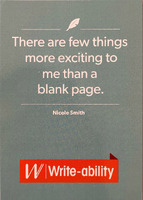 "Writers Victoria profile postcards of Write-ability Fellows - Nicole Smith" Writers Victoria profile postcards of Write-ability Fellow Nicole Smith