
Items
Search full-text
Create Ability: A Conference on Creativity and Disability
-
 "Writers Victoria profile postcards of Write-ability Fellows - Robert O’Brien" Writers Victoria profile postcards of Write-ability Fellow Robert O’Brien
-
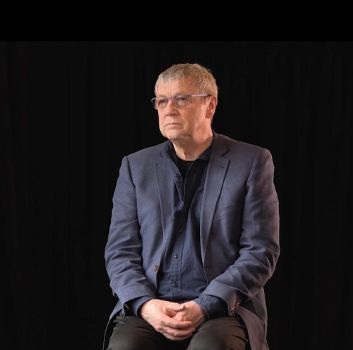 "Interview with Nick Hughes" Nick has worked as an actor, director, writer, artistic director, dramaturg and was the Company Manager for Restless Dance Theatre Interview Summary Nick Hughes is a retired arts administrator who has worked in various capacities within the arts industry, including as an actor, writer, stage manager, and notably as the company manager for Restless Dance Theatre. Nick gained degrees in drama, and sociology, and moved from the UK to Australia in 1973. During the interview, Nick reflects on his significant contributions to the arts and disability sectors. Despite being unfamiliar with disability arts in the beginning, Nick says he became deeply involved and committed to the field, valuing disability arts for the social and political aspects. Nick discusses witnessing first-hand the growth and development of individuals through creative expression. Throughout his career, Nick says he has seen the evolution and increasing recognition of disability arts as a legitimate and powerful art form capable of altering people’s perceptions and advocating for inclusivity and equality in society.
-
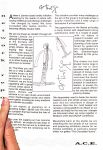 "Accessible Arts - ACE Arts Creativity Expression - Juliet London - Article: Artwise -1994 - Iss9, Pg22-23" Accessible Arts - ACE Arts Creativity Expression - Juliet London - Article: Artwise -1994 - Iss9, Pg22-23 - reads, in part "Artwise, a Lismore-based artists' initiative catering for the needs of artists with varying intellectual and physical challenges, has changed its name! We have succeeded, after twelve months, in becoming officially incorporated. We are now known as Growth Through Art Artwise the Lismore Inc., although the company sign at the doorway still proudly announces simply Artwise."
-
"First ABS Survey of Disability, Ageing and Carers (SDAC)" An ABS Survey of Disability, Ageing and Carers (SDAC) starting in 1981 and made people with disability more 'visible' for services and highlighted differences of experiences.
- Carriageworks
-
"Bree Hadley (2016) Cheats, charity cases and inspirations: disrupting the circulation of disability-based memes online. Disability and Society, 31(5), pp. 676-692." "With the increasing part online self-performance plays in day-to-day life in the twenty-first century, it is not surprising that critiques of the way the daily social drama of disability plays out in online spaces and places have begun to gain prominence. In this article, I consider memes as a highly specific style or strategy for representing disability via social media sites. I identify three commonly circulating categories of meme – the charity case, inspiration and cheat memes – all of which offer representations that people with disabilities find highly problematic. I then investigate the ways in which disabled people have begun to resist the representation and circulation of these commonly circulating categories of memes, via the production of counter or parodic memes. I focus, in particular, on the subversive potential of these counter memes, within disability communities online and within broader communities online."
-
"Juliet London and Des Walsh (1995) Arts & Disability: Report Australia Council: Surry Hills." Juliet London and Des Walsh - Arts & Disability, Australia Council 1995 - Reads, in part "The Australian Bureau of Statistics estimates that 18 per cent of the Australian population has a disability. There is a basic lack of data on participation in the arts by artists with a disability. No figures were available on the number of people with disabilities applying for grants from the Australia Council or from State or Territory arts agencies. The current dearth of statistical information needs to be overcome by systematic and sustained research."
-
 "The Arts and Disability 2016-2017" Except as permitted by copyright law, you may not reproduce or communicate any of the content on this website, including files downloadable from this website, without the permission of the copyright owner. The Australian Copyright Act allows certain uses of content from the internet without the copyright owner’s permission. This includes uses by educational institutions and by Commonwealth and State governments, provided fair compensation is paid to the copyright owner. For more information, see www.copyright.com.au and www.copyright.org.au.
-
 "The Arts and Disability No Date #1" Except as permitted by copyright law, you may not reproduce or communicate any of the content on this website, including files downloadable from this website, without the permission of the copyright owner. The Australian Copyright Act allows certain uses of content from the internet without the copyright owner’s permission. This includes uses by educational institutions and by Commonwealth and State governments, provided fair compensation is paid to the copyright owner. For more information, see www.copyright.com.au and www.copyright.org.au.
-
 "Australia Council - Annual Report 1980-81" Australia Council Annual Report 1980-81 - discusses members of council, standing committees and board reports as well as financial statements, grants lists, publications and programs particularly focused on the 1981 International Year of the Disabled Person (IYDP) including accessibility, integration and raising awareness of barriers of disability in arts, with funding for research, art exhibitions, theatre, film (“Stepping Out”), dance (“Life, Images and Reflections”), craft, and literature; conference, seminar celebrating IYDP.
- Sally Newman
- Sebastian Youssef
- Vanessa Star
- Zoe Fraser
-
“Genni Batterham stages a protest at the opening of Bondi Junction railway station 1979, makes film in 1980” When Bondi Junction railway station opened in 1979, Genni Batterham staged a protest about the lack of accessible transportation options for individuals with disabilities. After receiving a multiple sclerosis diagnosis in 1978, Genni became severely disabled very quickly. She did everything in her power to stop the disease's progression and was furious at being "consigned to the world of the disabled." The 1979 Bondi Junction protest was an important moment in the history of the Disability Rights Movement in New South Wales. The Premier, Neville Wran, later said that the experience led him to developing the Disability Taxi Service, the first public transport system designed for people with disability to be launched in Australia. Batterham then made the film ‘Pins and Needles’ (1980) with her husband Kim. Under the direction of Barbara Chobocky and with funding from the Australian Film Commission's Women's Film Fund, the film was screened in five different countries, took home first place at the 1980 Canadian Film Festival, and took home second place at the 1980 New York Film Festival. Genni and Kim would then collaborate on three further films about the phases of her life: Where's the Give and Take? (1981), Artreach (1982), and Riding the Gale (1987).
-
"Sarah Austin, Kath Duncan, Gerard Goggin, Lachlan MacDowall, Veronica Pardo, Eddie Paterson, Jax Jacki Brown, Morwenna Collett, Fiona Cook, Bree Hadley, Jess Kapuscinski-Evans, Donna McDonald, Julie McNamara, Gayle Mellis, Kate Sulan (2019). The last avant garde? In B. Hadley, D. McDonald ed. The Routledge Handbook of Disability Art, Culture, and Media. London & New York: Routledge, 251-262." "“The Australian Research Council project Disability and the Performing Arts in Australia: Beyond the Social Model – known to collaborators as the last avant garde – is mapping disability performing arts in Australia. We open up this chapter, and our ongoing research project, with the words of the late Tobin Siebers. In researching disability and performance here in Australia, we also acknowledge that since Siebers’ 2010 text, we have seen new experiments and emerging companies pushing the bounds of how bodies feel – in a sector which embraces differences in bodies, but also in thinking, in neurodiversities, in being, in articulating, in appearing, in sensing, in intersectionalities, and in the experiences for audiences. As such, this chapter aims to explore ‘disability aesthetics’ not as a set of specific techniques, themes, or politics, but in order to position disability at the centre of ‘future conceptions of what art is’ and what it can be.”
-
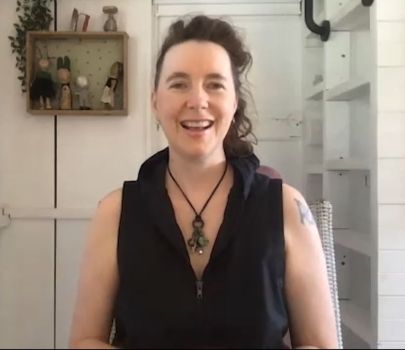 "Interview with Asphyxia" Asphyxia is an artist, author, activist and performer who has founded Amplio, a music app for Deaf and hard of hearing people. She also provides free online Auslan lessons and online art courses. Interview Summary Asphyxia is a Deaf artist whose journey into the arts started with a deep love for ballet, but after facing discrimination due to her Deafness, she pivoted to a successful career in circus performance and later puppetry, which embraced her Deafness and signing skills. Her work in performance art led her to write and illustrate the Awards-winning art-journal book, Future Girl, which explores Deaf identity and environmental issues. She has now moved into music, creating an app that makes music accessible and writing music designed with Deaf and hard of hearing audiences in mind. Although not sure about the major milestones in disability arts history in Australia, she considers her art to be both political and personal, often tackling issues related to her identity as a Deaf person and the aesthetics of disability equipment. While Asphyxia identifies as a Deaf artist, above all, she sees herself as an artist whose work appeals to the mainstream while celebrating Deafness and diversity.
-
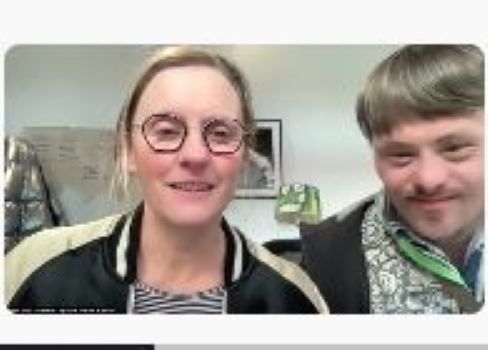 "Interview with Luke Cambpell and Kelly Drummond Cawthon" Luke Campbell is a theatre performer, writer and director and has been with Second Echo since 2015. Interview Summary In the interview Luke Campbell and Kelly Drummond Cawthon from Second Echo Ensemble share insights into their creative processes and the significance of their work. Luke, a core artist for the ensemble, emphasizes the role of deep listening and communication in his art, comparing his work to a meditative exploration of sound and connection, akin to the themes in the movie "Avatar." Kelly, as the ensemble's creative director, highlights the importance of presenting their work across diverse platforms to reach broader audiences and foster inclusive discussions. Throughout the conversation, they express views on the challenges and perceptions surrounding disability arts, advocating for recognition of diverse voices and stories in the arts community.
- Lindy Morrison
-
“The report ‘Inquiry into Health Services for the Developmentally Disabled and Psychiatrically Ill’ (aka the Richmond Review) is published by the NSW Government.” In 1983, the seminal NSW Government report, ‘Inquiry into Health Services for the Developmentally Disabled and Psychiatrically Ill’ was published. The NSW inquiry, also known as the Richmond Report due to its chair, David T. Richmond, revolutionised the institutional landscape by explicitly linking disability services to human rights for the first time in Australia and highlighting the critical need for advocacy "mechanisms" that actively allowed people with disabilities to "speak for themselves."
- Eddie Paterson
- Noelene Gration
-
 "Australia Council - Arts and disability a priority as Australia Council commits significant new funding" Australia Council - Arts and disability a priority as Australia Council commits significant new funding - reads, in part "The Australia Council has committed $750k over three years to support sustainable careers and to recognise the artistic excellence of artists with disability."
-
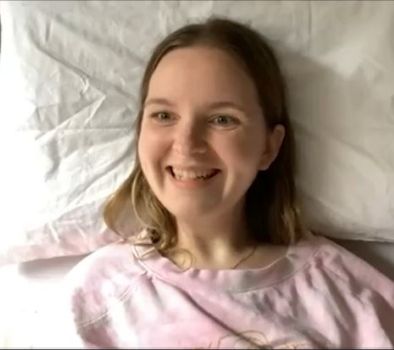 "Interview with Jess Cochran" Jess Cochran (they/them) is an actor, model, writer and disability advocate. Interview Summary: Jess Cochran is a queer, non-binary, neurodivergent, performing artist, advocate, writer, and consumer consultant with a background in both physical and psychosocial disabilities. Their journey into the performing arts began accidentally with a role in the Awards winning Melbourne Fringe Festival production, Qualia, which opened doors to more local and international Awards-winning work in film and stage. Jess identifies proudly with their disabilities and considers their art both a personal expression and a political act aimed at highlighting the issues faced by the disability community. Jess’s work spans across writing, modelling, and various performance arts, and they wish to see an increase of disability arts representation in mainstream media with authentic casting, opportunities and improved accessibility for disabled performers. Jess is also passionate about highlighting intersectionality in disability arts.
-
"Rachel Carling-Jenkins, Mark Serry (2014) Disability and social movements: learning from Australian experiences. Burlington : Ashgate Publishing Company" Reads, in part "This book provides the reader with a ground-breaking understanding of disability and social movements. By describing how disability is philosophically, historically, and theoretically positioned, Carling-Jenkins is able to then examine disability relationally through an evaluation of the contributions of groups engaged in similar human rights struggles. The book locates disability rights as a new social movement and provides an explanation for why disability has been divided rather than united in Australia.."