Items
Search full-text
Creative Writing
-
 "From Dust to Dust - Prologue" Reads, in Part, "A hybrid artist-curatorial project, inviting experimentation and conversations amongst Benjamin Hancock, Bryan Phillips, Jen Bervin, Shelley Lasica, Katie West, Simon Charles, Pippa Samaya, Gabriel Curtin, Adam Leslie, Zeno d'Evie, Anna Seymour, Ravi Vasavan, and in absentia, Aaron McPeake, Andy Slater, Jennifer Justice, and Lucreccia Quintanilla. Welcome to Country by Uncle Rick Nelson and Aunty Paulette Nelson.Afternoon tea by Murnong Mammas."
-
 “Australia Council - Events, captured 1998” Australia Council (Creative Australia) events captured December 1998, including Online Australia Day, National Arts Awareness Research and Strategy, Next Stage - The Performing Arts in the 21st Century Forum, 30th Anniversary, Media Releases and Artforce
-
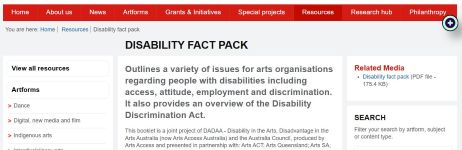 "Australia Council - Disability Fact Pack 1998" The website reads “Outlines a variety of issues for arts organisations regarding people with disabilities including access, attitude, employment and discrimination” - Noelene Gration
-
 "Australia Council - Access and audience development in Australia" Australia Council - 'Access and audience development in Australia' reports - reads, in part "These reports were commissioned in 2004 to assess what is currently being done, and what needs to be done, to increase access to the performing arts and museums & galleries in Australia for people with a disability."
-
 "Australia Council - Making the Journey: Arts and Disability in Australia" Reads, in part "A collection of inspiring examples of how to include people with disabilities in the arts, as participants, creators and organisers"
-
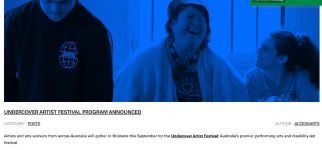 "Undercover Artist Festival Program Released 2021" Undercover Artist Festival 2021, curated by Festival Director Madeleine Little, including Lauren Watson’s Nerve, Andi Snelling’s Happy-Go-Wrong, Naavikaran’s Brown Church, Oliver Hetherington-Page’s The No Bang Theory in the ‘Creative’ program track, and work by Timothy Orton, Mitchell Runcie and Allycia Staples from The Sunshine Troupe in the ‘Community’ track.
-
 "Australia Council - Annual Report 2017-18" Australia Council Annual Report 2017-2018 – discusses Rawcus and Julia Hales as examples of highquality work - reads, in part "Through our Disability Action Plan we continued to build the capability of our staff, including Easy English and the continuity of our audio description group. "
-
 "Australia Council - Annual Report 2021-22" Australia Council - Annual Report 2021-22 - reads, in part "Following a review of our 2019–21 arts and disability initiatives, the Council expanded support for sustainable careers and the celebration of the achievements of artists with disability. We have committed investment of almost $1 million over 2022–24 through the National Arts and Disability Awards, Mentoring Initiatives, as well as a new fellowship for d/Deaf and Disabled artists. We will also continue our partnership with Arts Access Australia on the awards." and "Safe in Sound is an exploratory concert series for people with disability and their families and supporters. The group offers real-time, in-person interaction, connection and communication through sound as an alternative to listening to recorded music or watching television."
-
"Australia Council - Annual Report 2020-21" Australia Council - Annual Report 2020-21 - reads, in part "• We awarded two new prestigious National Arts and Disability Awards on the International Day of People with Disability in December 2020, to Emily Crockford and Gaelle Mellis. The Council partnered with Arts Access Australia (AAA) on our 2020 Arts and Disability Awards supporting the Arts Access Australia’s National Leadership Award to recipient Abbie Madden.", and "Research underway includes analysis of data from the Australian Consortium for Social and Political Research Incorporated (ACSPRI) national study on social inequality, analysis of access and equity in the online sphere and an Australian Research Council (ARC) Linkage Partnership exploring the evolution of Disability Arts in Australia."
-
"Australia Council - Annual Report 2018-19" Australia Council - Annual Report 2018-19 - reads, in part "This year the Council made a new commitment of $750,000 over three years to support structured mentorships and two new national awards for artists with disability. Empowering and celebrating artists with disability is imperative in ensuring that Australia’s rich diversity is truly reflected across the breadth of our arts."
- Fayen d'Evie
-
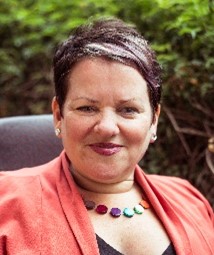 "Interview with Caroline Bowditch" Caroline Bowditch is an Australian artistic director, leader, performer, presenter, instructor, disability advocate and was the CEO of Arts Access Victoria. Interview Summary Caroline Bowditch, the CEO and Artistic Director of Arts Access Victoria, shared her journey as a performance artist and her experiences working within the Disability Arts community, highlighting her creative process and the challenges faced by disabled artists in Australia. Despite significant support and successful projects in the UK, she expressed concern over the limited progression and exposure of Disability Arts in Australia, noting a lack of ambition and opportunity deterring artists from aiming for larger, mainstream stages. Bowditch emphasized the importance of integrating access as a core component of artistic work and changing the aesthetic by including diverse bodies and perspectives. She also discussed tackling intersectionality within Disability Arts, reflecting on her own experiences as a visibly disabled and queer woman, and contemplating the future of Disability Arts, the desire for cultural equity, and the impact of potential shifts in societal barriers.
-
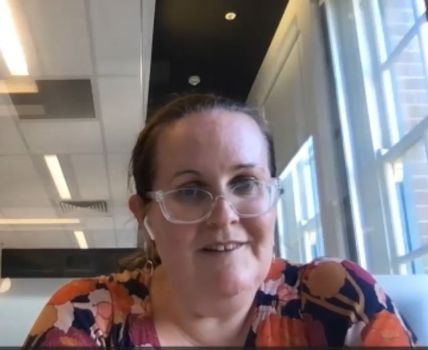 "Interview with Morwenna Collett" Morwenna is a leader, consultant and facilitator in the arts, government, not-for-profit and university sectors and is passionate about helping arts and cultural organisations to include everyone in their work. Interview Summary Morwenna Collett is a consultant in diversity, access and inclusion and during the interview discusses her vast experience in the disability arts sector including time in the Australia Council where she played a key role in creating the first targeted funding program for artists with disabilities. Morwenna notes that while disability arts is gaining some awareness with mainstream audiences, there are still issues regarding how people think about the quality of art created by artists with disabilities. Morwenna highlights the NDIS as a significant milestone for disability arts in Australia, though she believes that there is much more potential for arts organizations to engage with it. Morwenna also emphasizes that the decision for artists to identify with their disability is a personal choice and it is becoming increasingly safe to disclose this identity, demonstrating progress toward inclusion in the arts.
-
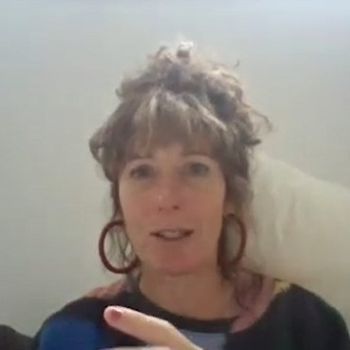 "Interview with Jodee Mundy OAM" Jodee Mundy OAM is a Disabled creative director, performer, writer, activist, creative producer, executive producer, commissioner, interpreter, film, festival maker and cultural leader. Interview Summary Jodee Mundy OAM, is an artist and festival director who identifies as Coda (child of Deaf adults) and lives with chronic illness reflects on the historical and ongoing challenges faced by Deaf and Disabled artists in Australia. Her work is deeply political, aiming to tell untold stories and bring visibility to marginalized communities. Despite significant achievements, Jodee stresses the need for structural support and inclusivity within the industry, especially given the limitations of hybrid access models post-pandemic. Jodee's personal journey, including her recent incurable cancer diagnosis, shapes her advocacy for a culture of care and well-being in the arts. Jodee leads Alter State, Australia’s Disability- led arts festival presented by Arts Centre Melbourne and Arts Access Victoria.
-
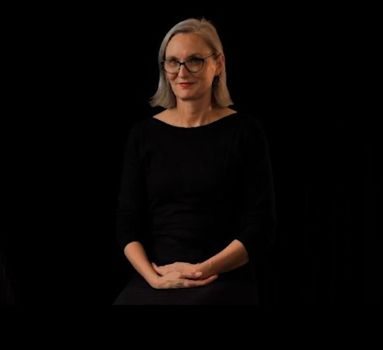 "Interview with Roz Hervey" Roz Hervey is a Creative Producer with Restless Dance Theatre and is also a director, dance theatre performer and lecturer. Interview Summary: Roz Hervey, the creative producer of Restless Dance in Adelaide, previously worked as a dancer and dance theatre artist in Australia and the UK. Her approach with Restless Dance involves creating personal and reflective dance theatre by giving dancers specific tasks. Roz does not view the performers as disabled but as exceptional artists telling unique stories, and she aspires to change societal attitudes and encourage diversity in art. Despite progressing towards inclusive perceptions, she still encounters patronizing attitudes and misconceptions about artists with disabilities.
-
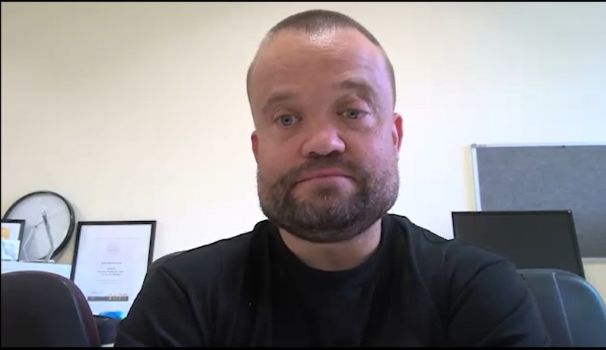 "Interview with Jeremy Smith" Jeremy Smith is a Senior Producer in Western Australia at Performing Lines, has a long career across community, experimental and performing arts, is a disability advocate and previously worked in Australia Council for the Arts (now Creative Australia) as Director – Community Arts and Experimental Arts. Interview Summary Jeremy Smith has vast experience in the arts including working as a director with Australia Council (Creative Australia). Jeremy is currently an arts worker in the performing arts sector. While Jeremy lives with Achondroplasia, he has not always identified as disabled however a transformative project for the 2016 Perth Festival led him to embrace his identity as a disabled person with pride recognising the complexities surrounding personal identification with disability. Jeremy talks about artists and organisations he finds inspirational who are leading change in the disability arts sector and his motivation to also advocate for inclusion and the evolution of public perception of disability arts work.
-
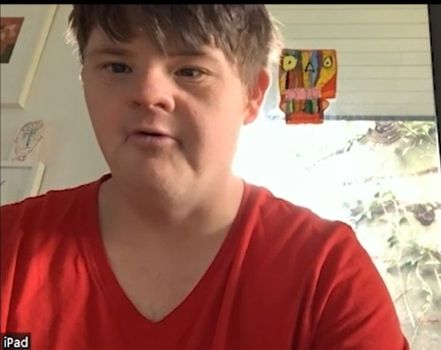 "Interview with Digby Webster" Digby Webster is a visual artist working with the mediums of oil pastels and acrylics and is also a performer, designer and co-founding member of past performance ensemble Ruckus Ensemble. Interview Summary Digby Webster is an artist with a wide range of creative talents, including theater, dance, animation, and mural painting. He has worked on various projects, including an animated short film called "Blockhead and Sparkles," and has had his artwork displayed in places like the Sydney Olympic Park and Vivid Sydney. Digby does not define himself by his disability and takes pride in the various creative endeavors he's involved in, aiming to have his art reach people in meaningful ways outside traditional galleries. In the future, he is interested in exploring fashion, designing artwork for clothing, and he hopes to see more people wearing his art.
-
"The Arts and Disability" This booklet/brochure provides images, descriptions of the work, and contact details and contact organisations for key organisations in South Australia including: Access2Arts; Bearded Dragon Gallery; Broughton Art Society; Community Bridging Services Inc. (CBS); Company AT; Learning Creative Skills; Lolly Jar Circus; mindshare; No Strings; Restless Dance Theatre; Sit Down, Shut Up and Watch Film and New Media Festival
-
 "Accessible Arts - Arts and Disability Expo - Program" Accessible Arts - Arts and DIsability Expo 2015 - Program - reads, in part "'Welcome to the first arts + disability expo. The arts + disability expo aims to provide you with information, advice and access to arts and cultural opportunities. With a variety of arts programs, organisations, venues and practitioners on hand, we hope to provide you with all the support that you need to become involved in creative pursuits. We encourage you to watch some of the performances, listen to the talks about the National Disability Insurance Scheme (NDIS), and view the photographic exhibition. The expo is also a good opportunity to see new and different levels of creative work by artists with disability.' - Sancha Donald, CEO, Accessible Arts"
-
 "Accessible Arts - Into the Light 1994 - The Major Cultural Function for the World Assembly" Accessible Arts - Into the Light 1994 - The Major Cultural Function for the World Assembly - reads, in part "Self determination is of critical significance if stereotypes are to be challenged. Into the Light wil highlight the creative expression of people with and without disablities working together as equals, to explore new artistic dimensions. Pioneering new concepts in dance, theatre and music this performance event will illustrate how creative interaction changes opinion and expands opportunities."
-
 "Artspeak: Newsletter for the Arts and Regional Cultural Issue Network of the Central West - Spring 1995 Iss2" Artspeak: Newsletter for the Arts and Regional Cultural Issue Network of the Central West - Issue 2 Spring 1995
-
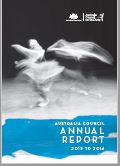 "Australia Council - Annual Report 2013-14" Australia Council Annual Report 2013-2014 – discusses year in review, report from the CEO, Strategic priorities, funding overview, statement of outcome, about the Australia Council including The Governing Council and the Board, Structure of the Australia Council; financial review and discussion of funding for numerous programs including a new Artists with Disability Program grant which funded development opportunities and creative projects for practitioners with disability and the dance board funded development and presentation of new work, workshops and residency programs, and strategic initiatives that focus on leadership, development and collaboration with a highlight being the “Torque Show” supported for the Melbourne premiere of “Intimacy”, a collaboration with Michelle Ryan presented as part of the Unlimited Festival in London which celebrates originality of artists with disability.
-
 "DADAA Annual Report 2021-2022" DADAA Annual Report 2021-2022 – Chair’s and Executive Director’s Reports, People, Partners, Arts and Client Services, Projects including The Other Film Festival WA, Creative Development 4:48 Psychosis Creative Development, Digital Project, Exhibitions, Financials
-
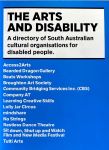 "The Arts and Disability No Date #2" Except as permitted by copyright law, you may not reproduce or communicate any of the content on this website, including files downloadable from this website, without the permission of the copyright owner. The Australian Copyright Act allows certain uses of content from the internet without the copyright owner’s permission. This includes uses by educational institutions and by Commonwealth and State governments, provided fair compensation is paid to the copyright owner. For more information, see www.copyright.com.au and www.copyright.org.au.
-
"Bree Hadley, Clark Crystal (2017) Style, stage presence, and the poetic subversion of stereotypes: A case study of Blue Roo Theatre Company. Social Alternatives, 36(4), pp. 15-21." "In this article, we consider the work of Blue Roo Theatre Company (http://www.bluerootheatre.org.au/), a Brisbane-based theatre company which “creates contemporary performances lead by the artistry, experiences and imaginations of an ensemble of artists with diverse ability and impairment” (http://www.bluerootheatre.org.au/). Writing from a dual insider-outsider perspective – as a scholar of disability theatre and a creator of disability theatre in conversation – we discuss the work done in the training and rehearsal room in the lead up to Blue Roo Theatre Company’s performances, such as the company’s recent sell-out performance of Orpheus and Eurydice in collaboration with Opera Queensland at the Judith Wright Centre for Contemporary Arts, and the way it creates a distinctive performance style, poetics, stage presence, pleasure for the spectators who come along to witness the results of the work, and sense of community. We document moments in which facilitators, collaborators, co-creating artists, audiences and the media alike feel the physical, psychological, and aesthetic focus and force of voice, movement and character work by people with disabilities. We identify ways in which this stage presence can subvert dominant depictions of people with disabilities as innocent, childlike, or inspirational as significantly as the content of a show. In doing so, we provide insights into Blue Roo Theatre Company’s processes, and the aesthetic results it produces, and contribute to a growing body of commentary around disability theatre and performance, which – though increasingly well understood by those working in the form – clearly can still provide surprises for audiences and commentators anticipating conventional representations of people with disabilities onstage."