
Items
Search full-text
Creative Writing
-
"Amanda Cachia (2013) ‘Disabling’ the museum: Curator as infrastructural activist. J. 12.3. pp. 257–289" Reads, in part "This article will explore how I attempt to ‘disable’ the museum through my infrastructural curatorial practice, which is the basis for my scholarly research and writing. By infusing my curatorial projects with critical reflection and theoretical development, I hope to begin this process of building a new vocabulary and methodology around curating disability and access."
-
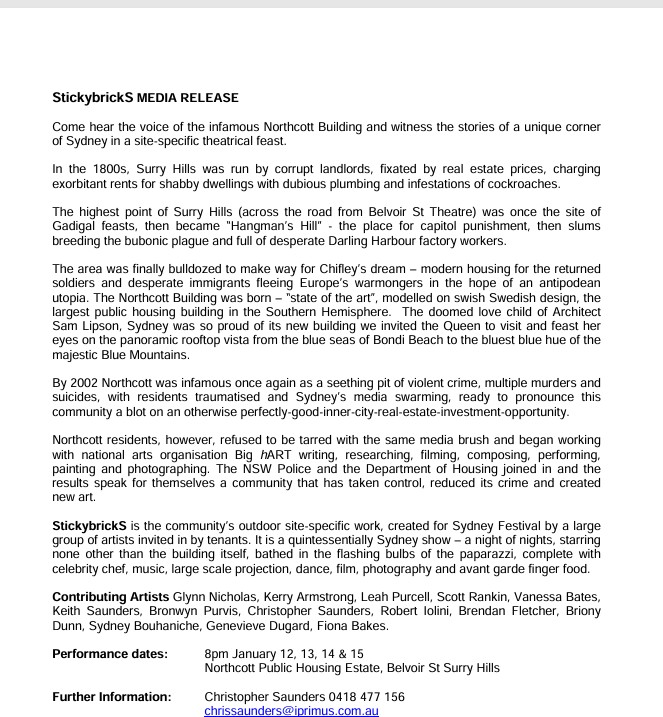 "Sydney Festival - StickybrickS MEDIA RELEASE - 2006" Sydney Festival - StickybrickS 2006 MEDIA RELEASE - Reads, in part "By 2002 Northcott was infamous once again as a seething pit of violent crime, multiple murders and suicides, with residents traumatised and Sydney’s media swarming, ready to pronounce this community a blot on an otherwise perfectly-good-inner-city-real-estate-investment-opportunity. Northcott residents, however, refused to be tarred with the same media brush and began working with national arts organisation Big hART writing, researching, filming, composing, performing, painting and photographing."
-
 "Let Me See - review by Keiran Finnane 2015, captured 2016" Describes InCite Arts ‘Starts with D Performance Ensemble’ members Tiffany Malthouse, Matt Woodham, Brandon Williams, Martin Armstead and director Kat Worth’s production of ‘ Meet You at the Edge’, as part of ‘Let Me See’ produced by Red Hot Arts Central Australia at Araluen Centre for the Arts, including film, use of audio description, writing, and choreography
-
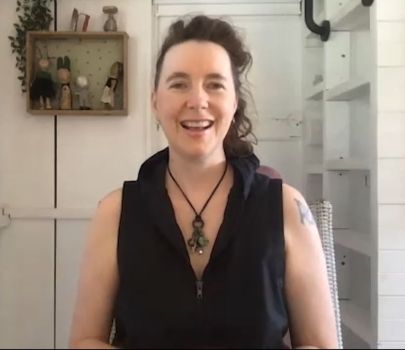 "Interview with Asphyxia" Asphyxia is an artist, author, activist and performer who has founded Amplio, a music app for Deaf and hard of hearing people. She also provides free online Auslan lessons and online art courses. Interview Summary Asphyxia is a Deaf artist whose journey into the arts started with a deep love for ballet, but after facing discrimination due to her Deafness, she pivoted to a successful career in circus performance and later puppetry, which embraced her Deafness and signing skills. Her work in performance art led her to write and illustrate the Awards-winning art-journal book, Future Girl, which explores Deaf identity and environmental issues. She has now moved into music, creating an app that makes music accessible and writing music designed with Deaf and hard of hearing audiences in mind. Although not sure about the major milestones in disability arts history in Australia, she considers her art to be both political and personal, often tackling issues related to her identity as a Deaf person and the aesthetics of disability equipment. While Asphyxia identifies as a Deaf artist, above all, she sees herself as an artist whose work appeals to the mainstream while celebrating Deafness and diversity.
-
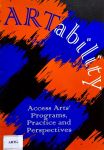 "Artability - Access Arts' Programs, Practice and Perspectives" Explains history, members rights, policies, arts pathways, training, classes, and planning to support these activities, plus information on programs – including Caberet Erratica, Cartoon Advocacy, Melrose Park Project, New Farm Park Mosaics, Visual Arts Exhibition, Explaining Discrimination Video Project – and examples of writing by Access Arts members
-
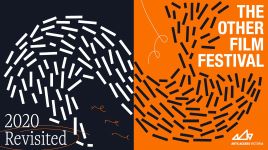 "The Other Film Festival Revisited 2020" The Other Film Festival 2020 Revisited - information about the Festival, program, achievements, including in 2020 writers room activity, daily screen writing prompt tasks, and events relating to climate change
-
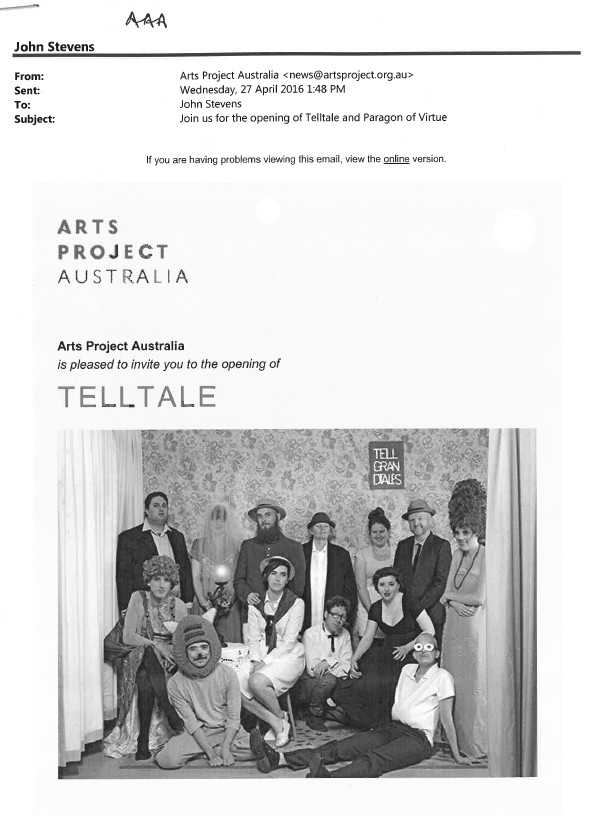 "Arts Project Australia - Telltale - ParagonOfVirtue Exhibition 2016 - Email Promotional Flyer" Arts Project Australia - Telltale - ParagonOfVirtue Exhibition 2016 - Email Promotional Flyer - Telltale is a writing and exhibition project centred on a narrative conceived by ten artists, written by Justin Hinder and explored over a series of collaborative workshops and studio sessions at Arts Project Australia. Telltale was developed through Next Wave's Emerging Curators Program with Arts Project Australia for Next Wave Festival 2016."
-
 "Tutti Arts -Tutti Kids - Kids and Youth Program Showcase 2016 - Program" Tutti Kids and Youth 2016 Showcase Program – reads, in part "The Tutti Kids and Youth Program provides Adelaide's only out of school hours arts program where young people living with disability are invited to develop their creativity through singing and song-writing, music, dance, movement, drama and theatre skills.”
-
 "Tutti Arts -Tutti Kids - Kids and Youth Program Showcase 2017 - Program" Tutti Kids and Youth 2017 Showcase Program – reads, in part "The Tutti Kids and Youth Program provides Adelaide's only out of school hours arts program where young people living with disability are invited to develop their creativity through singing and song-writing, music, dance, movement, drama and theatre skills.”
-
"Australia Council commissions a research study on people with disabilities' participation in arts activities" Australia Council commissioned a research study on the problems faced by people with disabilities attempting to participate in art activities (Australia Council Annual reports 1979/1980 and 1980/1981).
-
"Making the arts work for everyone: a resource and information kit about arts and disabilities produced in 1995" Arts Access Victoria and Australia Council published 'Making the Arts Work for Everyone: A Resource and Information Kit about Arts and Disabilities' in 1995.
-
"The Australian Elizabethan Theatre Trust begins operations in 1954" The Australian Elizabethan Theatre Trust began operations in 1954. The key role of the trust was to support the arts in Australia leading to the independent companies of: Opera Australia, The Australian Ballet Foundation, National Institute of Dramatic Art (NIDA), and Bell Shakespeare Company. At this time there was little involvement of people with disabilities in the arts.
-
“Assistance to Composers Advisory Board created by the Commonwealth government.” In 1967, the Commonwealth government created the Assistance to Composers Advisory Board with an aim to advise on funding needs for music composition and promotion of Australian composers. The Board was to judge work based on “musical distinction or excellence of its kind, and on the promotion of Australian composers both in Australia and abroad”. The Board’s functions were later absorbed by the Australia Council.
-
"The Australia Council establishes the Community Arts Committee in 1973 and the Community Arts Board in 1978" The Australia Council established the Community Arts Committee in 1973 and the Community Arts Board in 1978. The purpose of the latter was to encourage wider participation in the arts, especially for groups with little social capital. The Board was “the first funding body to identify the community arts phenomenon and respond with definition and policy." This occurred under the directorship of Rosalie Bower, the first director of the Community Arts Board, who wrote in a paper entitled 'The Case for a Community Arts Centre': “The activities within a centre should be accessible to children, aged people, the physically handicapped, ethnic groups and those whose time is severely restricted by work and family ties. The activities supplied by the centre should be conducted free from competitive elements which otherwise might discourage people from participation, and they must be inexpensive and accessible at almost any time. They must not pre-suppose education or income levels which would cut them off from any section of the community.'" (Australia Council 1979/1980 Annual Report, page 32)
-
“Australia Council grants funding for projects about disability or for disabled participants throughout the 1970s” The 1974/75 Australia Council annual report states $1,350 in funding granted to Spectrum Films (NSW) to "develop a screenplay for a feature film of the social pressures on a deaf mute”, as well as a $4,500 travel/study grant to Lloyd Nickson (QLD) "to attend summer schools in children's theatre and theatre for deaf children (USA and UK) for six months". In the same year, the Council reported Bryan Gracey as one of numerous individuals in receipt of Experimental Film funding for his short film ‘The World of a Blind Child’ (1975) about the emotional and physical difficulties 10-year-old Peter faces and how he navigates his disability. In the 1974/75 financial year, Australia Council’s crafts board awarded $1,288 to the Wheelchair and Disabled Association (NSW) for "Jewellery making tools and equipment". The 1979/1980 Australia Council annual report describes the following funding: "As in previous years, a grant was given to the Braille and Talking Book Library for its Braille Book of the Year.”
-
“Australia Council praises NSW Theatre of the Deaf and provides some funding to the Deaf theatres throughout the 1970s” The 1976/77 Australia Council annual report stated: "The NSW Theatre of the Deaf is a significant achievement. The only funded organisation in Australia working in nonverbal theatre, its production of King Lear received widespread praise. This company is now accepted as operating in a legitimate area of theatre rather than performing mime works for the deaf. This offers wide scope for innovation." The Council’s 1977/78 annual report recorded that it granted funding to the NSW Theatre of the Deaf “towards salaries of artistic director, deaf director, and tutors’ fees in 1978” for $25,000; the “presentation of theatre pieces (mime, clowning, puppetry) in public performance” for $2,500, and “towards costs of a production in 1978” for $4,000. It also awarded $1,980 to Queensland Theatre of the Deaf “towards the cost of transporting company to Sydney for seminar with NSW Theatre of the Deaf”. Drama Resource Centre (Victoria) received $2,840 “to develop student theatre at Victoria School for Deaf Children” and $630 went to Children’s Activities Time Society (Western Australia) for the “cost of deaf mime artist, Rae Gibson, to undertake four week visit to Melbourne and Sydney to work with deaf artists”. The following annual report for 1978/79 recorded that the Council granted $25,000 to the NSW Theatre of the Deaf “towards salaries of artistic director, administrator and tutors” in 1979. The Council also awarded $1,800 to the Queensland Theatre of the Deaf towards a salary for Geoffrey Rush to work with the company in 1979. The 1979/1980 Australia Council annual report mentions funding “provided for a playwright-in-residence at the NSW Theatre of the Deaf.”
-
“Salubrious Productions (QLD) established in 1999” Salubrious Productions (Queensland) was established in 1999. Salubrious is an agency for disabled artists, representing musicians, writers and composers, theatre performers and actors, visual artists, and technicians in the creative industries. The agency continues operation today. Their website describes them as follows: “Salubrious Productions is a Brisbane-based entertainment and production agency. We represent a core of more than 200 diverse acts and artists and draw further from a large network of professional artists throughout Queensland and Australia.”
-
“‘Arts and Disability: A Research Report’ published in 1995” In 1995, ‘Arts and Disability: A Research Report’ was published. Des Walsh and Juliet London were commissioned by the Australia Council to prepare the report. However, they found little information that was relevant to the theme of the report. In addition to a review of existing literature, they met with people involved in arts organisations, disability organisations and organisations dedicated to both, as well as funding bodies. Walsh and London outlined the different ways that disabled people interact with the arts: as artists, consumers, and through art therapy. They also recognised the “negative or unduly limiting notions attached to arts in relation to disability” (12). Overall, they found “no conclusive evidence […of a] widely shared, articulated concept of a ‘disability arts’ movement in Australia” at that time. The report was intended to inform meaningful policy going forward. They made recommendations related to buildings and physical barriers, leadership, education and training and action plans.
-
“Australia Council releases its first Disability Action Plan” In 1996, the Australia Council for the Arts released its first Disability Action Plan.
-
“National Arts and Disability Strategy is launched in 2009” In 2009, the National Arts and Disability Strategy was agreed on by Australian Cultural Minister’s Council. The strategy sought to improve access and participation in the arts and identified four priority areas: barriers to access and participation, supporting the creative practice of artists with disability, developing audiences for disability arts practice, and strengthening policy and planning within governments.
-
“The National Disability Insurance Scheme (NDIS) is launched” Following the spike in interest in the mid to late 2000s, significant steps were made towards the development of the National Disability Insurance Scheme (NDIS). It came about as the result of discussions about alternatives of disability support arrangements from 2007 to 2011. This included National Disability Strategy 2010–2020. A trial phrase of the NDIS was launched in 2013, and the scheme was rolled out across the country from July 2016. The 2022 change of government, which saw the Labor party voted in for the first time in nine years, reflected voter concern for climate change and social policies. The new prime minister Anthony Albanese ordered an independent review of the NDIS. The NDIS Review report was published in 2023 and had a number of recommendations, including affording funding based on functional impairment rather than diagnosis, increasing support for children, a requirement that all providers be registered, and state governments providing supports through other services for people who do not meet NDIS criteria.
-
“The Australian Government launches a new national cultural policy, Revive: a place for every story, a story for every place” The Australian Government launched a new national cultural policy, Revive: a place for every story, a story for every place. Revive comprises 5 pillars: First Nations First, A Place for Every Story, Centrality of the Artist, Strong Cultural Infrastructure, and Engaging the Audience. The policy allocates $5 million for an Arts and Disability Associated Plan, under Australia’s Disability Strategy 2021–31 “to enable people with disability to access and participate fully in the cultural and creative life of Australia.” This replaces the National Arts and Disability Strategy.
-
“Australia Council start development of Code of Conduct for Access in The Arts” Australia Council started development of Code of Conduct for Access in The Arts. Consultation took place in 2021-2022.
-
"Australia Council for the Arts (2022) Australia Council releases Towards Equity: a research overview of diversity in Australian arts." Reads, in part "The Australia Council for the Arts have released their critical new report Towards Equity: A research overview of diversity in Australia’s arts and cultural sector. This overview gathers published and unpublished data and research on representation within the arts and cultural sector in Australia."
-
"Queensland Government releases Arts & Disability Plan 2024-2026" Reads, in part "The Queensland Government acknowledges the rights of people with disability to participate equally in the state’s cultural life and to have the opportunity to develop and use their creative, artistic and intellectual potential, as recognised in the United Nations Convention on the Rights of Persons with Disability."