
Items
Search full-text
First Nations Arts and Artists
Class
CreativeWork
-
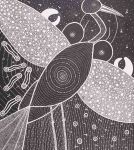 "NuunaRon - Dragonfly by Bec Jones" First Peoples Disability Network NuunaRon Art Group - 'Dragonfly' by Bec Jones
-
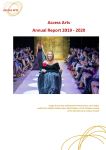 "Access Arts Annual Report 2019-2020" Access Arts Annual Report 2019-2020 - Performing Arts Workshops, Visual Arts Workshops, Exhibitions, First Nations Projects, Access Arts grants and Awards
-
 "High Beam Festival Program 2004" High Beam Festival Program 2004 reads "Welcome to evolve High Beam 2004 – A stimulating and inspiring seven-day cultural experience for people with a disability, families, friends and support workers, artists with a disability, professionals working in the disability sector, art workers and others."
-
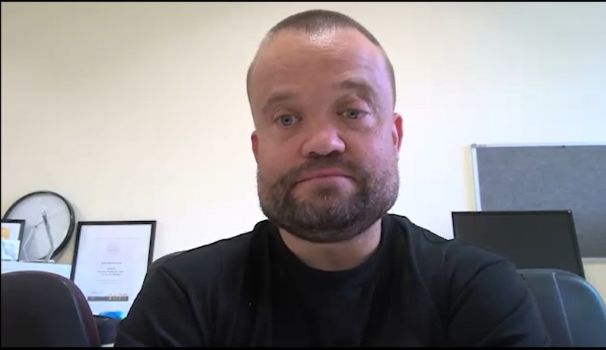 "Interview with Jeremy Smith" Jeremy Smith is a Senior Producer in Western Australia at Performing Lines, has a long career across community, experimental and performing arts, is a disability advocate and previously worked in Australia Council for the Arts (now Creative Australia) as Director – Community Arts and Experimental Arts. Interview Summary Jeremy Smith has vast experience in the arts including working as a director with Australia Council (Creative Australia). Jeremy is currently an arts worker in the performing arts sector. While Jeremy lives with Achondroplasia, he has not always identified as disabled however a transformative project for the 2016 Perth Festival led him to embrace his identity as a disabled person with pride recognising the complexities surrounding personal identification with disability. Jeremy talks about artists and organisations he finds inspirational who are leading change in the disability arts sector and his motivation to also advocate for inclusion and the evolution of public perception of disability arts work.
-
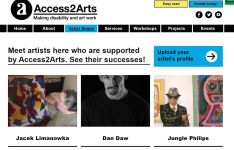 "Access2Arts Artist Profiles as first added to website in 2017" Access to Arts Artist Profiles as first added to website in 2017
-
 "Access Arts Annual Report 2012" Access Arts Annual Report 2012 - Indigenous Projects, Community Arts, Visual Arts, Brisbane Outsider Artists (BOA), Professional Development, Services
-
 "Incite Arts - Unbroken Land 2020 Episode Three - Flood Audio Described" Incite Arts - Unbroken Land 2020 Episode Three 'Flood' Audio Described - Reads, in part "As part of the Unbroken Land 2020 program, the ‘stArts with D’ Performance Ensemble have created a series of short films, telling their stories about water. From the dramatic storms with thunder and lightning, water flowing from the sky and flooding the rivers, to that good feeling of the rain on your skin…Water everywhere!"
-
 "Incite Arts - Unbroken Land 2020 Episode Four – Storm Audio Described" Incite Arts - Unbroken Land 2020 Episode Four 'Storm' Audio Described - Reads, in part "As part of the Unbroken Land 2020 program, the ‘stArts with D’ Performance Ensemble have created a series of short films, telling their stories about water. From the dramatic storms with thunder and lightning, water flowing from the sky and flooding the rivers, to that good feeling of the rain on your skin…Water everywhere!"
-
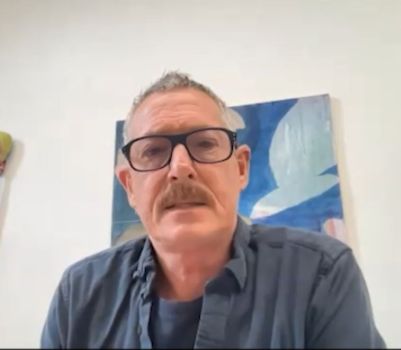 "Interview with David Doyle" David Doyle is the Executive Director of DADAA and has spent over 30 years leading large-scale Community Arts and Cultural Development (CACD) and arts projects globally and in Western Australia, significantly contributing to the arts and disability sectors through his work with DADAA and his dedication to community wellbeing and access to arts and culture. Interview Summary David Doyle, who originally trained in printmaking and ceramics with a background in community arts, has worked extensively in community arts and cultural development with a focus on addressing social issues through the arts. His experience with a disability from a young age and a deep understanding of power dynamics and privilege have influenced his motivation and commitment to disability arts in Australia. David highlights the significance of the Disability Discrimination Act and NDIS in empowering artists with disabilities and notes the uneven distribution of resources for disability arts across Australia. As the leader of an arts organization, he values the transition of power to individual artists with disabilities, stressing the importance of equipping them with the skills and contacts needed to lead and redefine the sector.
-
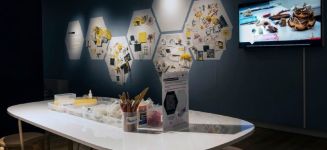 "Janice Rieger, Jasmien Herssens, Megan Strickfaden, Marianella Chamorro-Koc, Bree Hadley (2019) Vis-ability Exhibition." "The United Nations Convention on the Rights of Persons with Disabilities (UNCRPD, 2016) foregrounds the importance of cultural participation to realise human rights for people with disabilities. The creative industries play a critical role in supporting and shaping these social attitudes towards inclusion. Through the theoretical foundation of Design for All (EIDD Stockholm Declaration, 2004) new engagement processes involving a transdisciplinary team from Australia and around the world converged at QUT to co-design more equitable and collaborative forms of knowledge and practice around inclusion. International universities, the EU Commission and the European Institute for Design & Disability collaborated and presented Design for All for the first time in Australia, positioning QUT leadership in this field and as the first non-European member of EIDD-DfA. Co-design methods were employed through, Vis-ability workshops, Making Visible workshops, tactile artefacts and audio description work in the VisAbility Exhibition. Innovative practice was through the Inclusive Film Screening and Wondrous Googles technologies. An innovative model of engagement was created through the DfA Week program and events across sectors. Knowledge was disseminated through academic articles."
-
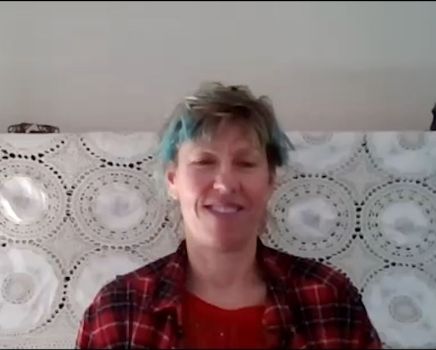 "Interview with Emiko Artemis" Dr Emiko Artemis is a visual artist with a PhD and a history of both solo and group exhibitions. Interview Summary Emiko Artemis identifies as a non-binary queer disabled visual artist. Emiko acknowledges their work essentially reflects their personal experiences with disability and comments on society. Despite interpersonal challenges due to disabilities, Emiko cherishes occasional collaborations, facilitated by clear structures or supportive relationships. Their artwork, often seen as "weird" to the public, aims to be thought-provoking rather than being particularly political. Emiko values the growing visibility of disability in the arts and the increase in acceptance of diversity in society. They proudly embrace their own identity as an integral aspect of their creative practice
-
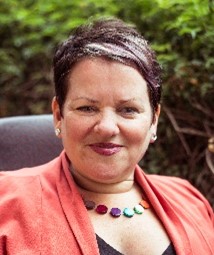 "Interview with Caroline Bowditch" Caroline Bowditch is an Australian artistic director, leader, performer, presenter, instructor, disability advocate and was the CEO of Arts Access Victoria. Interview Summary Caroline Bowditch, the CEO and Artistic Director of Arts Access Victoria, shared her journey as a performance artist and her experiences working within the Disability Arts community, highlighting her creative process and the challenges faced by disabled artists in Australia. Despite significant support and successful projects in the UK, she expressed concern over the limited progression and exposure of Disability Arts in Australia, noting a lack of ambition and opportunity deterring artists from aiming for larger, mainstream stages. Bowditch emphasized the importance of integrating access as a core component of artistic work and changing the aesthetic by including diverse bodies and perspectives. She also discussed tackling intersectionality within Disability Arts, reflecting on her own experiences as a visibly disabled and queer woman, and contemplating the future of Disability Arts, the desire for cultural equity, and the impact of potential shifts in societal barriers.
-
 "Crossroad Arts Annual Report 2011" Crossroad Arts Annual Report 2011 - Artistic Director/CEO Report, history, program, key statistics for the year
-
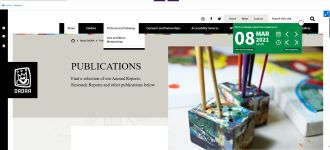 "DADAA Publications Webpage, captured 2021" DADAA Publications Webpage, captured 2021 - Annual Reports 2014-2019, Newsletters 2016-2019, and research reports, including Art Works: Employment in the Arts for People with Disability (2012), and Same Drum CACD Project With Young People from Migrant and Refugee Backgrounds (2018), Oddysea project with Sensorium Theatre (2014), the Lost Generation project (2011)
-
 "Incite Arts - Unbroken Land 2020 Episode Five – Rain" Incite Arts - Unbroken Land 2020 Episode Five 'Rain' -Reads, in part "As part of the Unbroken Land 2020 program, the ‘stArts with D’ Performance Ensemble have created a series of short films, telling their stories about water. From the dramatic storms with thunder and lightning, water flowing from the sky and flooding the rivers, to that good feeling of the rain on your skin…Water everywhere!"
-
 "Access Arts Annual Report 2006" Access Arts Annual Report 2006 - Indigenous Projects Report, Events, Workshops, Brisbane Outsider Artists Studio (BOA), Sound Circles Project Report
-
 "Access Arts Annual Report 2007" Access Arts Annual Report 2007 - Indigenous Projects, Brisbane Outsider Artists (BOA), Sound Circles, Wataboshi Festival, Conferences, Events & Celebrations, Workshops, Partnerships
-
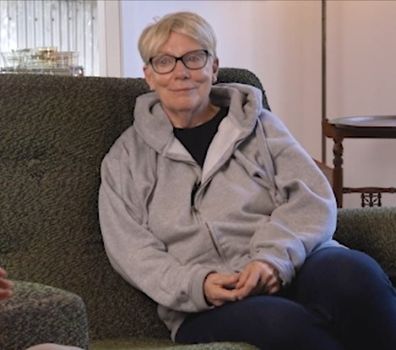 "Interview with Pat Rix" Pat Rix is a Disability Ally and Social Change advocate, and the recently retired Founder and CEO of TUTTI ARTS Incorporated. Interview Summary Pat Rix is an Artistic Director who has made extraordinary and sustained contributions to Australia’s cultural life through her artistic practice and leadership. A significant arts contributor since 1985, Pat made her early mark through plays and music-theatre productions which drew attention to social injustice and championed social inclusion. Her journey in disability arts began in 1997 with the formation of an inclusive choir at Minda Inc. which in 2001 incorporated to become the independent multi arts organisation known as ‘Tutti’ - embodying the inclusive Italian term meaning ‘everyone’. At a time when there were no vocational pathways for learning disabled and neuro divergent people, Tutti became a national trailblazer in creating a work environment where learning disabled and neuro diverse artists could create visual art, theatre, music, film and experimental art in a way that authentically nurtured their professional growth and recognition. Pat stresses the importance of disabled artists having control over their work. She believes that art is inherently political, and that it is finding your voice, being heard and being taken seriously that contributes to any artist's success. Pat looks forward to the future evolution of disability arts and the role of technology in enabling disabled artists to develop local and global partnerships which continue to provide exciting opportunities for artistic development.
-
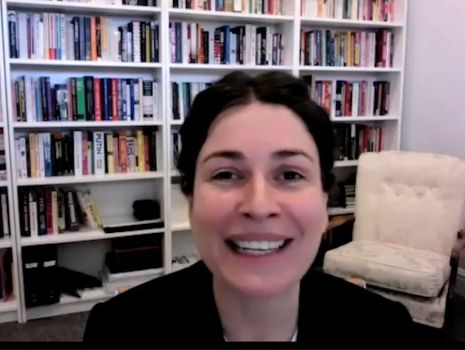 "Interview with Astrid Edwards" Astrid Edwards is a writer, publisher, lecturer, podcast host and disability advocate. Interview Summary Astrid Edwards, a former teacher and policy consultant, discusses in the interview how she pivoted her career towards writing and literature after being diagnosed with multiple sclerosis at 32, inspiring her to focus on work she loves. Astrid talks about writing at RMIT University, working with a diverse cohort of students, (many of whom have disabilities or are writing about trauma), which she finds rewarding. Though her work includes advocacy roles and a focus on disability, she does not wish to be defined solely by her illness, emphasizing the importance of allowing disabled individuals the freedom to explore and create beyond their disabilities. Currently, Astrid says she is a judge for the Stella Prize and discusses exploring a potential PhD about publishing and climate fiction, expressing a passion for addressing climate change within her work.
-
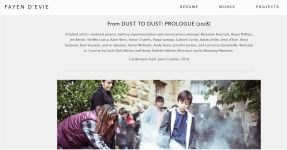 "From Dust to Dust - Prologue" Reads, in Part, "A hybrid artist-curatorial project, inviting experimentation and conversations amongst Benjamin Hancock, Bryan Phillips, Jen Bervin, Shelley Lasica, Katie West, Simon Charles, Pippa Samaya, Gabriel Curtin, Adam Leslie, Zeno d'Evie, Anna Seymour, Ravi Vasavan, and in absentia, Aaron McPeake, Andy Slater, Jennifer Justice, and Lucreccia Quintanilla. Welcome to Country by Uncle Rick Nelson and Aunty Paulette Nelson.Afternoon tea by Murnong Mammas."
-
 “Australia Council - People with a disability - attendance at cultural events 2008" Australia Council - People with a disability - attendance at cultural events 2008 - reads, in part "A 2003 survey by the Australian Bureau of Statistics showed that over 40 per cent of people with a disability went to the cinema. According to the 2003 Survey of Disability, Ageing and Carers, one in five people in Australia reported that they had a disability which restricted their everyday activities and which had lasted, or was expected to last, for at least six months."
-
 "Access Arts Annual Report 2011" Access Arts Annual Report 2011 - Indigenous Projects, Creative Recovery Project, Brisbane Outsider Artists (BOA), Wataboshi Festival, Visual Arts, Workshops, Events, Training, Professional Development
-
 "Access Arts Annual Report 2010" Access Arts Annual Report 2010 - Professional Development, Creative Recovery, Brisbane Outsider Artists (BOA), Indigenous Projects, Performances, Events, Workshops, Conferences, Training, Partners
-
 "Australia Council - Access and audience development in Australia" Australia Council - 'Access and audience development in Australia' reports - reads, in part "These reports were commissioned in 2004 to assess what is currently being done, and what needs to be done, to increase access to the performing arts and museums & galleries in Australia for people with a disability."
-
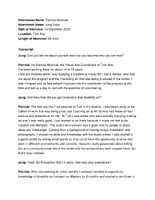 "Interview with Patricia Wozniak" Patricia Wozniak is a neurodivergent visual arts coordinator at Tutti Arts and is a disability arts advocate and ally. Interview Summary Patricia Wozniak, a visual arts coordinator at Tutti Arts with 14-15 years of experience, initially volunteered while studying for her master's and found joy and liberation in making art with the organisation. Tutti Arts has grown from offering two days to five days of visual arts each week and supports artists to enjoy creating, access quality materials, and earn income. While faced with challenges like NDIS funding intricacies and the need for easy-to-understand contracts, Patricia emphasizes the importance of artist-driven practice and equal opportunities. She observes a shift toward digital art and commercial endeavours among artists and asserts the vitality of educating artists about their rights and the political aspect of disability art in cultivating change and expression of identity.