Items
Search full-text
Focus On Ability Film Festival
- Gary Cooper
- Adelaide Film Festival
- Adelaide International Film Festival
- Tina Fielding
- Tony Sarre
- Stephanie Linder
- Ross Onley-Zerkel
- Michaela Olijnyk
- Stephanie Lindner
-
“Deaf film ‘A Silent Agreement’ is released in 2017” The Deaf film ‘A Silent Agreement’ was released in 2017 (written and directed by Davo Hardy). This romantic drama features a profoundly Deaf human rights activist and his filmmaker boyfriend with a speech impediment. It is said to be the first Australian film to feature Auslan as the main dialogue. Some scenes are entirely in Auslan. Screen Australia calls it the “first Australian film to feature Auslan.”
-
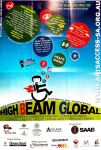 "High Beam Festival Program 2008" High Beam Program 2008 reads "Australia's international celebration of Arts and Disability - COMEDY | THEATRE| MUSIC | VISUAL ARTS | COMMUNITY EVENTS"
 -
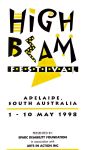 "High Beam Festival 1998 Poster" High Beam Festival Poster 1998 reads "High Beam Festival PRESENTED BY: SPARC DISABILITY FOUNDATION in association with ARTS IN ACTION INC"
 - Richard Vabre
-
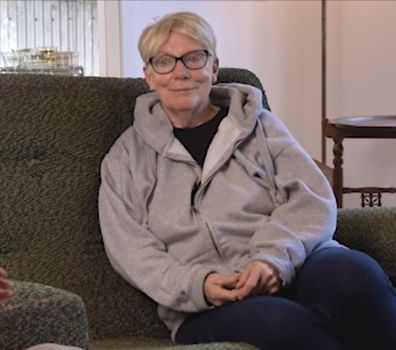 "Interview with Pat Rix" Pat Rix is a Disability Ally and Social Change advocate, and the recently retired Founder and CEO of TUTTI ARTS Incorporated. Interview Summary Pat Rix is an Artistic Director who has made extraordinary and sustained contributions to Australia’s cultural life through her artistic practice and leadership. A significant arts contributor since 1985, Pat made her early mark through plays and music-theatre productions which drew attention to social injustice and championed social inclusion. Her journey in disability arts began in 1997 with the formation of an inclusive choir at Minda Inc. which in 2001 incorporated to become the independent multi arts organisation known as ‘Tutti’ - embodying the inclusive Italian term meaning ‘everyone’. At a time when there were no vocational pathways for learning disabled and neuro divergent people, Tutti became a national trailblazer in creating a work environment where learning disabled and neuro diverse artists could create visual art, theatre, music, film and experimental art in a way that authentically nurtured their professional growth and recognition. Pat stresses the importance of disabled artists having control over their work. She believes that art is inherently political, and that it is finding your voice, being heard and being taken seriously that contributes to any artist's success. Pat looks forward to the future evolution of disability arts and the role of technology in enabling disabled artists to develop local and global partnerships which continue to provide exciting opportunities for artistic development.
 - David Helfgott
-
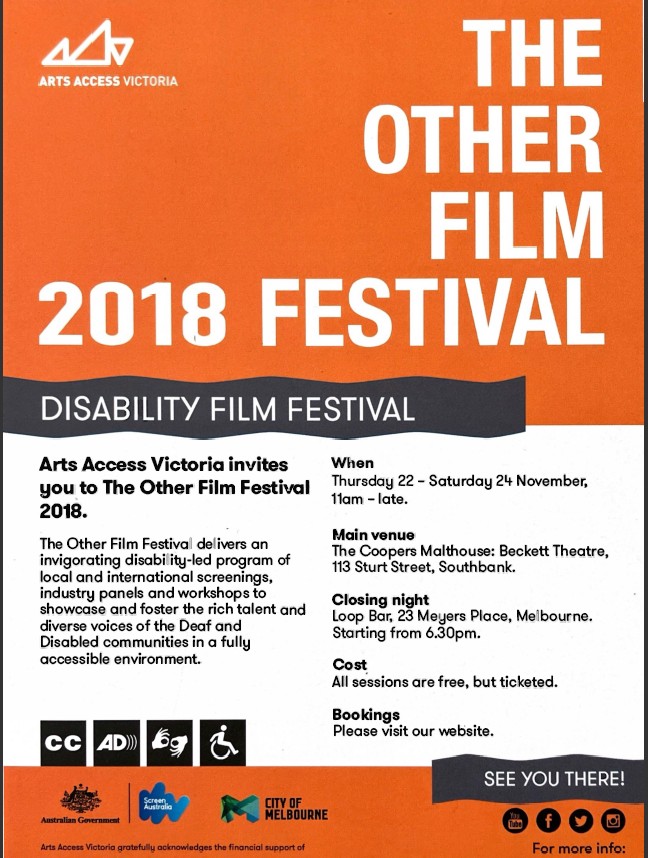 “Arts Access The Other Film Festival 2018 Invitation”
 -
"Bree Hadley, Janice Rieger (2021) Co-designing choice: objectivity, aesthetics and agency in audio-description. Museum Management and Curatorship, 36(2), pp. 189-203.” "The ‘Vis-ability’ exhibition, presented at the QUT Art Museum in 2019 was an exhibition curated with clear social inclusion goals from the outset. Through it, the museum sought to develop innovative, cost effective, and readily replicable techniques to allow blind and low vision visitors and artists to engage with the institution and its collections. The results affirm the benefits of offering blind and low vision visitors a spectrum of engagement choices, and also affirm that blind and low vision artists and visitors have capacity to make a critical contribution in co-designing that spectrum of choices. This exhibition and its use of multisensorial elements offers a useful prompt to museums to engage this community more fully in co-designing inclusion in the future."
-
"Maree Roche, Ben Whitburn (2019) Mate, You’re Crippin’ Us Out: Biopolitics of the Arts Curriculum in Australia and the Swinging Identities of Dis/abilities. Journal of Literary & Cultural Disability Studies.13(3). https://doi.org/10.3828/jlcds.2019.25" Reads, in part "The article explores arts curriculum in Australia as developed in the contexts of schooling, community organizations, and higher education for people with disabilities and mental health concerns. Motivated to explore whether or not students provided access to modified arts curriculum are engaging in education or receiving therapy, the aim is to address a dichotomy that is seemingly present in educational institutions, but extends well beyond the school gate and informs organizational responses to arts in the lives of people with disabilities. Resourced with the theoretical contributions of dis/ability studies for its concern for the biopolitics of disability, the authors weave personal experiences through the discussion of participation in arts throughout their lives. The article concludes with a theoretical discussion of how arts provision in the Australian context might develop the social and political value of art in the lives of people with dis/abilities and for all, on the basis that its educative value is emphasized over its therapeutic one."
-
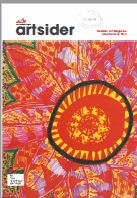 “Arts Access Arts Access Artsider May 2014” Arts Access Arts Access Artsider May 2014 – “This issue of Artsider sources visual arts from the Supported Residential Services (SRS) Studios program” and “Much of the written material in this issue was sourced through Write-ability a partnership program between Arts Access Victoria and Writers Victoria” – discussion of outsider art being “in”, description of Arts Access Victoria, showcasing visual art and creative writing from 17 artists - Bruno Conci, Colin Ferris, David Smyth, Deb Lissek, Diane Chen, Dimitrios Jim Mouhtsis, Felicity Mimigiannis, Gavin Jackson, Giovanni Dimase, Jalal Merhi, Marco Sirolli, Maribel Steel, Pauline Matton, Peter Piwko, Robbie Weir, Sandy Jeffs, Theo Psathas
 -
 "Writeability website, captured 2013" Webpage reads, in part "Arts Access Victoria, in partnership with Writers Victoria, is pleased to announce the launch of Write-ability, a new pilot project to support writers with a disability wishing to advance their writing practice"
 -
 "Australia Council - Annual Report 2016-17" Australia Council Annual Report 2016-2017 – discusses purpose, reports from chair and CEO, year in review, report from the CEO, Strategic priorities, funding overview, statement of outcome, about the Australia Council including The Governing Council and the Board, Structure of the Australia Council with new grants model; performance outcomes, manageability and accountability, financial statements and discussion of the final year of delivering $1.3 million over four years to support artists with disability with their careers and funding more organisations to support producing and touring disability-led and mixed-ability arts practice as well as mentoring arts leaders with disabilities and publication of the Council’s 2014–16 Disability Action Plan review.
 - Wayne Close
- Wendy Cowley
- Victoria Keighery
- Vince Crowley