
Items
Search full-text
Focus On Ability Film Festival
-
“Sydney Film Festival launches Screenability program in 2017” Sydney Film Festival launched its Screenability program in 2017. The international program was intended to offer a platform for screen practitioners with disability. Sofya Gollan was Screenability’s inaugural programmer and remained in the role until 2021.
- Film Victoria
- State Library of Victoria
-
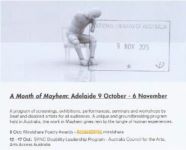 "A Month Of Mayhem" RealTime article on A Month of Mayhem, "A program of screenings, exhibitions, performances, seminars, and workshops by Deaf and colourblind artists for all audiences," presented by Access2Arts, in partnership with Adelaide Film Festival, Australian Network for Art and Technology (ANAT), Arts Access Australia, Unlimited UK, Tutti Arts, Sit Down Shut Up and Watch Film Festival
-
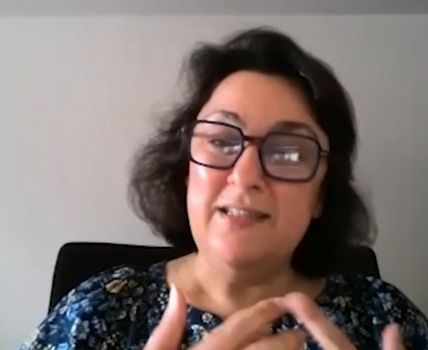 "Interview with Veronica Pardo" Veronica Pardo is a disability arts ally and has been a disability advocate with previous leadership positions in organisations such as Arts Access Victoria and Multicultural Arts Victoria, Interview Summary Veronica Pardo, former Executive Director of Arts Access Victoria, discussed the evolution and impact of Disability Arts in Australia, detailing the political dimensions of the field and the importance of genuine representation and intersectionality. Pardo highlighted the importance of leadership transitions in arts organizations informed by a spirit of solidarity and mutual support, particularly citing Caroline Bowditch's role as significant in the sector. She emphasized a need for systems-level change within the arts to reflect true diversity, beyond tokenism, advocating for dismantling exclusive structures and creating new ones informed by those marginalized. Finally, Pardo stressed the importance of acknowledging the work of predecessors in Disability Arts to honour their legacy and inform current artistic and cultural practices.
- Michelle Ryan
-
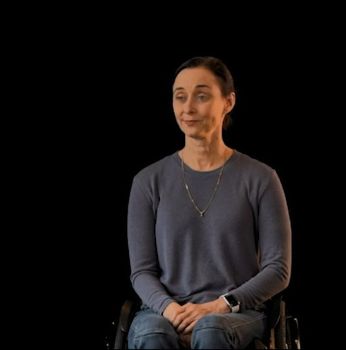 "Interview with Michelle Ryan" Michelle Ryan is the artistic director of Restless Dance Theatre and has extensive experience as a dancer and performer. Interview Summary Michelle Ryan, the artistic director of Restless Dance Theatre, shares her journey from being a successful dancer diagnosed with multiple sclerosis at 30 to becoming an advocate for artists with disabilities. Despite her initial hesitations to perform with her disability, a positive experience dancing with a European company reignited her passion and led her to Restless Dance Theatre, where she aims to change perceptions of who can create art. Michelle emphasizes the importance of providing professional opportunities and proper compensation for disabled artists, challenging the notion that disability work is charity or hobbyist. She advocates for representation that is genuine and not tokenistic, ensuring the inclusion of people with disabilities is meaningful and respectful.
- Undercover Artist Festival
-
 "High Beam Festival Program 1998"
-
 "Undercover Artist Festival Program 2017" Undercover Artist Festival 2017, curated by Festival Director Harmonie Downes, including “Here we all are, assembled” by Kathryn Ash, “The Grumpy Cripple” by Thane Pullan, “Environment Moves Me” by Eleonora Ginardi, “Rock ‘n’ Country Blues Show” with Steve Sparrow, “Inside”, by Wielding Theatre, “Explorations” by Vulcana Women’s Circus, “Stories So True” by Ged Maybury, “Whiplash” by Scott Wings, “Hotel Pantelone” by Blue Roo Theatre Company, “Alone with the Keyboard Kat” with Jeff Usher, “Love Me” by Indelability Arts, “Just Dance” by InsideOutside Dance Ensemble, “Ambition Road” with David Truong, “Morgan Stern” by Company of Rogues, “Sing It Out” with Leah Cotterell, “Tribal Disco Ball” by Velvet Pesu and Tichawona Noble Mashawa, “Songs from the Vault” by Donna Dyson and Friends””, “Unmasterclass” by Back to Back Theatre, “What Does Your Artist Statement Say About You?” workshop with Dr Kari Sullivan, “Disability Voices and Mainstream Stages” panel facilitated by Morwenna Collett.
-
 "Shine - IMDB" Reads, in part "David Helfgott, a gifted pianist, struggles through childhood as his dysfunctional father abuses him and his siblings. Years later, he suffers a mental breakdown but manages to return as a legend."
- Melbourne Fringe Festival
-
"Janice Rieger and Megan Strickfaden(2019) “Dis/ordered assemblages of disability in museums.” In The Routledge Handbook of Disability Art, Culture, and Media, edited by Bree Hadley and Donna McDonald, 48–61. London & New York: Routledge." "Museums are spaces of power and care. They are institutions that present assemblages (Deleuze & Guattari 2002), which are reconstructions and representations of history and societal values, and thus are partial realities that curate human existence. These assemblages cannot ever represent the totality of human existence because it is never possible to do so, and yet these assemblages are embedded with power because choices are made about what ought or ought not be represented within museums (Ott 2013; Bennet 2017). The nature of partial realities is that, at their centre, these are still representations that tell stories of what one would imagine to be the most significant events related to a place (nation, city), with a particular focus on a societal event or issue (war, art, sports, nature, human rights, etc.) and peoples (e.g. immigrants, migrants, First Nations or Indigenous peoples, etc.). Persons attending museums rely on the expertise of historians, curators, archivists, conservators, and exhibition designers to present materials within the museum that focus upon and represent societal values. Most museum visitors are not aware of the power that museums hold, although more and more museum visitors push against narratives which they do not feel to be adequate representations of the places, events, issues, and peoples of society (Hooper-Greenhill 1992, 2000; Anderson 2004; Janes 2009, 2010). Where there is power, there is also care. Historians, curators, archivists, conservators, and exhibition designers take great care in how they assemble materials within museums."
-
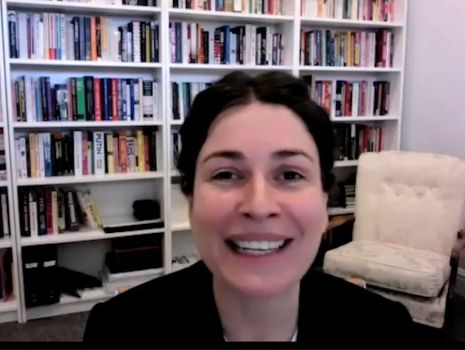 "Interview with Astrid Edwards" Astrid Edwards is a writer, publisher, lecturer, podcast host and disability advocate. Interview Summary Astrid Edwards, a former teacher and policy consultant, discusses in the interview how she pivoted her career towards writing and literature after being diagnosed with multiple sclerosis at 32, inspiring her to focus on work she loves. Astrid talks about writing at RMIT University, working with a diverse cohort of students, (many of whom have disabilities or are writing about trauma), which she finds rewarding. Though her work includes advocacy roles and a focus on disability, she does not wish to be defined solely by her illness, emphasizing the importance of allowing disabled individuals the freedom to explore and create beyond their disabilities. Currently, Astrid says she is a judge for the Stella Prize and discusses exploring a potential PhD about publishing and climate fiction, expressing a passion for addressing climate change within her work.
-
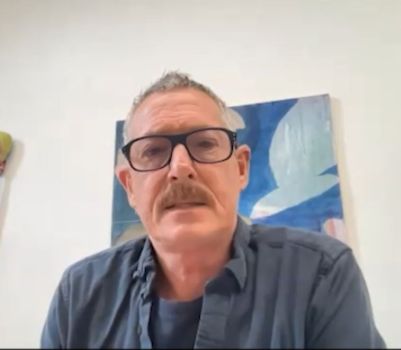 "Interview with David Doyle" David Doyle is the Executive Director of DADAA and has spent over 30 years leading large-scale Community Arts and Cultural Development (CACD) and arts projects globally and in Western Australia, significantly contributing to the arts and disability sectors through his work with DADAA and his dedication to community wellbeing and access to arts and culture. Interview Summary David Doyle, who originally trained in printmaking and ceramics with a background in community arts, has worked extensively in community arts and cultural development with a focus on addressing social issues through the arts. His experience with a disability from a young age and a deep understanding of power dynamics and privilege have influenced his motivation and commitment to disability arts in Australia. David highlights the significance of the Disability Discrimination Act and NDIS in empowering artists with disabilities and notes the uneven distribution of resources for disability arts across Australia. As the leader of an arts organization, he values the transition of power to individual artists with disabilities, stressing the importance of equipping them with the skills and contacts needed to lead and redefine the sector.
- South Australian Film Corporation
- Jax Jacki Brown
- Adelaide Film Festival
- Adelaide International Film Festival
- Anne Cabrie
- Gary Cooper
- Michaela Olijnyk
- Ross Onley-Zerkel
- Stephanie Linder
- Stephanie Lindner