
Items
Search full-text
Multi Arts
Class
CreativeWork
-
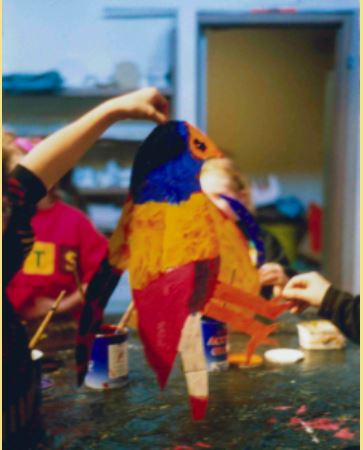 “Arts Access Victoria – Sharing knowledge (early – mid 1990s)” In 1990 AAV hosted the Participate conference. From this the DADAA (Disability in the Arts, Disadvantage in the Arts, Renamed Arts Access Australia in 2003) network was born. AAV created a guidebook on creating art projects in hospitals while programs and exhibitions “Stormy Weather”, “FEELEN BOORDUP” were gaining recognition with location and purchase of artwork.
-
 "Australia Council - Annual Report 2005-06" Australia Council Annual Report 2005-2006 - discusses letter from chair of council, letter from CEO, corporate overview, year in review, goals, financial statements, analysis of funding analysis and grants list, including various artistic and community projects - “Stickybricks” – exploring the history of a Sydney Housing Estate where 95% of residents receive aged or disability benefits were traumatised by by murders, suicides, assaults and drug and alcohol-related crimes and they partnered with Big hART to tell their story at the Sydney Festival, “Small Metal Objects” by Back to Back Theatre presented at the Melbourne international arts festival, and the DADAA (WA) regional collaborative “Bridging the Gap” project in Bunbury and publication of “Making the Journey: Arts and disability in Australia”
-
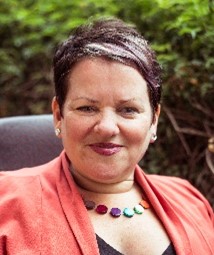 "Interview with Caroline Bowditch" Caroline Bowditch is an Australian artistic director, leader, performer, presenter, instructor, disability advocate and was the CEO of Arts Access Victoria. Interview Summary Caroline Bowditch, the CEO and Artistic Director of Arts Access Victoria, shared her journey as a performance artist and her experiences working within the Disability Arts community, highlighting her creative process and the challenges faced by disabled artists in Australia. Despite significant support and successful projects in the UK, she expressed concern over the limited progression and exposure of Disability Arts in Australia, noting a lack of ambition and opportunity deterring artists from aiming for larger, mainstream stages. Bowditch emphasized the importance of integrating access as a core component of artistic work and changing the aesthetic by including diverse bodies and perspectives. She also discussed tackling intersectionality within Disability Arts, reflecting on her own experiences as a visibly disabled and queer woman, and contemplating the future of Disability Arts, the desire for cultural equity, and the impact of potential shifts in societal barriers.
-
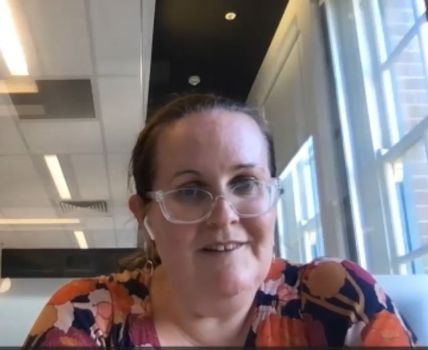 "Interview with Morwenna Collett" Morwenna is a leader, consultant and facilitator in the arts, government, not-for-profit and university sectors and is passionate about helping arts and cultural organisations to include everyone in their work. Interview Summary Morwenna Collett is a consultant in diversity, access and inclusion and during the interview discusses her vast experience in the disability arts sector including time in the Australia Council where she played a key role in creating the first targeted funding program for artists with disabilities. Morwenna notes that while disability arts is gaining some awareness with mainstream audiences, there are still issues regarding how people think about the quality of art created by artists with disabilities. Morwenna highlights the NDIS as a significant milestone for disability arts in Australia, though she believes that there is much more potential for arts organizations to engage with it. Morwenna also emphasizes that the decision for artists to identify with their disability is a personal choice and it is becoming increasingly safe to disclose this identity, demonstrating progress toward inclusion in the arts.
-
 "Accessible Arts - Annual Report 2007" Accessible Arts - Annual Report 2007 - Vision, Chair’s Report, Chief Executive Officer’s Report, Accessible Arts’ People, Strategic Outcomes, Service, Arts Programs, Training, Western Sydney Project, Audience Development, Information and Public Relations, Cultural Partners
-
 "Australia Council - Annual Report 1997-98" Australia Council Annual Report 1997-98 - discusses letter from chair of council, functions, profile, organisation chart, corporate overview, year in review, arts funding, main activities of Council and its Boards, and includes professional development activities, financial statements and lists of grants made including grants for programs, projects, information and advocacy with producing a set of Disability Fact Packs exploring the importance of accessibility for arts and cultural organisations and a guide to marketing arts to disabled audience
-
 "ARTAbility Conference" The national Disability and Arts Disadvantage and the Arts Australia (DADAA) committee was established in Melbourne, Victoria, in 1991, and – as described in the Access Arts Annual Report 1992 – at the inaugural meeting of this group in 1991, Access Arts offered to organise a conference for the group in 1992, with funding from the Queensland Performing Arts Trust, at the Queensland Cultural Centre - the Access Arts Annual Report 1992 says “Drawing on the experience of the Queensland ARTability conference of 1990 enabled Access Arts staff and members to be fully involved in the planning of the conference. It was a big success. Access Arts has also set up the Queensland DADAA network.”
-
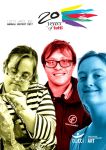 "Tutti Arts - Annual Report 2017" Tutti Arts Annual Report 2017 – President’s, Artistic Directors, Disability & Quality Manager's, Arts Manager Reports, information on Visual Arts, Performing Arts, Film and New Media and Choral and Kids & Youth Programs, Projects, and Exhibitions, including information on Impersonal Space, Frozen Girl, Sit Down Shutup and Watch Film Festival, The Sisters of Invention, Company AT, Financials, Staff and Board Members, Supporters
-
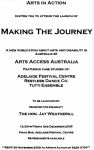 "Tutti Arts - Making the Journey: New Publication About Arts and Disability in Australia By Arts Access Australia - Launch Event - Promotional Flyer" Tutti Arts 'Making the Journey: New Publication About Arts and Disability in Australia By Arts Access Australia - Launch Event' 2005 - Promotional Flyer
-
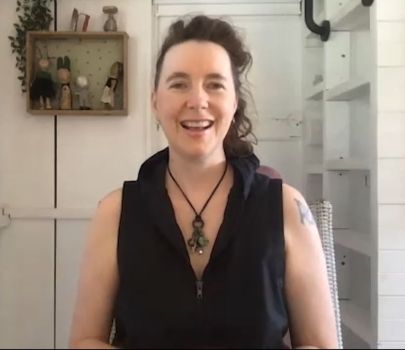 "Interview with Asphyxia" Asphyxia is an artist, author, activist and performer who has founded Amplio, a music app for Deaf and hard of hearing people. She also provides free online Auslan lessons and online art courses. Interview Summary Asphyxia is a Deaf artist whose journey into the arts started with a deep love for ballet, but after facing discrimination due to her Deafness, she pivoted to a successful career in circus performance and later puppetry, which embraced her Deafness and signing skills. Her work in performance art led her to write and illustrate the Awards-winning art-journal book, Future Girl, which explores Deaf identity and environmental issues. She has now moved into music, creating an app that makes music accessible and writing music designed with Deaf and hard of hearing audiences in mind. Although not sure about the major milestones in disability arts history in Australia, she considers her art to be both political and personal, often tackling issues related to her identity as a Deaf person and the aesthetics of disability equipment. While Asphyxia identifies as a Deaf artist, above all, she sees herself as an artist whose work appeals to the mainstream while celebrating Deafness and diversity.
-
 "Access Arts Annual Report 2019-2020" Access Arts Annual Report 2019-2020 - Performing Arts Workshops, Visual Arts Workshops, Exhibitions, First Nations Projects, Access Arts grants and Awards
-
 "Accessible Arts - ACE Arts Creativity Expression - Peter Ross - Article: Arts Extraordinaire -1993 - Iss8, PG14-17" Accessible Arts - ACE Arts Creativity Expression - Peter Ross - Article: Arts Extraordinaire -1993 - Iss8, PG14-17 - reads, in part "Arts Extraordinary Celebrating Where The Arts Can Take You is Australia's first arts festival to celebrate the diverse creative talents and artistic skills of people with disabilities."
-
 "Australia Council - Annual Report 1999-2000" Australia Council Annual Report 1999-2000 - discusses letter from chair of council, corporate overview, year in review, financial statements, analysis of funding and grants for projects, programs, presentation and promotions, triennial grants to disability arts organisations in NSW, South Australia and Victoria and funding to Accessible Arts for audience development, as well as the New Media Arts Fund for Back to Back performance of “Soft”
-
 "Arts Access Victoria - History, captured 2011"
-
 "InCite Arts - History, and 2014, 2015 Annual Reports" InCite Arts history, and 2014, 2015 Annual Reports, captured 2017 - including starting as Alice Springs Youth Arts Group (ASYAG) in 1998, becoming InCite Youth Arts Inc in 2004, auspicing Arts Access Central Australia (AACA) 2005, then revising its constitution to reflect the broader scope of work as it became InCite Arts in 2013
-
 "Incite Arts - News, captured 2018" InCite Arts News, captured 2018 – Awards, Announcement of plan to host Arts Access Australia Meeting Place Arts and Disability Forum in 2018, new ‘Sounds Good to Me’ music program, visit from Tutti Arts’s Choir and Sisters of Invention music group, and ‘stArts with D’ Performance Ensemble
-
 "Arts and Disability: A research summary" Australia Council - Arts and Disability: A research summary, 2018 - reads, in part "The great art created by artists with disability, and participation of people with disability in the arts, are integral to the artistic and cultural life of Australia. This summary brings together findings from Australia Council research publications and a research overview compiled by the Meeting of Cultural Ministers to build the evidence base about disability and the arts."
-
 "Accessible Arts - Activated Arts Podcasts" Accessible Arts - Activated Arts Podcasts - reads, in part "Get turned on to a different kind of creativity! The Activated Arts podcasts, produced in association with Accessible Arts and 2RPH Radio, explore and showcase the unconventional talent and distinctive work of professional arts practitioners with disability."
-
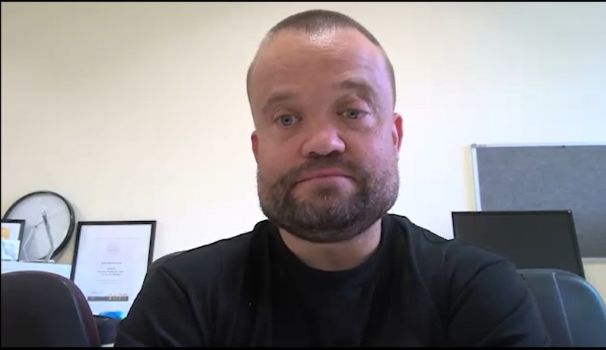 "Interview with Jeremy Smith" Jeremy Smith is a Senior Producer in Western Australia at Performing Lines, has a long career across community, experimental and performing arts, is a disability advocate and previously worked in Australia Council for the Arts (now Creative Australia) as Director – Community Arts and Experimental Arts. Interview Summary Jeremy Smith has vast experience in the arts including working as a director with Australia Council (Creative Australia). Jeremy is currently an arts worker in the performing arts sector. While Jeremy lives with Achondroplasia, he has not always identified as disabled however a transformative project for the 2016 Perth Festival led him to embrace his identity as a disabled person with pride recognising the complexities surrounding personal identification with disability. Jeremy talks about artists and organisations he finds inspirational who are leading change in the disability arts sector and his motivation to also advocate for inclusion and the evolution of public perception of disability arts work.
-
 "Access Arts Annual Report 2006" Access Arts Annual Report 2006 - Indigenous Projects Report, Events, Workshops, Brisbane Outsider Artists Studio (BOA), Sound Circles Project Report
-
 "Access Arts Annual Report 2007" Access Arts Annual Report 2007 - Indigenous Projects, Brisbane Outsider Artists (BOA), Sound Circles, Wataboshi Festival, Conferences, Events & Celebrations, Workshops, Partnerships
-
 "Access Arts Annual Report 2008" Access Arts Annual Report 2008 - Indigenous Projects, Brisbane Outsider Artists (BOA), Professional Development Mentoring Program, Sound Circles, Conferences, Events and Celebrations, Workshops, Projects, Partnerships
-
 "Access Arts Annual Report 2009" Access Arts Annual Report 2009 - Indigenous Projects, Visual Arts, SoundCircles, Creative Recovery Project, Professional Development
-
 "REWIND - Strategies for _Integration - A training seminar presented by Accessible Arts Inc - 1992" REWIND - Strategies for _Integration - A training seminar presented by Accessible Arts Inc - 1992 - reads, in part "Accessible Ans Inc. is an organisation which encourages and promotes the development of opponunities for people with disabilities to have access to and participation in all creative artforms. Accessible Arts began, in 1985, as an arts project for people with disabilities at Community Activities Network. In 1989 Accessible Arts became an independent, non-profit organisation incorporated as an Association. During 1990 Accessible Arts was financially supported by the State and Federal Governments to establish a statewide service for people with disabilities. The change from activities project to a statewide service has been significant. The organisation has compiled a state profile on what art facilities are available to people with disabilities in New South Wales; provides a consultancy service for artists, people with disabilities, disability services and arts organisations; assists the general community to initiate their own art programs and projects through the establishment of regional networks; provides training programs in the area of art and disability; produces publications; and, acts as an advocacy/educational body for the promotion of access and equity in the arts. The Rewind Seminar was initiated after expressions of interest and concern were directed to Accessible Arts about the need for strategies to effectively involve people with disabilities in arts practice."
-
 “Arts Access Arts Access News Autumn 1996” Arts Access Arts Access News Autumn 1996 – Calendar of Events, Editorial, profile of two Arts Access team - Samantha Marsh and Rhona Bester. Artistic Program – Art Day programs, Juvenile Justice programs, Supported Residential Services Program, North Fitzroy Youth Refuge project, The Heidelberg Hospital, Saturday morning Art Classes, Arts Access Library and Information Service – new technology and resources, EASE ticket service - EASE Industry Development Program Disability Seminars 1996, DADAA national one day meeting, Arts Access Membership, EASE Subscriptions and Donations, Arts Access mission statement and programs.