Items
Search full-text
Paralympic Arts Festival
-
 "Announcement of transition from DATT to Access2Arts" Announcement of transition from DATT (Disability and Arts Transition Team) to Access2Arts
 -
“Australia Council grants funding for projects about disability or for disabled participants throughout the 1970s” The 1974/75 Australia Council annual report states $1,350 in funding granted to Spectrum Films (NSW) to "develop a screenplay for a feature film of the social pressures on a deaf mute”, as well as a $4,500 travel/study grant to Lloyd Nickson (QLD) "to attend summer schools in children's theatre and theatre for deaf children (USA and UK) for six months". In the same year, the Council reported Bryan Gracey as one of numerous individuals in receipt of Experimental Film funding for his short film ‘The World of a Blind Child’ (1975) about the emotional and physical difficulties 10-year-old Peter faces and how he navigates his disability. In the 1974/75 financial year, Australia Council’s crafts board awarded $1,288 to the Wheelchair and Disabled Association (NSW) for "Jewellery making tools and equipment". The 1979/1980 Australia Council annual report describes the following funding: "As in previous years, a grant was given to the Braille and Talking Book Library for its Braille Book of the Year.”
-
“Australia Council praises NSW Theatre of the Deaf and provides some funding to the Deaf theatres throughout the 1970s” The 1976/77 Australia Council annual report stated: "The NSW Theatre of the Deaf is a significant achievement. The only funded organisation in Australia working in nonverbal theatre, its production of King Lear received widespread praise. This company is now accepted as operating in a legitimate area of theatre rather than performing mime works for the deaf. This offers wide scope for innovation." The Council’s 1977/78 annual report recorded that it granted funding to the NSW Theatre of the Deaf “towards salaries of artistic director, deaf director, and tutors’ fees in 1978” for $25,000; the “presentation of theatre pieces (mime, clowning, puppetry) in public performance” for $2,500, and “towards costs of a production in 1978” for $4,000. It also awarded $1,980 to Queensland Theatre of the Deaf “towards the cost of transporting company to Sydney for seminar with NSW Theatre of the Deaf”. Drama Resource Centre (Victoria) received $2,840 “to develop student theatre at Victoria School for Deaf Children” and $630 went to Children’s Activities Time Society (Western Australia) for the “cost of deaf mime artist, Rae Gibson, to undertake four week visit to Melbourne and Sydney to work with deaf artists”. The following annual report for 1978/79 recorded that the Council granted $25,000 to the NSW Theatre of the Deaf “towards salaries of artistic director, administrator and tutors” in 1979. The Council also awarded $1,800 to the Queensland Theatre of the Deaf towards a salary for Geoffrey Rush to work with the company in 1979. The 1979/1980 Australia Council annual report mentions funding “provided for a playwright-in-residence at the NSW Theatre of the Deaf.”
-
“The Broughton Art Society is founded in 1965” The Broughton Art Society was established in 1965 by Ian Broughton (as The Arts Society for the Handicapped). Broughton, who had muscular dystrophy, was a resident at The Home for Incurables. BAS offers community-based art classes to adults living with disability.
-
Theatre performance ‘Take Up Thy Bed & Walk’ integrates ‘aesthetic access’” The 2012 performance ‘Take Up Thy Bed & Walk’ designed by Gaelle Mellis and produced by Vitalstatistix proved that accessibility measures could be aesthetic. As Creative Australia describes it “is credited as Australia’s first performance work incorporating ‘aesthetic access’. It embedded the performer’s physicality and communication styles – and those of potential audiences – at the centre of the creative process. The work integrated audio description, captioning, sign language and interactivity uniquely into the core of the work.” Gaelle Mellis has said of the performance that “aesthetic access can be used in ways that add layer, texture, meaning and richness to a work. Art, at its simplest, is primarily about communication. Aesthetic access, at its simplest, is a form of communication that communicates to everyone.”
-
“An ABC video series explores the experiences of deaf and disabled musicians” A 2021 video series by ABC Classic featured interviews with four deaf and disabled musicians. The series, made in honour of International Day of People with Disability, explored the musicians’ experiences of the music industry.
-
”Bree Hadley, Janice Rieger, Katie Ellis, Eddie Paterson (2024) Cultural safety as a foundation for allyship in disability arts. Disability & Society, 39(1), pp. 213-233.” "In this article, we argue that cultural safety, respect, and trust is a precursor to good allyship in the creative industries. We outline factors that influence feelings of safety or non-safety for disabled arts and media makers, and the way the legacy of the medical model makes it difficult for many arts and media workers to appreciate and enact enablers of safety as part of an allyship relationship."
-
"Bree Hadley (2014) Disability, Public Space Performance, and Spectatorship: Unconscious Performers. London: Palgrave Macmillan." "Why would disabled people want to re-engage, re-enact and re-envisage the everyday encounters in public spaces and places that cast them as ugly, strange, stare-worthy? In Disability, Public Space Performance and Spectatorship: Unconscious Performers, Bree Hadley examines the performance practices of disabled artists in the US, UK, Europe and Australasia who do exactly this. Operating in a live or performance art paradigm, artists like James Cunningham (Australia), Noemi Lakmaier (UK/Austria), Alison Jones (UK), Aaron Williamson (UK), Katherine Araniello (UK), Bill Shannon (US), Back to Back Theatre (Australia), Rita Marcalo (UK), Liz Crow (UK) and Mat Fraser (UK) all use installation and public space performance practices to re-stage their disabled identities in risky, guerilla-style works that remind passersby of their own complicity in the daily social drama of disability. In doing so, they draw spectators' attention to their own role in constructing Western concepts of disability. This book investigates the way each of us can become unconscious performers in a daily social drama that positions disability people as figures of tragedy, stigma or pity, and the aesthetics, politics and ethics of performance practices that intervene very directly in this drama. It constructs a framework for understanding the way spectators are positioned in these practices, and how they contribute to public sphere debates about disability today."
-
"Ruth Rentschler, Boram Lee, Ayse Collins, Jung Yoon (2023) ‘I am a professional dancer’: A case study of performing artists with disability. In Wyszomirski, M. J. & Chang, W. (Eds.), Building professionalism in the creative sector. Oxon: Routledge, 227-246" "The demand for professional recognition for artists with disability is growing. There is little research, however, on the ways in which disability arts are associated with professionalism. This study examines professionalization in disability arts by comparing it with the concept of professionalization in the arts generally. It identifies three components of professionalization in disability arts by means of a case study of an inclusive arts organization. This qualitative study entails 17 semi-structured interviews with artists, staff members, and other stakeholders both with and without disabilities."
-
"David Throsby, Katya Petetskaya (2024) Artists as Workers: An Economic Study of Professional Artists in Australia, Creative Australia, 2024." "Artists as Workers: An Economic Study of Professional Artists in Australia, by David Throsby and Katya Petetskaya, is the seventh in a landmark study, carried out independently over the last four decades by Professor Throsby and colleagues at Macquarie University, with support from Creative Australia (previously the Australia Council for the Arts). Conducted at roughly six–year intervals, the series tracks the working conditions of artists, providing information about their artistic practice, income, career development and pathways, and their broader working lives. The latest survey was in the field late 2022 and early 2023 and examines activity in the 2021-22 financial year. This edition therefore captures the conditions for artists in the wake of COVID-19 and coincides with the Australian Government’s January 2023 announcement of its five-year national cultural policy Revive: A place for every story, a story for every place."
-
"Queensland disability fact book for arts and cultural organisations - DADAA National Network and Australia Council (1998)" https://disabilityartshistoryaustralia.net/s/DAHA/item/9586
- Andrew McNicol
- Timothy Heywood-Smith
-
 "DADAA Annual Report 2013-2014" DADAA Annual Report 2013-2014 - information about Vision, Mission and Goals, Chairperson and Executive Director’s Reports, Staff list, Staff training and development, Capital works, Participation, Programs including Sculptures by the Sea Tactile Tours, StARTSpeak, Art Link Be Active Program for Children and Young People, Esperance: The Emergence Project, HERE&N0W13, Aging & Disability, Regional Arts Australia Summit, Nexus Arts Grant, Regional Development and Consultancy, Partners, and Financials
 -
 "DADAA Annual Report 2012-2013" DADAA Annual Report 2012-2013 - information about Vision, Mission and Goals, Chairperson and Executive Director’s Reports, Staff list, Participation, Programs including the Lost Generation Project, Sculptures by the Sea Tactile Tours, StARTSpeak, Fusion Project, Esperance: The Emergence Project, HERE&N0W13, Aging & Disability, Fourth International Arts And Health Conference, Nexus Arts Grant, Regional Development and Consultancy, Partners, and Financials
 -
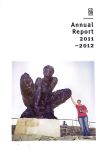 "DADAA Annual Report 2011-2012" DADAA Annual Report 2011-2012 - information about Vision, Mission and Goals, Chairperson and Executive Director’s Reports, Staff list, Participation, Programs including the Lost Generation Project, Sculptures by the Sea Tactile Tours, StARTSpeak, Art Link Children and Young People’s programs, Aging & Disability, Fourth International Arts And Health Conference, WA Disability Arts Grants Program, Regional Development and Consultancy, Partners, and Financials
 -
 “Arts Access Access All Areas August 2002”
 -
 “Arts Access Victoria – Calendar 1999 – Promotional Calendar” Calendar reads “Arts Access has always enjoyed the artwork produced in these classes. We are now very proud to share same of this work with you in the Saturday Morning Art Class: 1999 Calendar” showcasing the artwork of twelve artists who are participants in the program - Caroline Thompson, Cathy Staughton, Chris Black, Estell Carew, Grant McCormack, John Shirres, Jordan Gestos, Lorna Cleave, Rebecca Stauch, Rebecca Watson, Rosalie Fitzsimmons, Vicki Wilbur.
 -
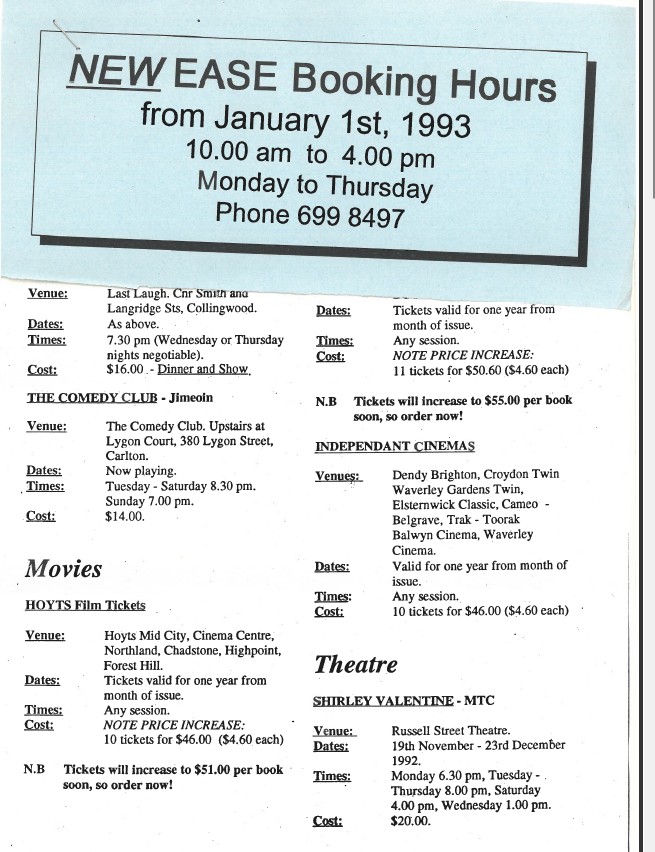 “Arts Access Victoria EASE Entertainment Access Service Ticketing Update December 1992" Arts Access Victoria EASE Entertainment Access Service Ticketing Update December 1992
 -
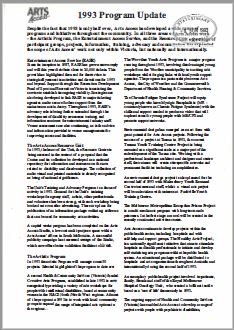 “Arts Access Victoria – 1993 Program Update”
 -
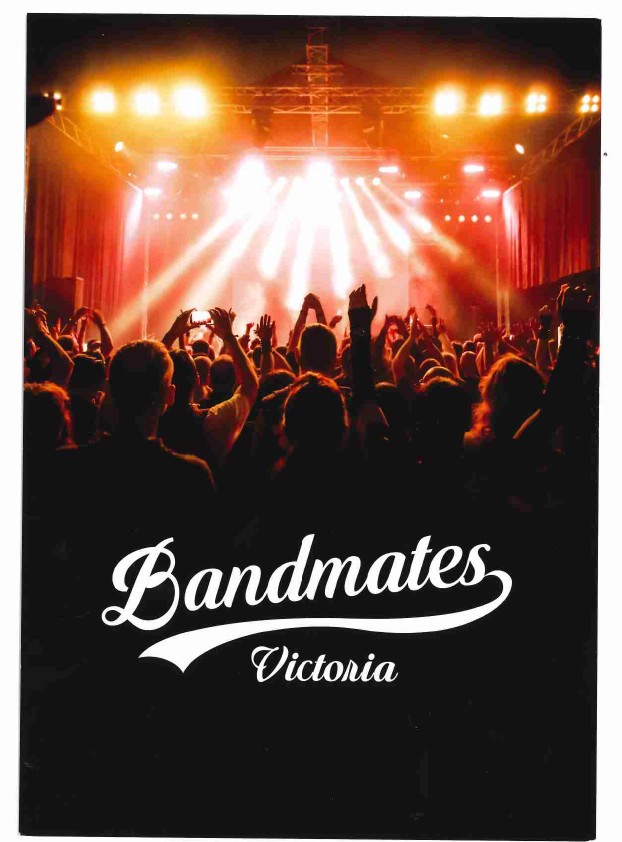 “Arts Access Victoria – Bandmates Victoria - Promotional Card 1" Arts Access Victoria - Bandmates Victoria – Promotional Card – information about AAV program matching people with disabilities and/or mental health conditions with volunteers with comparable music tastes to see live music
 -
 “Arts Access Victoria – Beyond Access Literature Review - 2015"
 -
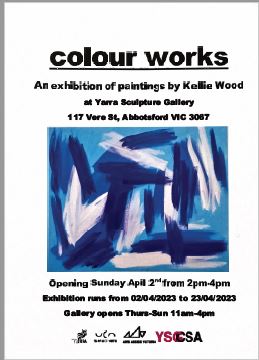 “Arts Access Colour Works Exhibition Promotional Poster 2023”
 -
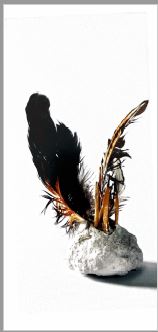 “Arts Access Victoria Connecting to Country 2018 Invitation”
 -
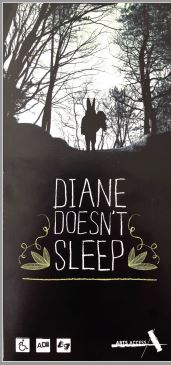 “Arts Access Victoria Diane Doesn’t Sleep ND Promotion Card”