Items
Search full-text
Sit Down Shut Up and Watch
- Restless Dance
- Restless Dance Company
-
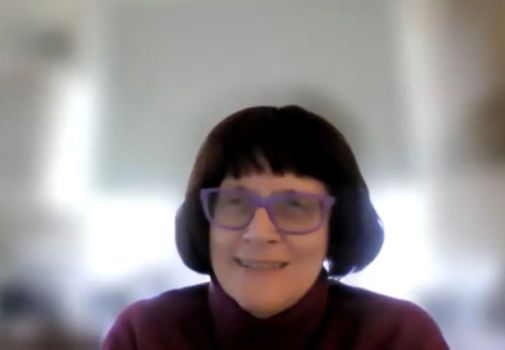 "Interview with Janice Florence" Janice Florence is a performing artist and disability advocate. She originally trained as a Teacher and Librarian. Janice has worked in Education and Libraries for many years and in disability advocacy for 20 years She has worked in Training and Consultation at Arts Access Vic for 12 years. Janice has been involved in theatre, dance and human movement for over 35 years. For 25 years she has been the Artistic Director of Weave Movement Theatre, comprising disabled and non-disabled performers. Weave has produced many devised original works often with respected performing artists as collaborators. She was the inaugural recipient of the Australia Council Awards for Disability Arts-Established Artist in 2019. Interview Summary Janice Florence is a veteran performer and Artistic Director of Weave Movement Theatre, which includes disabled performers. During the interview, Janice reflected on her extensive history with dance, both prior to and after acquiring her disability, highlighting the significance of political and personal themes, as well as the use of humour in her work. She discussed the ongoing challenges in securing accessible rehearsal and performance spaces, along with the complexities of funding and recognition within the Disability Arts scene in Australia. Janice also acknowledged the importance of Disability Arts historically and its potential for challenging societal expectations regarding disability.
 -
"Amanda Cachia (2022) Networks of Care: Collectivity as Dialogic Creative Access, in Amanda Cachia ed. Curating Access: Disability Art Activism and Creative Accommodation. London: Routledge, 219-230" Reads, in part "The collectives that have formed in recent years and that will be the subject of this chapter include the Feminist Health Care Research Group (FHCRG), the Sickness Affnity Group (SAG), and Power Makes Us Sick (PMS). Each of these groups attempts to be intersectional in their approach, focusing on feminist and crip revisions to health care. Feminist and crip unite in the groups as the participants all identify as both women and as disabled. In shared spaces, which can be found in physical spaces, such as an art gallery or an artist’s home, or online through Zoom, artists can offer mutual understanding of their experiences with chronic illness, disability, the medical industrial complex, and simply be a shoulder to lean on in times of anxiety, anger, and sadness. The collectives also offer an opportunity for the artists to lift each other up, creating an environment of respect, dignity, and self-worth, becoming a strong circle of empowerment, affrmation, and allyship. The proliferation of these support groups shows a general shift in social norms, where the medical feld no longer holds the only authoritative voice on health. This phenomenon also indicates how nonmedical health based groups are flling a need and making up for a lack in social support networks elsewhere, particularly within sanctioned medical arenas."
-
"Bree Hadley (2020) Allyship in disability arts: Roles, relationships, and practices. Research in Drama Education, 25(2), pp. 178-194.” "In this article, I propose that investigation of allies, ally skills, and allyship in disability arts is overdue. I articulate some of ways in which non-arts approaches to allyship need to be adapted to meet the needs of disabled artists, given the aesthetic as well as professional and social dimensions of allyship distinctive to disability arts. In doing so, I highlight the need for new theory, terminology, and frameworks to define the different approaches to allyship, developed by different artsworkers, operating in different roles, across the different domains of disability arts and/or arts and disability practice."
-
"Bree Hadley, Donna McDonnald (2019) Introduction: disability arts, culture, and media studies - mapping a maturing field. In Hadley, B & McDonald, D (Eds.) The Routledge handbook of disability arts, culture, and media. Routledge, United Kingdom, pp. 1-18.” Reads, in part "In this book, an internationally recognised collection of established and emerging scholars, artists, and activists from across the US, UK, Europe, Asia, and Australasia come together to trace the development of disability arts, culture, and media studies in recent decades, flag current interests, and forecast future concerns."
-
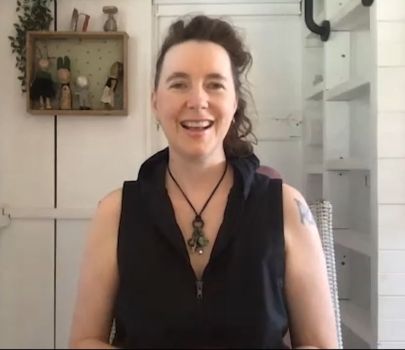 "Interview with Asphyxia" Asphyxia is an artist, author, activist and performer who has founded Amplio, a music app for Deaf and hard of hearing people. She also provides free online Auslan lessons and online art courses. Interview Summary Asphyxia is a Deaf artist whose journey into the arts started with a deep love for ballet, but after facing discrimination due to her Deafness, she pivoted to a successful career in circus performance and later puppetry, which embraced her Deafness and signing skills. Her work in performance art led her to write and illustrate the Awards-winning art-journal book, Future Girl, which explores Deaf identity and environmental issues. She has now moved into music, creating an app that makes music accessible and writing music designed with Deaf and hard of hearing audiences in mind. Although not sure about the major milestones in disability arts history in Australia, she considers her art to be both political and personal, often tackling issues related to her identity as a Deaf person and the aesthetics of disability equipment. While Asphyxia identifies as a Deaf artist, above all, she sees herself as an artist whose work appeals to the mainstream while celebrating Deafness and diversity.
 -
"Bree Hadley (2018) Disability, disabled dance audiences and the dilemma of neuroaesthetic approaches to perception and interpretation. In Wood, K, Brown, A, Waelde, C, Harmon, S, Blades, H, & Whatley, S (Eds.) Dance, disability and law: Invisible difference. Intellect Ltd, United Kingdom, pp. 293-315.” "In this chapter, I want to consider one emerging approach to spectatorship – the neuroaesthetic approach – through the lens of disability spectatorship. In the twenty-first century, neuroaesthetics is gaining traction amongst scholars looking to provide accounts of spectatorship in less story-based performing arts such as classical and contemporary dance, as well as in more story-based practices in drama, theatre and performance. ‘It would be fair to say that neuroaesthetics has become a hot field’, as Alva Noë puts it (2011). To date, though, the assumptions that underpin neuroaesthetic approaches to spectatorship have not been brought together with the assumptions that underpin the equally emergent field of disability spectatorship studies. As Carrie Sandahl (2002: 18) has noted, different cognitive, sensory and corporeal abilities result in a range of different phenomenologies, perceptual processes and perceptual preferences that can in turn produce different styles of engagement with experiences, events and objects. These differences impact on how people with disabilities produce and perceive aesthetic performances – somatically, syntactically, symbolically and socially, as disabled people hear with their eyes, see with their fingers, or perceive phenomena vicariously via the intervention of technologies or translators. Accordingly, disability spectatorship, and more detailed attention to the presence of distinctive cognitive, sensory and corporeal processes amongst disabled spectators, has the potential to complicate, extend and challenge assumptions embedded in emerging neuroaesthetic approaches to spectating."
-
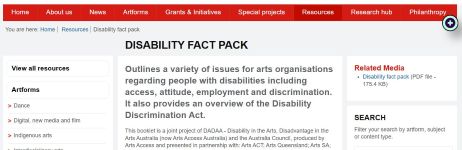 "Australia Council - Disability Fact Pack 1998" The website reads “Outlines a variety of issues for arts organisations regarding people with disabilities including access, attitude, employment and discrimination” - Noelene Gration
 -
“The National Disability Insurance Scheme (NDIS) is launched” Following the spike in interest in the mid to late 2000s, significant steps were made towards the development of the National Disability Insurance Scheme (NDIS). It came about as the result of discussions about alternatives of disability support arrangements from 2007 to 2011. This included National Disability Strategy 2010–2020. A trial phrase of the NDIS was launched in 2013, and the scheme was rolled out across the country from July 2016. The 2022 change of government, which saw the Labor party voted in for the first time in nine years, reflected voter concern for climate change and social policies. The new prime minister Anthony Albanese ordered an independent review of the NDIS. The NDIS Review report was published in 2023 and had a number of recommendations, including affording funding based on functional impairment rather than diagnosis, increasing support for children, a requirement that all providers be registered, and state governments providing supports through other services for people who do not meet NDIS criteria.
-
"Bree Hadley, Janice Rieger (2021) Co-designing choice: objectivity, aesthetics and agency in audio-description. Museum Management and Curatorship, 36(2), pp. 189-203.” "The ‘Vis-ability’ exhibition, presented at the QUT Art Museum in 2019 was an exhibition curated with clear social inclusion goals from the outset. Through it, the museum sought to develop innovative, cost effective, and readily replicable techniques to allow blind and low vision visitors and artists to engage with the institution and its collections. The results affirm the benefits of offering blind and low vision visitors a spectrum of engagement choices, and also affirm that blind and low vision artists and visitors have capacity to make a critical contribution in co-designing that spectrum of choices. This exhibition and its use of multisensorial elements offers a useful prompt to museums to engage this community more fully in co-designing inclusion in the future."
-
"Bree Hadley, Clark Crystal (2017) Style, stage presence, and the poetic subversion of stereotypes: A case study of Blue Roo Theatre Company. Social Alternatives, 36(4), pp. 15-21." "In this article, we consider the work of Blue Roo Theatre Company (http://www.bluerootheatre.org.au/), a Brisbane-based theatre company which “creates contemporary performances lead by the artistry, experiences and imaginations of an ensemble of artists with diverse ability and impairment” (http://www.bluerootheatre.org.au/). Writing from a dual insider-outsider perspective – as a scholar of disability theatre and a creator of disability theatre in conversation – we discuss the work done in the training and rehearsal room in the lead up to Blue Roo Theatre Company’s performances, such as the company’s recent sell-out performance of Orpheus and Eurydice in collaboration with Opera Queensland at the Judith Wright Centre for Contemporary Arts, and the way it creates a distinctive performance style, poetics, stage presence, pleasure for the spectators who come along to witness the results of the work, and sense of community. We document moments in which facilitators, collaborators, co-creating artists, audiences and the media alike feel the physical, psychological, and aesthetic focus and force of voice, movement and character work by people with disabilities. We identify ways in which this stage presence can subvert dominant depictions of people with disabilities as innocent, childlike, or inspirational as significantly as the content of a show. In doing so, we provide insights into Blue Roo Theatre Company’s processes, and the aesthetic results it produces, and contribute to a growing body of commentary around disability theatre and performance, which – though increasingly well understood by those working in the form – clearly can still provide surprises for audiences and commentators anticipating conventional representations of people with disabilities onstage."
-
"Commonwealth of Australia (2019) Key Results of the 2018 Public Consultation: National Arts and Disability Strategy. Canberra: An initiative of the Meeting of Cultural Ministers" Reads, in part "Between 24 September and 3 December 2018, people shared their stories and ideas about arts and disability in Australia. The Meeting of Cultural Ministers asked to hear these ideas and stories. The Meeting of Cultural Ministers is made up of the Cultural Ministers from the Australian Government and state and territory governments. The statistics in the report all come from the online survey. These ideas and stories will help Ministers to make a new National Arts and Disability Strategy.
-
 "Australia Council - Annual Report 2002-03" Australia Council Annual Report 2001-2002 - discusses letter from chair of council, corporate overview, year in review, financial statements, analysis of funding and grants for projects, initiatives, new work, programs, presentation and promotions including funding for implementing the Commonwealth Disability Strategy by evaluating current and changing needs of people with disabilities in the arts sector and reflecting this in funding and policies, arts marketing and audience development and triennial grants to disability arts organisations in NSW, South Australia and Victoria as well as a Fellowship by the Community Cultural Development Board (CCDB) to Tony Doyle to develop models for disability-led community building and on-the-job training for disability support workers and performance of “Soft” by Back to Back theatre at the Melbourne Festival and on tour to Switzerland and Germany.
 -
 "Australia Council - Annual Report 2001-02" Australia Council Annual Report 2001-2002 - discusses letter from chair of council, corporate overview, year in review, financial statements, analysis of funding and grants for projects, initiatives, new work, programs, presentation and promotions including funding for implementing the Commonwealth Disability Strategy by evaluating current and changing needs of people with disabilities in the arts sector and reflecting this in funding and policies, arts marketing and audience development and triennial grants to disability arts organisations in NSW, South Australia and Victoria as well as an image from Crossroad Arts for the exhibition “Shades of White” and the publication “Making the Journey”
 -
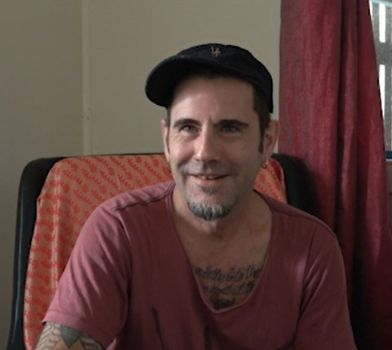 "Interview with Jeremy Hawkes" Jeremy Hawkes is a multidisciplinary artist working in sculpture, drawing, painting and photography as well as being a writer, educator and disability arts leader. Interview Summary Jeremy Hawkes, a visual artist, opened up about his life and identity during his interview. After a debilitating workplace accident, he had to reimagine his sculptural practice due to his acquired disability and ventured into drawing, which helped him cope with multiple operations and diagnoses. Jeremy's art explores themes of identity and the interconnectedness between the macro and the micro, drawing inspiration from neurobiology and medical imagery. Despite his struggles, Jeremy commits to his studio daily, aims for success without fear, and advocates for greater visibility and opportunities for artists with disabilities.
 -
"Queensland Government (2024) Arts and Disability Plan. 25 September 2024. https://www.arts.qld.gov.au/projects-and-initiatives/arts-and-disability-plan-web" Reads, in part "The Queensland Government acknowledges the rights of people with disability to participate equally in the state’s cultural life and to have the opportunity to develop and use their creative, artistic and intellectual potential, as recognised in the United Nations Convention on the Rights of Persons with Disability."
-
"Bree Hadley (2015) Participation, politics and provocations: People with disabilities as non-conciliatory audiences. Participations: journal of audience and reception studies, 12(1), pp. 154-174.” "Disability has always had a prominent place on the theatrical stage. Throughout the C19th, C20th and C21st to date, disabled characters have been used to signify corruption, innocence or suffering, and, of course, as salutary examples of how to overcome such suffering. In the past three decades, the work of disability scholars, activists and artists has also provided opportunities for people with disabilities to produce their own plays, performances or installations challenging these stereotypes. Interestingly, though both the body of literature on theatre makers with disabilities and the body of literature on theatre audiences has grown apace over the past decade, there is still surprisingly little written on people with disabilities as theatre audiences. In this article, I draw on observations made during five years of practical, empirical and theoretical research into disability theatre to discuss how people with disabilities work as a distinctive sub-group of spectators, with distinctive spectatorial processes, modalities and preferences, within contemporary theatre audiences. I begin with the factors that make attending theatre difficult for people with disabilities. I note that people with disabilities respond to the challenges they face in attempting to become active audiences of contemporary theatre in three common ways. I then unpack what these spectatorial modalities teach us about people with disabilities as audiences, other marginalised groups as audiences, as well as about audiences, audiencing and the part audiences play in theatre practice more generally."
-
"Commonwealth of Australia, 2018. Research Overview: Arts and Disability in Australia. Barton: Department of Communication and the Arts, Cultural Ministers Council. Available from: https://www.arts.gov.au/sites/g/files/net1761/f/research_overview_of_arts_and_disability.pdf." Reads, in part "The Research Overview brings together published and unpublished data and research about arts and disability in Australia, and case studies highlighting arts and disability practice around the country. The Research Overview is part of the evidence base for a renewed National Arts and Disability Strategy. The evidence gathered here will be complemented by submissions and survey during a national consultation in 2018."
-
 "Australia Council - Annual Report 1985-86" Australia Council Annual Report 1985-86 - discusses functions and objectives, structures, process and membership of Council, Council Committees and members, Board Members, Assessment panels, staff lists, organisation chart, main activities of Council and its Boards, and includes financial statements and lists of grants made including grants for programs, workshops, tuition and skill development for disabled people in community arts, grant for Theatre of the Deaf Playwright, travel/study grant, Braille Book of the Year award and establishing audio visual gallery accessible to deaf and blind.
 -
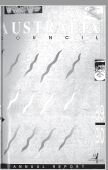 "Australia Council - Annual Report 1989-90" Australia Council Annual Report 1989-90 - discusses objectives, highlights, support for artform development, main activities of Council and its Boards, and includes financial statements and lists of grants made including grants for conferences, access and touring, programs training and resource development as well as publications such as “The Arts and People with Disabilities”
 -
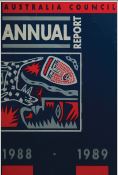 "Australia Council - Annual Report 1988-89" Australia Council Annual Report 1988-89 - discusses objectives, Council Committees and members, board members, allocation chart, main activities of Council and its Boards, and includes financial statements and lists of grants made including grants for community cultural development traineeships, training, programs, projects, performances and promotion and publications including “The Arts and People with Disabilities: A code of practice for arts organisations.”
 -
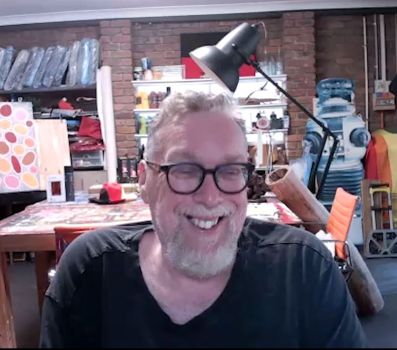 "Interview with Paul Constable Calcott" Uncle Paul Constable Calcott is a proud Wiradjuri man and artist living with a disability on Gubbi Gubbi country….. Uncle Paul uses his art to share stories of his journey as an aboriginal gay man living with a disability in urban Australia. Interview Summary Uncle Paul Calcott is a proud Wiradjuri elder and disability advocate who contracted polio as a child. During the interview, Uncle Paul discusses becoming an artist later in life through the encouragement of his husband and influenced by the storytelling of his culture. He embraces his identity as an Aboriginal, gay man living with disability. He talks about his artwork aiming to celebrate the achievements and contributions of people with disabilities, using traditional symbols to tell new stories, particularly about disability within Indigenous communities. Although there has been increased visibility and acknowledgment of disability arts in Australia, Paul notes that there's still a long way to go in terms of policy, funding, and public recognition. Uncle Paul says art can reflect political and social issues, and he proudly identifies as an artist with a disability and believes in the significance of diverse stories being told through the arts.
 -
"Bree Hadley, Eddie Paterson, Madeleine Little, Kath Duncan (2024) How Disability Performance Travels in Australia: The Reality Under the Rhetoric. In Czymoch, Christiane, Maguire Rossier, Kate, & Schmidt, Yvonne (Eds.) How Does Disability Performance Travel?: Access, Art, and Internationalization. Routledge, Abingdon, Oxon, pp. 62-76.” "The last three decades has witnessed the development of a distinct narrative about how disability performance has become a much celebrated component of the Australian theatre landscape. A central aspect of this narrative is the critical importance of festivals, events, and other industry initiatives that allow disabled performers to travel - both conceptually and corporeally - to meet and be mentored by other artists, and to present their work to new and more mainstream audiences, in new spaces and places, around the country, and around the world. In this chapter, we draw on historical data, collected as part of an AusStage ARC LIEF project designed to database information about disability drama, theatre, performance, and dance over the past 100 years, as well as the Last Avant Garde ARC Linkage project on disability performance in Australia, to unpack areas where the reality seems to challenge some of the dominant rhetoric."
-
”Racheal Missingham, Bree Hadley (2022) Oppression and allyship in Australia's Deaf Arts. Australasian Drama Studies, 80, pp. 304-332.” "In this article, we investigate the history of Deaf theatre in Australia, through the lens of oppression and allyship. Through a review of the to date limited academic, industry, and media literature, in conjunction with survey and interview research with Deaf theatre practitioners, this research sheds light on Deaf theatre makers’ perceptions of the ways in which ally support can operate to create both social benefits and barriers, and how this has impacted on the non-linear development and recent decline in Deaf theatre companies in Australia. It finds that, in developing a framework to scaffold stronger allyship relationships with d/Deaf and hard of hearing artists, it is critical to consider the accessibility and cultural requirements not just in relation to theatre methodologies, but in relation to arts management practices, which support continuing company production, too."