Items
Search full-text
Sit Down Shut Up and Watch
-
“Creative Australia releases reports on arts participation, including d/Deaf, Disabled and Neurodivergent artists and audiences” A series of reports about arts and disability in Australia published in the mid-to-late-2010s are summarised on the Creative Australia website. Sources for the summary include Connecting Australians: Results of the National Arts Participation Survey (June 2017), Making Art Work: An Economic Study of Professional Artists in Australia (2017), Creating Pathways: Insights on support for artists with disability (2018), and Arts and Disability in Australia: Meeting of Cultural Ministers (2018). The overview of this research series demonstrates that disabled Australians’ participation in the arts had increased as access had grown, though equity for disabled artists, especially those with intersecting marginalised identities, continued to face barriers. It reports that work by disabled artists is innovative and transformative.
-
”Bree Hadley, Janice Rieger, Sarah Barron, Sarah Boulton, Catherine Parker (2023) Codesigning Access: A New Approach to Cultures of Inclusion in Museums and Galleries. In Cachia, Amanda (Ed.) Curating Access: Disability Art Activism and Creative Accommodation. Routledge, Abingdon, Oxon, pp. 183-195.” "In museums and galleries, access is often designed and implemented by staff and informed by regulations and guidelines. Codesign approaches have the potential to shift this understanding away from designing access “for” visitors and toward access as a creative process developed “with” visitors. This chapter focuses on the exhibition and practice-led research project Vis-ability: Artworks from the QUT Art Collection, which was presented at the Queensland University of Technology (QUT) Art Museum in Australia in 2019. Vis-ability represented the culmination of five years of international research into access in museums and galleries for visitors who are blind or have low vision."
-
“Activism leads to a Disability Royal Commission” Decades of activism led to a 2019 Senate motion calling for a Disability Royal Commission. The first public hearing of the Royal Commission took place on 16th September, 2019 at Brisbane’s Convention and Exhibition Centre. The Commission resulted in a report in 12 volumes. Several volumes include Volume 3: Nature and extent of violence, abuse, neglect and exploitation, Volume 6: Enabling autonomy and access, Volume 7: Inclusive education, employment and housing, Volume 9: First Nations people with disability, and Volume 10: Disability services. Overall, the Commission presented “222 recommendations on how to improve laws, policies, structures and practices to ensure a more inclusive and just society that supports the independence of people with disability and their right to live free from violence, abuse, neglect and exploitation.” In 2023, the final report of the Royal Commission into Violence, Abuse, Neglect and Exploitation of People with Disability was published with 220 recommendations for a more inclusive nation to reduce exploitation, violence, abuse and neglect of people with disabilities.
-
"Sarah Austin, Kath Duncan, Gerard Goggin, Lachlan MacDowall, Veronica Pardo, Eddie Paterson, Jax Jacki Brown, Morwenna Collett, Fiona Cook, Bree Hadley, Jess Kapuscinski-Evans, Donna McDonald, Julie McNamara, Gayle Mellis, Kate Sulan (2019). The last avant garde? In B. Hadley, D. McDonald ed. The Routledge Handbook of Disability Art, Culture, and Media. London & New York: Routledge, 251-262." "“The Australian Research Council project Disability and the Performing Arts in Australia: Beyond the Social Model – known to collaborators as the last avant garde – is mapping disability performing arts in Australia. We open up this chapter, and our ongoing research project, with the words of the late Tobin Siebers. In researching disability and performance here in Australia, we also acknowledge that since Siebers’ 2010 text, we have seen new experiments and emerging companies pushing the bounds of how bodies feel – in a sector which embraces differences in bodies, but also in thinking, in neurodiversities, in being, in articulating, in appearing, in sensing, in intersectionalities, and in the experiences for audiences. As such, this chapter aims to explore ‘disability aesthetics’ not as a set of specific techniques, themes, or politics, but in order to position disability at the centre of ‘future conceptions of what art is’ and what it can be.”
- DADAA National Network
-
 "Australia Council - Annual Report 2000-01" Australia Council Annual Report 2000-2001 - discusses letter from chair of council, corporate overview, year in review, financial statements, analysis of funding and grants for projects, initiatives, new work, programs, presentation and promotions including funding for music development, implementing the Commonwealth Disability Strategy by evaluating current and changing needs of people with disabilities in the arts sector and reflecting this in funding and policies, arts marketing and audience development and triennial grants to disability arts organisations in NSW, South Australia and Victoria
 -
 "Australia Council - Annual Report 1990-91" Australia Council Annual Report 1990-91 - discusses objectives, organisation chart, year in review, support for artform development, main activities of Council and its Boards, and includes financial statements and lists of grants made including grants for Self Advocacy tor Intellectually Disabled, programs, artists and playwrights in residence and resource development and an increase of Australia Council staff with disabilities following Equal Opportunity Employment program.
 -
 "Australia Council - Annual Report 1981-82" Australia Council Annual Report 1981-82 - discusses objectives, members of council, board members, organisation chart, staff list, council report, programs, board reports, financial statements, publications and grant lists incuding Arts Access Society (Vic) theatre performance of “Theorem” as well as funding for workshops in Artreach, Southern Media Co-operative, disabled playwright in residence, travel costs and artists fees as well as salaries of deaf artists and mime directors and research publication.
 -
 "Australia Council - Annual Report 1982-83" Australia Council - Annual Report Australia Council Annual Report 1982-83 - discusses objectives, members of council, board members, organisation chart, staff list, council report, programs, board reports, financial statements, publications and grant lists including workshops, art production activities, production of magazine, award and performances.1982-83
 -
 "Australia Council - Annual Report 1986-87" Australia Council Annual Report 1986-87- discusses functions and objectives, structures, process and membership of Council, Council Committees and members, board members, assessment panels, staff lists, organisation chart, main activities of Council and its Boards, and includes financial statements and lists of grants made including grants for programs, workshops for disabled people in community arts, funding for posters on theme of disability, grant for Theatre of the Deaf Braille Book of the Year award and Sound Pot Purri literary magazine for Royal Blind Society
 -
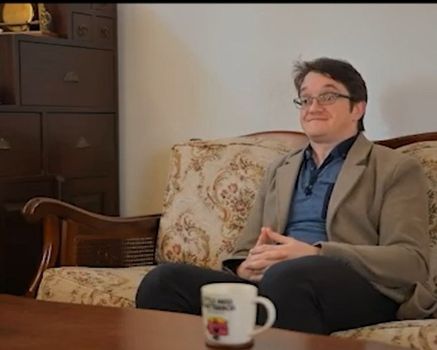 "Interview with Matthew Shilcock" Matthew Shilcock is a stage and film performer, dancer, director, choreographer, producer, project planner, manager, consultant and disability advocate. Interview Summary Matthew Shilcock, a contemporary dancer, lives with osteogenesis imperfecta, a condition that led him to discover dance as an affordable alternative to physiotherapy. His 12-year dance career has been shaped by working with both disabled and non-disabled artists, including elite companies and individual dancers, where he found a passion for the unique problem-solving and rewarding experiences that come with working with disabled dancers. As he transitions from performer to dance maker, Matthew's motivation has shifted from personal excitement and self-discovery to a focus on the next generation, aiming to pass on his unique experiences and methodologies. He acknowledges that while being on stage as a disabled artist can be inherently political, he values his authenticity and the impact of his work over the perceptions and labels placed upon disability in the arts.
 -
"Bree Hadley (2019) Disability arts in an age of austerity. In Hadley, B & McDonald, D (Eds.) The Routledge handbook of disability arts, culture, and media. Routledge, United Kingdom, pp. 347-361." "Is the current “age of austerity” (Summers 2009) impacting on art, culture, and media practices by and about people with disabilities, and, in particular, on art-based protest practices by people with disabilities? In recent years, much has been written about austerity as neo-liberal economic, political, social, and ideological agenda (Harvey 2005; Barnett 2010; Seymour 2014). Much has been written about the way groups effected by local and global governmental shifts towards austerity are protesting, presenting themselves, and being represented by others (Fritsch 2013; Goodley, Lawthom, & Runswick-Cole 2014; Runswick- Cole & Goodley 2015; della Porta 2015; Kokoli & Winter 2015; Beresford 2016; Dodd 2016; Giugni & Grasso 2016; Berry 2017). The question of whether disabled artists are adapting their practices to address these changing cultural circumstances has received less attention (Hadley 2017) and is thus the topic I focus on in this chapter."
-
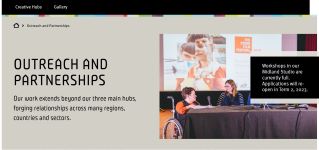 "DADAA Outreach and Partnerships Webpage, captured 2023" DADAA Outreach and Partnerships Webpage, captured 2023 – reads, in part "In addition to its three main hubs, DADAA works with other organisations to take our services and programs to communities, or to develop new services and programs that enhance access to arts and cultural activities for artists and audiences. Arts programs can be customised to respond directly to the needs of your community or clients, to ensure inclusive practice or to bring new audiences to your organisation."
 -
 "Australia Council - Making the Journey: Arts and Disability in Australia" Reads, in part "A collection of inspiring examples of how to include people with disabilities in the arts, as participants, creators and organisers"
 -
"Arts Access Victoria established in 1973 and provides valuable resources and conferences throughout the decades" In 1973, Judy Morton successfully applied for funding to start a 6-month pilot program and Arts Access Victoria was established the following year. However, due to lack of government funding and despite public appeal, programs were suspended in 1977. Fortunately, operation resumed in 1979 and AAV was formally constituted with a small School Commission fund as Arts Access Society Inc. Arts Access Victoria had both organisational and financial growth in the mid to late 1980s. This led to a diversification of arts projects and the beginning of long-term artistic programs which remain as the core programs of AAV. Arts workshops also began in regional Victoria during this time. In 1988, Arts Access was approached to run a national conference focusing on the arts and disability. Two years later, they convened P-art-ICIPATE '90 and subsequently published ‘P-art-ICIPATE '90: a conference report’. They also published ‘Inner Words Outer Spaces’, edited by Bev Roberts (1995), ‘Arts Alive: An Information Leaflet about the Ways the Arts Can Work for Older People’ (1995), ‘Accessible Theatresports’ (1996), and Bev Roberts's ‘Work Guide: How to Establish an Artist in Community Project’ (1996). In 1998, Arts Access (Victoria) assumed responsibility for its own financial management and administration. In 1999, Arts Access Victoria presented Verve!, a national symposium on arts and disability.
-
“Tutti Arts is founded in Adelaide by Pat Rix in 1997” Tutti Arts was founded in Adelaide by Pat Rix in 1997. Initially a choir of people with and without disabilities, it quickly added a focus on visual arts. Tutti has since expanded to offer programs in dance, screen, music, acting, and visual arts, and its choir continues. Programs are on offer in Brighton, Port Adelaide, and in the Barossa Valley, for adults as well as kids and youth. Tutti has performed both nationally and internationally, and has taken part in significant co-productions. Tutti Arts and KickstARt 2 Choir presented Up and Away for the KickstART Festival in Vancouver, Canada in 2004. Tutti’s international performance of 'Between the Worlds' in Minneapolis, Minnesota (2007) was remounted as a coproduction with Interact Center for the Performing and Visual Arts. Tutti returned to Minneapolis in 2009 to perform ‘Northern Lights, Southern Cross,’ which they first performed in 2007 for Adelaide Fringe. It was a collaboration with Interact, which brought together Aboriginal, Native American and Disabled Artists from the Northern and Southern hemispheres “to explore personal, racial and environmental trauma.” In 2009, Tutti Ensemble performed with the State Opera of South Australia to present ‘The Shouting Fence’.
-
"Bree Hadley, Janice Rieger, Eddie Paterson (2024) Reinhabiting, Reimagining, and Recreating Ableist Spaces: Embodied Criticality In Art. In Ellis, Katie, Kent, Mike, & Cousins, Kim (Eds.) The Routledge International Handbook of Critical Disability Studies. Routledge, pp. 48-58." "In this chapter we bring critical disability studies into dialogue with disability artworks that resituate critiques of inaccessibility and exclusion as complicated encounters with space, lived experience and embodiment. Drawing on Irit Rogoff’s (2003, 2006) notions of embodied criticality, and the pioneering work of performance studies scholar Petra Kuppers (2003, 2014), we argue for an embodied, embedded and creative form of critical disability studies – enacted through art. We examine two recent performance and installation works in hotels: Welcome Inn (2019) by British artist Christopher Samuel, and Intimate Space (2017) by Australian performance company Restless Dance Theatre."
-
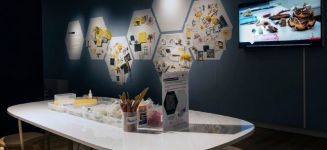 "Janice Rieger, Jasmien Herssens, Megan Strickfaden, Marianella Chamorro-Koc, Bree Hadley (2019) Vis-ability Exhibition." "The United Nations Convention on the Rights of Persons with Disabilities (UNCRPD, 2016) foregrounds the importance of cultural participation to realise human rights for people with disabilities. The creative industries play a critical role in supporting and shaping these social attitudes towards inclusion. Through the theoretical foundation of Design for All (EIDD Stockholm Declaration, 2004) new engagement processes involving a transdisciplinary team from Australia and around the world converged at QUT to co-design more equitable and collaborative forms of knowledge and practice around inclusion. International universities, the EU Commission and the European Institute for Design & Disability collaborated and presented Design for All for the first time in Australia, positioning QUT leadership in this field and as the first non-European member of EIDD-DfA. Co-design methods were employed through, Vis-ability workshops, Making Visible workshops, tactile artefacts and audio description work in the VisAbility Exhibition. Innovative practice was through the Inclusive Film Screening and Wondrous Googles technologies. An innovative model of engagement was created through the DfA Week program and events across sectors. Knowledge was disseminated through academic articles."
 -
"Jung Yoon (2021) Cultural strategy for people with disability in Australia. International Journal of Cultural Policy, 28(2), 187–203. https://doi.org/10.1080/10286632.2021.1916003" Reads, in part "This paper analyses the first cultural strategy introduced in Australia for people with disability and its evaluation reports. For an in-depth understanding of the cultural strategy, it reviews the literature on disability in historical and socio-political contexts, and on human rights for people with disability. It also discusses three key recommendations identified from the evaluations of the cultural strategy: first, to develop an information hub for the arts and disability sector; second, to facilitate collaboration between Australian governments, including arts agencies and national disability support agencies; and third, to revisit and renew the existing cultural strategy"
-
"Commonwealth of Australia (2014) National Arts Disability Strategy Evaluation 2009–2012. Canberra: Meeting of Cultural Ministers: National Arts and Disability Implementation Working Group." Reads, in part "The first evaluation was completed in October 2013 and explores the Strategy's outcomes from October 2009 to December 2012. The Evaluation Report includes input from the Australian, state and territory governments, following targeted consultation with arts and disability stakeholders. The Evaluation Report was endorsed by cultural ministers in October 2014."
-
"Bree Hadley (2022) Disability and the Arts, Creative, and Cultural Industries in Australia. Australian Academy of Humanities" Reads, in part "There are five interrelated factors that support arts workers, arts organisations, and the arts sector at large to develop improved policy, protocol, and training practices."
-
"Commonwealth of Australia (2024) Equity: the Arts and Disability Associated Plan" "Equity: the Arts and Disability Associated Plan (the Plan) was released on 14 November 2024. The Plan is a four-year roadmap of activities to build the foundations for equity for artists, arts workers and audiences with disability across Australia, with an $8.1 million investment in actions to drive change."
-
"Radha O'Meara, Laura Dunstan, Anna Debinski, Catherine Ryan (2023). Disability and Screen Work in Australia: Report for Industry 2023. In Disability and Screen Work in Australia: Report for Industry. Melbourne Disability Institute, University of Melbourne." Disability is a key vector of inequality in Australian society. The screen industry has the potential to create meaningful change, in our workplaces and working practices, for our colleagues and our audiences. We need to pay more attention to disability and take more action to include disabled people in our industry. Disability equity, inclusion and accessibility training tailored to the screen industry can make a significant impact. Consultation, innovation and funding can transform industrial structures to create a more inclusive and sustainable industry for all screen workers. We must normalise talking about and providing access requirements to support disabled workers. The findings of this research reflect the need to build greater understanding, transparency and accountability in order to fully include disabled workers in the Australian screen industry.
-
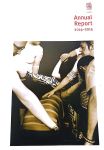 "DADAA Annual Report 2014-2015" DADAA Annual Report 2014-2015 - Chairperson and Executive Director’s Reports, Staff list, Staff training and development, Capital works, Participation, Programs including Projects and Performances, Galleries and Exhibitions, Regional Programs, Sculpture at Bathers, StARTSpeak, Art Link Be Active Program for Children and Young People, Awesome Festival, Community Arts and Recreation Program, Wangaree Community Centre, South African Arts Development Program, DFAT Sri Lankan Fellowship, Circus and Fusion, Nexus Arts Grant, Partnerships, and Financials
 -
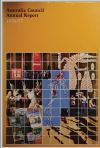 "Australia Council - Annual Report 1976-77" Australia Council Annual Report 1976-77 discusses membership, the year in review including NSW Theatre of the Deaf as the only funded organisation working in nonverbal theatre with production of “King Lear”, and grants paid by Australia Council including Salaries, travel and costs for NSW Theatre of the Deaf and Braille Book of the Year Award, funding the program of entertainment for the old, sick and handicapped in homes, programs including salary and costs for Arts Access Society (Victoria) and performances by Arts Access Society and Arts Council of Australia (Victoria).