Items
Search full-text
Sit Down Shut Up and Watch
-
 "Australia Council - Annual Report 2004-05" Australia Council Annual Report 2004-2005 - discusses letter from chair of council, letter from CEO, corporate overview, year in review, goals, financial statements, analysis of funding analysis and grants list, including funding for key organisations, new work, presentation and promotion, audience participation (with publication “Access All Areas”), skills and arts development with Arts Access partnering with Helicon Dance to provide 10 workshops in Princess Alexandra hospital Mental Health Service to find out which arts the community members wanted to pursue with a reference group including the University of Queensland and funding for Back to Back theatre to perform Small Metal Objects, in collaboration with sound artist Hugh Covill, animator Rhian Hinkley, director/designer Bruce Gladwin to shed light on, provoke and transform society, and to position artistic creativity as an integral part of the nation’s agenda. Triennial funding to Arts Access Australia (formerly known as Disability in the Arts Disadvantage in the Arts Australia—DADAA)
 -
 "Australia Council - Annual Report 2003-04" Australia Council Annual Report 2003-2004 - discusses letter from chair of council, letter from CEO, corporate overview, year in review, financial statements, analysis of funding analysis and grants list, including funding for conduct national research to identify ways of addressing barriers to access for audiences with disabilities and their carers, funding for the publication, “Don’t Give Up Your Day Job”, included survey questions specifically related to artists with disabilities, arts marketing and audience development and triennial grants to disability arts organisations in NSW, South Australia and Victoria as well as funding to conduct national research to identify ways of addressing barriers to access for audiences with disabilities and their carers and three year funding for Accessible Arts to continue Audience Development.
 -
 "Australia Council - Annual Report 1998-99" Australia Council Annual Report 1998-99 - discusses letter from chair of council, functions, profile, organisation chart, corporate overview, year in review, arts funding, main activities of Council and its Boards, and includes promoting the importance of accessibility in the arts for all people with and without disabilities with workshops for arts organisations and training for Australia Council staff, financial statements and lists of grants made including grants for programs, projects, information and advocacy with Restless Dance Company being the first youth dance company to receive a Triennial Grant.
 -
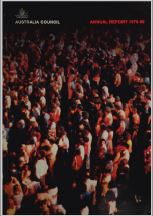 "Australia Council - Annual Report 1979-80" Australia Council Annual Report 1979-80 discusses members of council, standing committees and board reports as well as financial statements, grants lists, planning for the nternational Year of Disabled Persons (IYDP) 1981 including publications of a study to identify options of disabled gaining greater access to the arts and programs and grants for Braille and Talking Book Library for its Braille Book of the Year, salaries of staff and funding for production of “The Threepenny Opera”, workshops and travel costs of NSW Theatre of the Deaf, funding for residents of the Lorna Hodgkinson Sunshine Home for the intellectually handicapped who gave a performance at the Sydney Opera House
 -
 "Interview with Simone Flavelle" Simone Flavelle is a producer and consultant to artists with disability and the arts and film sectors. Interview Summary During an in-depth discussion about disability arts, Simone Flavelle outlined their career trajectory, emphasizing early work at Rocky Bay, involvement with Disability in the Arts Disadvantage in the Arts Australia (DADAA), and noted milestones in the field, including the impact of the NDIS on choice and control for artists. She discussed the evolution of public perception towards disability arts and the ongoing challenges with inclusivity and accessibility in various spaces. Simone also touched on the politicization of art by disabled artists, the complexity of identity among these artists, and the spectrum of how disability pride is embraced.
 -
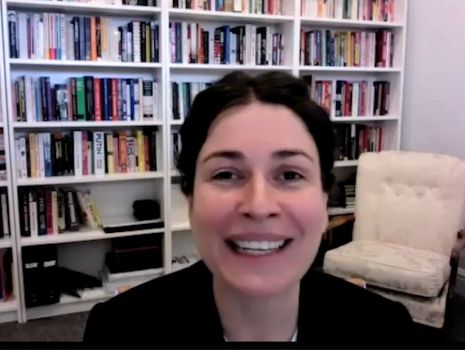 "Interview with Astrid Edwards" Astrid Edwards is a writer, publisher, lecturer, podcast host and disability advocate. Interview Summary Astrid Edwards, a former teacher and policy consultant, discusses in the interview how she pivoted her career towards writing and literature after being diagnosed with multiple sclerosis at 32, inspiring her to focus on work she loves. Astrid talks about writing at RMIT University, working with a diverse cohort of students, (many of whom have disabilities or are writing about trauma), which she finds rewarding. Though her work includes advocacy roles and a focus on disability, she does not wish to be defined solely by her illness, emphasizing the importance of allowing disabled individuals the freedom to explore and create beyond their disabilities. Currently, Astrid says she is a judge for the Stella Prize and discusses exploring a potential PhD about publishing and climate fiction, expressing a passion for addressing climate change within her work.
 -
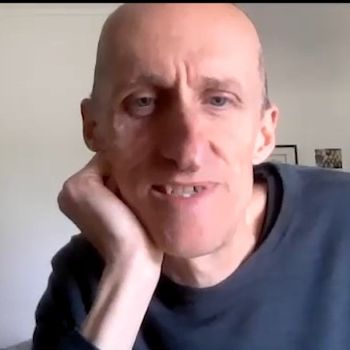 "Interview with Andy Jackson" Andy Jackson is a published poet focusing on disability and difference, has completed a PhD and is a lecturer of poetry and creative writing. INTERVIEW SUMMARY This is an oral history interview with poet Andy Jackson. Andy, who has Marfan syndrome, discusses how disability and visible difference have shaped his writing and poetry, explaining that he often writes about the meaning of the body within society. He emphasizes the importance of Disability Arts, noting a growing community of disabled writers and expressing the need for both disability-specific literary spaces and mainstream recognition. Andy also highlights the transformative role of online communities in creating networks for disabled individuals and the emergence of disability-focused literary journals, anticipating an anthology from a collaborative writing project he is involved with.
 -
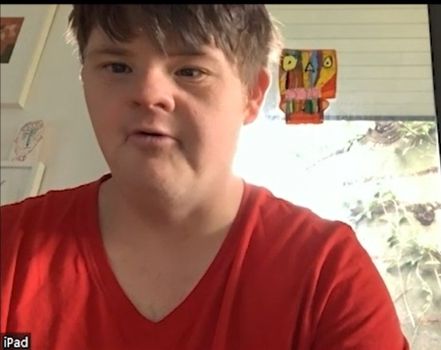 "Interview with Digby Webster" Digby Webster is a visual artist working with the mediums of oil pastels and acrylics and is also a performer, designer and co-founding member of past performance ensemble Ruckus Ensemble. Interview Summary Digby Webster is an artist with a wide range of creative talents, including theater, dance, animation, and mural painting. He has worked on various projects, including an animated short film called "Blockhead and Sparkles," and has had his artwork displayed in places like the Sydney Olympic Park and Vivid Sydney. Digby does not define himself by his disability and takes pride in the various creative endeavors he's involved in, aiming to have his art reach people in meaningful ways outside traditional galleries. In the future, he is interested in exploring fashion, designing artwork for clothing, and he hopes to see more people wearing his art.
 -
"Australia Government (2019) My Art Goals: NDIS and the Arts. Canberra: Department of Communication and Arts." Reads, in part "My art goals shows some of the ways National Disability Insurance Scheme (NDIS) participants who have creative or cultural jobs, or who want to participate recreationally in the arts, can reach their goals. My art goals provides information about how the NDIS might support participants with arts goals, or about what supports or services might be available outside the NDIS."
-
"Screen Australia (2023) Seeing Ourselves 2: Diversity, equity and inclusion in Australian TV drama. Screen Australia" Reads, in part "Screen Australia has released new research into diversity on Australian screens, titled Seeing Ourselves 2: Diversity, Equity and Inclusion in Australian TV Drama. A follow up to the landmark 2016 study, Seeing Ourselves 2 examines the diversity of main characters in 361 scripted Australian TV and online dramas broadcast between 2016 and 2021, how this compares to the Australian population, and what has changed since the previous Seeing Ourselves report."
-
"Bree Hadley (2016) Cheats, charity cases and inspirations: disrupting the circulation of disability-based memes online. Disability and Society, 31(5), pp. 676-692." "With the increasing part online self-performance plays in day-to-day life in the twenty-first century, it is not surprising that critiques of the way the daily social drama of disability plays out in online spaces and places have begun to gain prominence. In this article, I consider memes as a highly specific style or strategy for representing disability via social media sites. I identify three commonly circulating categories of meme – the charity case, inspiration and cheat memes – all of which offer representations that people with disabilities find highly problematic. I then investigate the ways in which disabled people have begun to resist the representation and circulation of these commonly circulating categories of memes, via the production of counter or parodic memes. I focus, in particular, on the subversive potential of these counter memes, within disability communities online and within broader communities online."
- "Bree Hadley (2021) What's in a name? The politics of labeling in disability performance. In Rai, Shirin, Gluhovic, Milija, Jestrovic, Silvija, & Saward, Michael (Eds.) The Oxford Handbook of Politics and Performance. Oxford University Press, New York, NY, pp. 531-543.”
-
 "Bree Hadley, Katherine Dionysius, Sarah Boulton (2019) Vis-Ability: Audio descriptions. In Vis-ability: Artworks from the QUT Art Collection. QUT Art Museum, Brisbane, Qld, pp. 45-53." "Bringing together a selection of recent acquisitions from the QUT Art Collection ,Vis-ability has been conceived as a project to broaden understanding of the lived experiences of people who are blind and people with low vision. Drawing on research in QUT's Creative Industries Faculty, Vis-ability proposes alternative ways of engaging with the collection, considering how technologies can deepen our understanding of vision and challenging our sight-driven experience of art. In this essay, QUT artist scholar and audio description author Associate Professor Bree Hadley, curator Katherine Dionysius, and blind artist and exhibition guide Sarah Boulton examine the principles, processes, and challenges of producing audio descriptions and associated engagement strategies to enable creative new forms of audio encounter with visual art works."
 -
"Janice Rieger, Bree Hadley, Katherine Dionysius, Michael Whelan (2019) VIS-ABILITY: Audio Description of Brown, Green and Cattapan's 'War and peace #7: Empire' (2011)." "This is an audio description of Lyndell Brown, Charles Green and Jon Cattapan's artwork 'War and peace #7: Empire', narrated by Dr Bree Hadley and recorded by Michael Whelan. This recording was produced in partnership with QUT Creative Industries Faculty for the exhibition, 'Vis-ability' at QUT Art Museum, from 11 May to 4 August 2019."
-
 "Arts and Disability: A research summary" Australia Council - Arts and Disability: A research summary, 2018 - reads, in part "The great art created by artists with disability, and participation of people with disability in the arts, are integral to the artistic and cultural life of Australia. This summary brings together findings from Australia Council research publications and a research overview compiled by the Meeting of Cultural Ministers to build the evidence base about disability and the arts."
 -
"Una Rey (2022) Art and sensoria: Whose disability? ArtLink, 42(2), pp.8–11." "SENSORIA: Access & Agency is ArtLink’s effort to affect this swell by providing a platform for divergent perspectives and nuanced articulations of being an artist. Whatever the prevailing conditions. It also invites a discussion within contemporary art discourse that is not driven by fear (of getting it wrong, of ‘the other’, of adding injury to trauma). Art is our place of intersectionality: if you’re reading ArtLink, you’re already on the margins, and quite possibly on the spectrum."
-
“‘Arts and Disability: A Research Report’ published in 1995” In 1995, ‘Arts and Disability: A Research Report’ was published. Des Walsh and Juliet London were commissioned by the Australia Council to prepare the report. However, they found little information that was relevant to the theme of the report. In addition to a review of existing literature, they met with people involved in arts organisations, disability organisations and organisations dedicated to both, as well as funding bodies. Walsh and London outlined the different ways that disabled people interact with the arts: as artists, consumers, and through art therapy. They also recognised the “negative or unduly limiting notions attached to arts in relation to disability” (12). Overall, they found “no conclusive evidence […of a] widely shared, articulated concept of a ‘disability arts’ movement in Australia” at that time. The report was intended to inform meaningful policy going forward. They made recommendations related to buildings and physical barriers, leadership, education and training and action plans.
-
"Juliet London and Des Walsh (1995) Arts & Disability: Report Australia Council: Surry Hills." Juliet London and Des Walsh - Arts & Disability, Australia Council 1995 - Reads, in part "The Australian Bureau of Statistics estimates that 18 per cent of the Australian population has a disability. There is a basic lack of data on participation in the arts by artists with a disability. No figures were available on the number of people with disabilities applying for grants from the Australia Council or from State or Territory arts agencies. The current dearth of statistical information needs to be overcome by systematic and sustained research."
-
 "DADAA Annual Report 2013-2014" DADAA Annual Report 2013-2014 - information about Vision, Mission and Goals, Chairperson and Executive Director’s Reports, Staff list, Staff training and development, Capital works, Participation, Programs including Sculptures by the Sea Tactile Tours, StARTSpeak, Art Link Be Active Program for Children and Young People, Esperance: The Emergence Project, HERE&N0W13, Aging & Disability, Regional Arts Australia Summit, Nexus Arts Grant, Regional Development and Consultancy, Partners, and Financials
 - DADAA Network
- National Disability Insurance Scheme (NDIS)
-
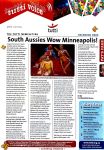 "Tutti Arts - Tutti Voice Newsletter December 2009" Tutti Arts - Tutti Voice Newsletter December 2009 - reads, in part "It is great to be back in South Australia with the Tutti team who made the trip to Minnesota. Northern Lights, Southern Cross was a marvellous experience complete with huge challenges and moments of exhilaration, and it was wonderful working both with Interact and at the ultra-modern and very accessible Guthrie Theater. We were delighted that our South Aussie patron's film The Boys are Back opened around the same time and that both Scott and Tutti won critical acclaim from the Minneapolis press. In fact, Northern Lights, Southern Cross broke all box office records for the Guthrie and attracted a broad mainstream, Native American, and African American audience. Dozens remained behind after every performance for post-show discussions looking at themes of trauma and healing central to the show and by closing night Northern Lights, Southern Cross had truly succeeded in raising awareness about barriers that exclude. We also knew that audiences everywhere are hungry for original work created through the melting pot of radical inclusion."
 -
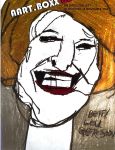 "Accessible Arts and Tin Sheds Gallery - AART-BOXX 2008 - Program" Accessible Arts and Tin Sheds Gallery- AART-BOXX 2008 Program - reads, in part "AART.BOXX is an exhibition and cultural initiative that highlights the current and diverse art practices of young and emerging artists with a disability. Initiated by Accessible Arts, the peak arts and disability body in NSW, AART.BOXX aims to extend and challenge current discourses within contemporary art by including art practices that are informed by cultures of disability. These artists are a creative force whose unique voices are often marginalized within the broader cultural context."
 -
 "Tutti Arts - History of Autism - Program" Tutti Arts 'History of Autism' 2014 Program - reads, in part "History of Autism is about two things, firstly it is about the evolution of Autism as a clinical diagnosis in the Twentieth Centurv, ax well a giving an overview of a "Nut Shell" explanation of how Autism can be viewed. Secondly, it's the untold story of what generations of forgotten people went through. The pain, anguish and ridicule suffered by people when diagnosis a was not an option, as well as the constant striving tor an identity. About Company @ (Autistic Theatre) Company @ began as AAA Theatre group run by Autism SA in the 1990's and it is believed to be the only wholly Autistic run and led Theatre Company in the world. Company @ inspires and connects people with an Autism Spectrum Disorder through the process of creating and presenting powerful theatre pieces. The company contributes to the creative and cultural life of the Australian and broader communities through collaboration, innovation and education.”
 -
 "Australia Council - Annual Report 1994-95" Australia Council Annual Report 1994-95- discusses functions, organisation chart, year in review, work to overcome inequities experienced by artists with disabilities with a review of arts and disabilities developing into an action plan by 1997, artform development, main activities of Council and its Boards, and includes financial statements and lists of grants made including grants for programs, projects, creative development of organisations and an international cultural exchange program.