Items
Search full-text
Sit Down Shut Up and Watch
-
 "REWIND - Strategies for _Integration - A training seminar presented by Accessible Arts Inc - 1992" REWIND - Strategies for _Integration - A training seminar presented by Accessible Arts Inc - 1992 - reads, in part "Accessible Ans Inc. is an organisation which encourages and promotes the development of opponunities for people with disabilities to have access to and participation in all creative artforms. Accessible Arts began, in 1985, as an arts project for people with disabilities at Community Activities Network. In 1989 Accessible Arts became an independent, non-profit organisation incorporated as an Association. During 1990 Accessible Arts was financially supported by the State and Federal Governments to establish a statewide service for people with disabilities. The change from activities project to a statewide service has been significant. The organisation has compiled a state profile on what art facilities are available to people with disabilities in New South Wales; provides a consultancy service for artists, people with disabilities, disability services and arts organisations; assists the general community to initiate their own art programs and projects through the establishment of regional networks; provides training programs in the area of art and disability; produces publications; and, acts as an advocacy/educational body for the promotion of access and equity in the arts. The Rewind Seminar was initiated after expressions of interest and concern were directed to Accessible Arts about the need for strategies to effectively involve people with disabilities in arts practice."
 -
 “Tutti Arts – Tutti Choir – Christmas Celebration 2014 - No More Turníng Away - Program” Tutti Arts – Tutti Choir Christmas Celebration 2014 'No More Turníng Away' Program- reads, in part "“The Tutti Choir is Australia's first inclusive choir and takes its name from the musical term Tuti', meaning everyone. From its origins in 1997 as a small singing group at Minda, the choir has grown into a vibrant independent multi arts organisation, deeply connected into the disability and mainstream arts worlds of South Australia and beyond. With its strong commitment to access and inclusion, Tutti is both a grass roots nurturer of disabled artists and a creator and presenter of high quality work which brings disabled artists, and community and professional artists together for performances and exhibitions.”
 -
 "Australia Council - Annual Report 2014-15" Australia Council Annual Report 2014-2015 – discusses purpose, reports from chair and CEO, year in review, report from the CEO, Strategic priorities, funding overview, statement of outcome, about the Australia Council including The Governing Council and the Board, Structure of the Australia Council with new grants model; performance outcomes, manageability and accountability, financial statements and discussion of capacity building programs in partnerships with artists with disabilities, increasing audiences of people with disabilities, programs of dance including a research project between QUT and UQ about Queensland Ballet collaborating with Parkinson’s Queensland, and the New York based Mark Morris Dance Group to deliver weekly dance classes for 500 people around Brisbane affected by Parkinson’s disease and a program run by Crossroad Arts for two major dance and photography projects in 2015
 -
 "Australia Council - Annual Report 1996-97" Australia Council Annual Report 1996-97- discusses letter from chair of council, functions, profile, organisation chart, corporate overview, year in review, arts funding, main activities of Council and its Boards, and includes professional development activities, financial statements and lists of grants made including grants for programs, projects, information and advocacy with an Arts and Disability action plan.
 -
 "Australia Council - Annual Report 1978-79" Australia Council Annual Report 1978-79 discusses membership, members of boards, senior staff list, principals and precautions of grants, grant lists, programs including funding for multi arts camps for handicapped children, salaries and travel for NSW and QLD Theatre of the Deaf, and presentation and production costs for Braille and Talking Book Award for 1979.
 -
 "Australia Council - Annual Report 1983-84" Australia Council Annual Report 1983-84 - discusses main activities of Council and its eight Boards, and includes financial statements and lists of grants made including artist fees, performances for handicapped, production of radio material for blind, and activities for Theatre of the Deaf.
 -
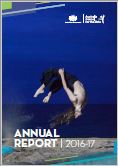 "Australia Council - Annual Report 2016-17" Australia Council Annual Report 2016-2017 – discusses purpose, reports from chair and CEO, year in review, report from the CEO, Strategic priorities, funding overview, statement of outcome, about the Australia Council including The Governing Council and the Board, Structure of the Australia Council with new grants model; performance outcomes, manageability and accountability, financial statements and discussion of the final year of delivering $1.3 million over four years to support artists with disability with their careers and funding more organisations to support producing and touring disability-led and mixed-ability arts practice as well as mentoring arts leaders with disabilities and publication of the Council’s 2014–16 Disability Action Plan review.
 - Noelene Gration
-
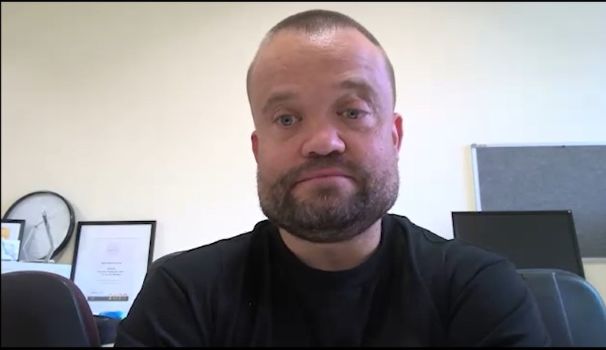 "Interview with Jeremy Smith" Jeremy Smith is a Senior Producer in Western Australia at Performing Lines, has a long career across community, experimental and performing arts, is a disability advocate and previously worked in Australia Council for the Arts (now Creative Australia) as Director – Community Arts and Experimental Arts. Interview Summary Jeremy Smith has vast experience in the arts including working as a director with Australia Council (Creative Australia). Jeremy is currently an arts worker in the performing arts sector. While Jeremy lives with Achondroplasia, he has not always identified as disabled however a transformative project for the 2016 Perth Festival led him to embrace his identity as a disabled person with pride recognising the complexities surrounding personal identification with disability. Jeremy talks about artists and organisations he finds inspirational who are leading change in the disability arts sector and his motivation to also advocate for inclusion and the evolution of public perception of disability arts work.
 -
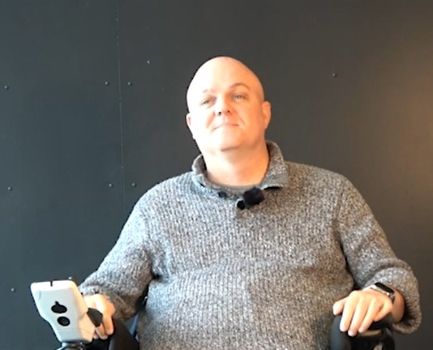 "Interview with Tim McCallum" Tim McCallum is a singer, performer and speaker and disability advocate. Interview Summary Tim McCallum is a performer who specializes in singing and acting, with singing being his foremost talent. Having sustained a spinal cord injury resulting in quadriplegia before beginning his studies at the Western Australian Academy of Performing Arts, Tim's childhood passion for the performing arts has continued to motivate his career. Through his experiences, both positive and negative, regarding inclusion and discrimination in the arts, Tim has become determined to challenge preconceived notions and make disability a visible and celebrated aspect of performance. He is a strong advocate for the representation of artists with disabilities in leadership roles within arts governance, stressing the importance of lived expertise over tokenism for lasting change in the industry.
 -
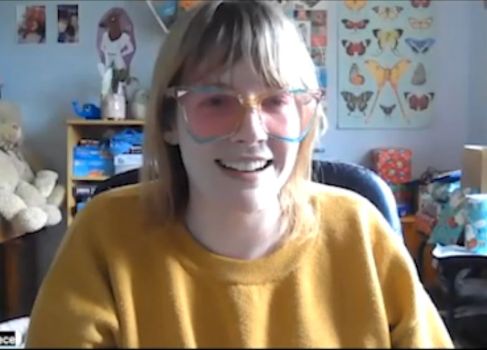 "Interview with Alex Creece" Alex Creece is writer, poet, editor, collage artist, and average kook living on Wadawurrung land. Interview Summary Alex Creece, focused on her experiences and journey as a disabled artist and writer in Australia. Alex discussed the importance of building a community and the challenges of balancing personal identity with maintaining professionalism in art. Alex expressed a desire for increased accessibility and recognition in the industry, highlighting the need for continued support of disabled artists. Throughout the conversation, the complexity of disability arts' visibility, identity politics, and the definition of creative success were explored, with Alex providing insight into her own work as well as broader industry trends and challenges.
 - Gerard Goggin
-
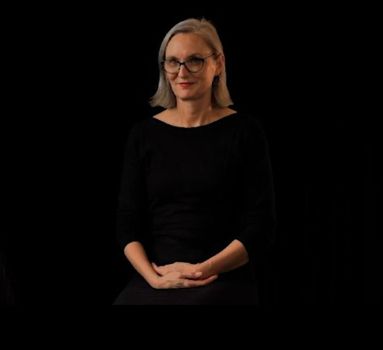 "Interview with Roz Hervey" Roz Hervey is a Creative Producer with Restless Dance Theatre and is also a director, dance theatre performer and lecturer. Interview Summary: Roz Hervey, the creative producer of Restless Dance in Adelaide, previously worked as a dancer and dance theatre artist in Australia and the UK. Her approach with Restless Dance involves creating personal and reflective dance theatre by giving dancers specific tasks. Roz does not view the performers as disabled but as exceptional artists telling unique stories, and she aspires to change societal attitudes and encourage diversity in art. Despite progressing towards inclusive perceptions, she still encounters patronizing attitudes and misconceptions about artists with disabilities.
 -
 "Australia Council - Annual Report 2021-22" Australia Council - Annual Report 2021-22 - reads, in part "Following a review of our 2019–21 arts and disability initiatives, the Council expanded support for sustainable careers and the celebration of the achievements of artists with disability. We have committed investment of almost $1 million over 2022–24 through the National Arts and Disability Awards, Mentoring Initiatives, as well as a new fellowship for d/Deaf and Disabled artists. We will also continue our partnership with Arts Access Australia on the awards." and "Safe in Sound is an exploratory concert series for people with disability and their families and supporters. The group offers real-time, in-person interaction, connection and communication through sound as an alternative to listening to recorded music or watching television."
 -
"SENSORIA: Access & Agency. ArtLink Magazine Issue 42.2, Spring 2022." Reads, in part "This issue platforms a range of contemporary art practices and debates written by and with artists who identify as part of the disabled, d/Deaf, vision impaired or neurodiverse communities. The commissioned essays, profiles and conversations offer diverse perspectives of lived experience and (in)visibility in the art worlds of Australia, Aotearoa/New Zealand and the UK."
-
"Screen Australia (2016) Seeing ourselves: Reflections on diversity in Australian TV drama. Screen Australia" Reads, in part "Whose stories are our TV dramas exploring? Screen Australia has benchmarked current levels of diversity in Australian TV drama and explore the challenges and opportunities involved in making TV drama more broadly representative of Australian society."
-
"Katie Ellis (2019) Disability and Digital Television Cultures Representation, Access, and Reception. London & New York: Routledge." Reads, in part "Disability and Digital Television Cultures offers an important addition to scholarly studies at the intersection of disability and media, examining disability in the context of digital television access, representation and reception."
-
"Cultural Ministers Council (2009) National Arts & Disability Strategy." Reads, in part "On 9 October 2009, the Cultural Ministers Council agreed to the National Arts and Disability Strategy, which sets out a vision for improving access and participation in the artistic and cultural activities for people with disabilities. The Strategy provides a framework within which jurisdictions can assess and improve existing activities. It also identifies new priority projects that could be progressed as national initiatives or by individual jurisdictions."
-
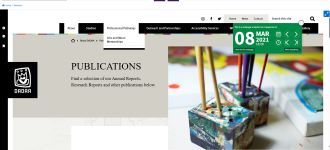 "DADAA Publications Webpage, captured 2021" DADAA Publications Webpage, captured 2021 - Annual Reports 2014-2019, Newsletters 2016-2019, and research reports, including Art Works: Employment in the Arts for People with Disability (2012), and Same Drum CACD Project With Young People from Migrant and Refugee Backgrounds (2018), Oddysea project with Sensorium Theatre (2014), the Lost Generation project (2011)
 -
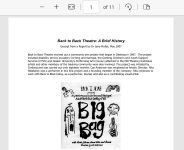 "Back to Back Theatre - Website - BriefHistory, captured 2008" Back to Back Theatre 'Brief History' page, with PDF document of history captured 2008 - reads, in part "Back to Back Theatre evolved out a community arts project that began in Geelong in 1987. The project included disability service providers Corilong and Karingal, the Geelong Children's and Youth Support Services (CYSS) and Deakin University's Performing Arts Course (attached to the Mill Theatre) Individual artists and other members of the Geelong community were also involved." Includes list of Professional Productions (including ‘Big Bag’ 1987-88; ‘Stinking Houses’ 1989; ‘The Peg Machine’ 1990; ‘Everything and the Mermaid’ 1990, ‘I Don’t Want to Live in Lara Anymore 1991; ‘Yell Blue Murder’ 1991; ‘Woodenhead’ 1992; ‘The Adventures of Bobbi Dazzler’ 1992; ‘Voices of Desire’ 1993; ‘Freak Show with Circus Oz 1994; Back to Back in Shorts 1995; Road Movie with Melbourne Workers Theatre 1996; Minds Eye with Handspan Visual Theatre 1996; Peter Pan with Arena Theatre Company 1997; Mr September 1997; Boomtown with Snuff Puppets 1998; Mental 1999; Dog Farm 2000; Pornstar 2001; Soft 2002; Cow 2003; Small Metal Objects 2005), and Community Productions (including Ritual with Matthew Flinders Girls Secondary College 1998; Push Push 1999; Drag Racers in Love with Nelson Park School 1999; Arnold 2000 Fishman with Theatre of Speed 2001; Inside the Angel House with Theatre of Speed 2003; Minotaur with Theatre of Speed 2005; DMI with Theatre of Speed 2007; Pod Residences with Night School, Awakenings Festival, Brr Theatre Group, Ants Pantz Arts, Break of Day Players, Theatre of Speed, Arts Action and Amalgamation Festival 2003-2006), and films (including Mullet (1995), White Maggots (1996), Spill (1997), Mark Deans Human Cannonball (1998), Underpants (1999), Backscratch (2000), Porn Star (2002), Rhian Hinkley Theatre of Speed vs. BOZ'n'HOK, vs. HUGE COVILL (2004), D9 (2005), Out of our Minds (2001)).
 -
"Australia Council - Annual Report 2020-21" Australia Council - Annual Report 2020-21 - reads, in part "• We awarded two new prestigious National Arts and Disability Awards on the International Day of People with Disability in December 2020, to Emily Crockford and Gaelle Mellis. The Council partnered with Arts Access Australia (AAA) on our 2020 Arts and Disability Awards supporting the Arts Access Australia’s National Leadership Award to recipient Abbie Madden.", and "Research underway includes analysis of data from the Australian Consortium for Social and Political Research Incorporated (ACSPRI) national study on social inequality, analysis of access and equity in the online sphere and an Australian Research Council (ARC) Linkage Partnership exploring the evolution of Disability Arts in Australia."
-
“National Arts and Disability Strategy is launched in 2009” In 2009, the National Arts and Disability Strategy was agreed on by Australian Cultural Minister’s Council. The strategy sought to improve access and participation in the arts and identified four priority areas: barriers to access and participation, supporting the creative practice of artists with disability, developing audiences for disability arts practice, and strengthening policy and planning within governments.
-
“Screen Australia commissions the reports ‘Seeing Ourselves’ (2016) and ‘Seeing Ourselves 2’ (2023)” In 2016, Screen Australia commissioned a report "Seeing ourselves: Reflections on diversity in Australian TV drama". The report highlighted the lack of characters on TV with a disability. When characters with a disability were part of the story they were played by actors without a disability and were portrayed as either unemployed or retired. Screen Australia commissioned a follow-up report in 2023 called "Seeing Ourselves 2 - Diversity, equity and inclusion in Australian TV drama". This report shows that, while diversity is a global conversation and there is an increase of disability representation, it remained significantly lower than the actual disabled population.
-
“Angharad Butler-Rees, Bree Hadley(2023) Exploring the Role of the Disabled Body as a Vehicle and Art Form within Anti-Austerity Protest. In Zebracki, Martin & McNeill, Z. Zane (Eds.) Politics as Public Art: The Aesthetics of Political Organizing and Social Movements. Routledge, Abingdon, Oxon, pp. 116-132.” "The impact of neoliberal austerity policy is being felt by people with disabilities across the globe. This chapter attends to disability protest in response to austerity across two contexts—the United Kingdom and Australia. It examines how people with disabilities are choreographing their protest, the strategies they are using, and the outcomes they are seeking."
-
"Australia Council for the Arts (2018) Arts and Disability a Priority as Australia Council Commits
Significant New Funding. 24 September 2018." Reads, in part "The Australia Council has committed $750k over three years to support sustainable careers and to recognise the artistic excellence of artists with disability."