
Items
Search full-text
Sit Down Shut Up and Watch
-
 "Tutti Arts -Tutti Kids - Under The Sea - Promotional Flyer" Tutti Kids and Youth 'Under the Sea' Promotional Flyer – reads, in part "Join Tutti's youngest artists for a show-and-tell of the work they've created this year, in an ocean-themed performance and visual arts extravaganza!"
-
 "Tutti Arts - Visual Arts Studio - Bowerbird Market Stall - Promotional Card" Tutti Arts Visual Arts Studio - Bowerbird Market Stall - Promotional Card - reads, in part "Tutti Visual Arts will be at the Bowerbird Bazaar Design Market. Come and support the Tutti visual artists and bag yourself a wonderful Mother's Day gift."
-
 "Tutti Arts - Vivid Barossa - Promotional Postcard" Tutti Arts 'Vivid' Barosa Exhibition 2023 Promotional Postcard -reads, in part "Vivid Barossa is a collection of stunning cyanotype prints by the artists at Tultti's Barossa studio. The works explore self-expression and how it intersects with notions of the traditional and contemporary"
-
 Disability Arts History Australia Launch 2025 - Archiving, Access and AI Report
-
"The first Arts Activated conference takes place" Accessible Arts NSW started biennial Arts Activated conferences in 2007 "to inform, connect and activate people and organisations involved with Australia’s arts and disability sector" https://aarts.net.au/arts-activate/
-
"The Commonwealth Rehabilitation Service (CRS) established in 1941." Following the first and second world wars, there was better recognition of veteran disability and the Commonwealth Rehabilitation Service (CRS) was established.
-
"Declaration on the Rights of Disabled Persons adopted in 1975" The 1960s and 1970s saw major changes in people’s attitudes towards disability. Stemming from the growth of the human rights movement and the introduction of normalisation theory internationally, Australia signed key human rights declarations of people with disabilities, the Declaration on the Rights of Disabled Persons (adopted in 1975). The Declaration argued that disabled people deserve to live lives “as normal and full as possible”.
-
“The Mouth and Foot Painting Artists starts in Australia in 1971” The Mouth and Foot Painting Artists (MFPA) started in Australia in 1971. The roots of the international organisation of mouth and food painting artists go back to the 1950s in Europe.
-
“The Cunningham Dax Collection of artworks opens” In 1952, an English psychiatrist Dr Eric Cunningham Dax was appointed as the Chairman of the Mental Hygiene Authority in Melbourne. In the UK, Dr Dax had introduced art therapy in programs for patients in psychiatric care and introduced art programs to Victorian Hospitals. In 1959, Dr Dax organised the first art exhibition of psychiatric patients held at Gallery A, Flinders Lane. The Cunningham Dax Collection of artworks grew, and an official opening occurred in Faraday Street Gallery in the 1980s. “Two distinct eras are represented in the Cunningham Dax Collection; artworks produced within psychiatric hospitals from 1940s into 1970s and artworks donated to the Collection by artists and community groups from 1980s until the present.” Dr Dax had introduced art therapy in programs for patients in psychiatric care and introduced art programs to Victorian Hospitals. In 1981, the National Gallery of Australia received 68 paintings from the Dax Collection - these were returned in 1994.
-
“Fusion Theatre established in 1997” Fusion Theatre (Victoria) was established in 1997. "Since its beginnings as a drama group, Fusion has expanded into two main performance ensembles that make up the company. The ensemble members collaborate with professional theatre makers, guest performing artists and designers, to devise theatre performances based on the stories, imagination and ideas of all participants." Fusion Theatre’s ongoing association with Deakin University's Faculty of Arts and Education means that each year, Deakin’s theatre and drama students work with Fusion as artists, performers, assistants, and theatre technicians. Some alumni continue to be involved with the company.
-
“Studio A established in 2000” Studio A (NSW) was established in 2000 to create access and opportunities for visual artists with intellectual disabilities; their in-house artists’ “practices range from painting and drawing to sculpture, textiles and digital media”. In their own words, “At Studio A, we are dedicated to professionally empower artists with disability and have their voices heard within contemporary Australian culture.”
-
“80 wheelchair users and allies halt Melbourne trams, demanding better access to public transportation” In a 2000 demonstration organised by the Catch a Tram group, 80 wheelchair users and their allies halted city trams in Melbourne during lunch hours, demanding better access to public transportation.
-
“Arts Access Australia launches its ‘Don’t Play Us, Pay Us’ campaign in response to 'cripping up'” In 2012, Arts Access Australia launched its ‘Don’t Play Us, Pay Us’ campaign in response to 'cripping up,' where non-disabled performers play disabled characters on stage or screen.
-
“Production company A2K Media founded in 2007, as a 'a Disabled-led production company, creating connections that entertain, educate, and empower'” A2K Media is “a Disabled-led production company, creating connections that entertain, educate, and empower.” In 2024, A2K launched their Disability Justice Lens course, which teaches screen professionals how to bring disabled people onto their productions and make their workplaces more accessible and empowering.
-
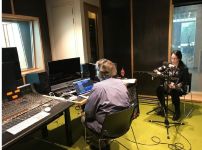 "Janice Rieger, Bree Hadley, Katherine Dionysius, Michael Whelan (2019) VIS-ABILITY: Audio Description of Denise Green's 'Saar elegy: Opposites' 2014." "This is an audio description of Denise Green’s artwork, ‘Saar elegy: opposites’ (2014) narrated by Dr Bree Hadley. This recording was produced in partnership with QUT Creative Industries Faculty for the exhibition, 'Vis-ability' at QUT Art Museum, from 11 May to 4 August 2019."
-
"Helena Grehan, Peter Eckersall (2013) ‘We’re People Who Do Shows’: Back to Back Theatre – Performance Politics Visibility. Wales: Performance Research Books." Reads, in part "This book gathers key perspectives on Back to Back Theatre including interviews, documentation and scripts selected by the company and here made available to the reader for the first time."
-
"Bree Hadley (2014) Practice as method: The ex/centric fixations project. In Bolt, B & Barrett, E (Eds.) Material inventions: applying creative arts research. I.B. Tauris Publisher, United Kingdom, pp. 145-165.” "In this chapter, I consider the efficacy of creative practice as a research method, concentrating specifically on its applications in the performing arts, using one of my own recent projects, The Ex/centric Fixations Project (2009), as an example."
- "Kevin Cho (1980) 1981 International Year of Disabled Persons. Melbourne, Australia: Royal Melbourne Institute of Technology."
-
"Ruth Rentschler, Boram Lee, Ayse Collins, Jung Yoon (2023) ‘I am a professional dancer’: A case study of performing artists with disability. In Wyszomirski, M. J. & Chang, W. (Eds.), Building professionalism in the creative sector. Oxon: Routledge, 227-246" "The demand for professional recognition for artists with disability is growing. There is little research, however, on the ways in which disability arts are associated with professionalism. This study examines professionalization in disability arts by comparing it with the concept of professionalization in the arts generally. It identifies three components of professionalization in disability arts by means of a case study of an inclusive arts organization. This qualitative study entails 17 semi-structured interviews with artists, staff members, and other stakeholders both with and without disabilities."
-
"Anthea Skinner, Grace Thompson, Katrina Skewes McFerran (2022). Professional Pathways for Musicians with Disability in Victoria, Australia. Musicology Australia, 44(1), 21–42. https://doi.org/10.1080/08145857.2022.2088930" Reads, in part "The work of disabled musicians has become the focus on of an increasingly large body of academic work; however, existing literature rarely provides details about the educational experiences of these musicians, or how disability impacted these experiences. This study interviewed eleven performing musicians living with disability in Australia to elucidate the barriers and enablers that they faced in their music educations and careers."
-
"Anthony White, Anna Parlane (2019). Outsider Art in Australia: Artists' Voices versus Art-world Mythologies. Art and Australia, 56 (1), pp. 80-95." This article explores the questions: Have you ever come across the category 'outsider art'?... What do you think of that phrase in terms of a way of describing artwork?
-
"Parkinson's Queensland (2015) Research Study finds Dance has positive benefits for people with Parkinson’s, 4 March 2015, https://webarchive.nla.gov.au/awa/20150311153726/http://parkinsons-qld.org.au/danceforpd/" Parkinson's Queensland -Research Study finds Dance has positive benefits for people with Parkinson’s (2015) - reads, in part "Now, in exciting research findings, Parkinson’s Queensland, in conjunction with Queensland Ballet and research undertaken by QUT and The University of Queensland (UQ) demonstrate that Queensland Ballet’s Dance for Parkinson’s program had positive physical, social, cognitive and emotional benefits for participants affected by Parkinson’s."
- No Strings Attached Theatre of Disability
- Morwenna Collett
- Morwena Collett