Items
Search full-text
The Other Film Festival
-
“The National Disability Insurance Scheme (NDIS) is launched” Following the spike in interest in the mid to late 2000s, significant steps were made towards the development of the National Disability Insurance Scheme (NDIS). It came about as the result of discussions about alternatives of disability support arrangements from 2007 to 2011. This included National Disability Strategy 2010–2020. A trial phrase of the NDIS was launched in 2013, and the scheme was rolled out across the country from July 2016. The 2022 change of government, which saw the Labor party voted in for the first time in nine years, reflected voter concern for climate change and social policies. The new prime minister Anthony Albanese ordered an independent review of the NDIS. The NDIS Review report was published in 2023 and had a number of recommendations, including affording funding based on functional impairment rather than diagnosis, increasing support for children, a requirement that all providers be registered, and state governments providing supports through other services for people who do not meet NDIS criteria.
-
"Bree Hadley (2015) Participation, politics and provocations: People with disabilities as non-conciliatory audiences. Participations: journal of audience and reception studies, 12(1), pp. 154-174.” "Disability has always had a prominent place on the theatrical stage. Throughout the C19th, C20th and C21st to date, disabled characters have been used to signify corruption, innocence or suffering, and, of course, as salutary examples of how to overcome such suffering. In the past three decades, the work of disability scholars, activists and artists has also provided opportunities for people with disabilities to produce their own plays, performances or installations challenging these stereotypes. Interestingly, though both the body of literature on theatre makers with disabilities and the body of literature on theatre audiences has grown apace over the past decade, there is still surprisingly little written on people with disabilities as theatre audiences. In this article, I draw on observations made during five years of practical, empirical and theoretical research into disability theatre to discuss how people with disabilities work as a distinctive sub-group of spectators, with distinctive spectatorial processes, modalities and preferences, within contemporary theatre audiences. I begin with the factors that make attending theatre difficult for people with disabilities. I note that people with disabilities respond to the challenges they face in attempting to become active audiences of contemporary theatre in three common ways. I then unpack what these spectatorial modalities teach us about people with disabilities as audiences, other marginalised groups as audiences, as well as about audiences, audiencing and the part audiences play in theatre practice more generally."
-
"Ruth Rentschler, Boram Lee, Ayse Collins, Jung Yoon (2023) ‘I am a professional dancer’: A case study of performing artists with disability. In Wyszomirski, M. J. & Chang, W. (Eds.), Building professionalism in the creative sector. Oxon: Routledge, 227-246" "The demand for professional recognition for artists with disability is growing. There is little research, however, on the ways in which disability arts are associated with professionalism. This study examines professionalization in disability arts by comparing it with the concept of professionalization in the arts generally. It identifies three components of professionalization in disability arts by means of a case study of an inclusive arts organization. This qualitative study entails 17 semi-structured interviews with artists, staff members, and other stakeholders both with and without disabilities."
-
"Una Rey (2022) Art and sensoria: Whose disability? ArtLink, 42(2), pp.8–11." "SENSORIA: Access & Agency is ArtLink’s effort to affect this swell by providing a platform for divergent perspectives and nuanced articulations of being an artist. Whatever the prevailing conditions. It also invites a discussion within contemporary art discourse that is not driven by fear (of getting it wrong, of ‘the other’, of adding injury to trauma). Art is our place of intersectionality: if you’re reading ArtLink, you’re already on the margins, and quite possibly on the spectrum."
-
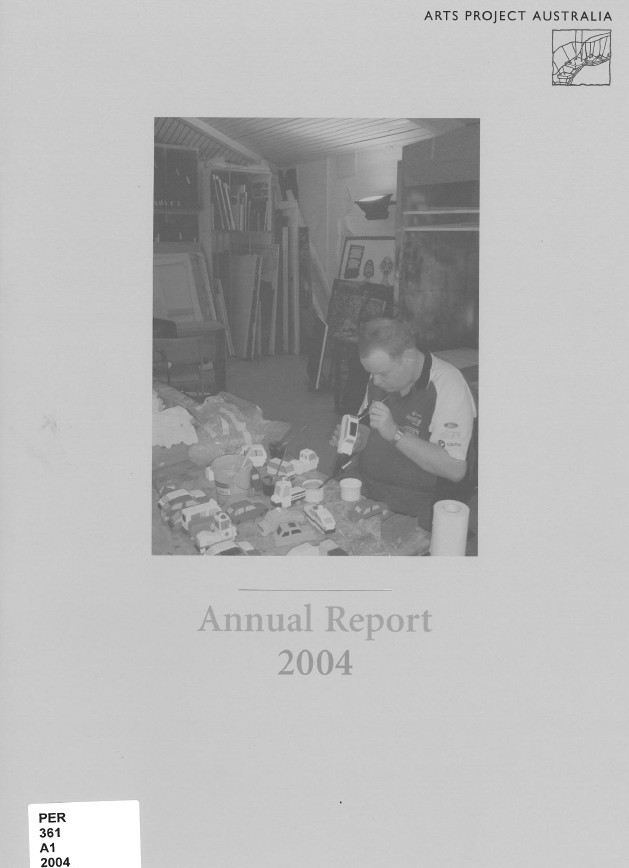 "Arts Project Australia - Annual Report 2004" Arts Project Australia - Annual Report 2004 - President’s Report, Director’s Report, Studio Manager’s Report, Exhibitions Report, Financials - reads, in part “Arts Project Australia was founded in 1974. It had the express purpose of exhibiting the art work of people with an intellectual disability in a manner that accords therr1 the same dignity and respect as other artists.”
 -
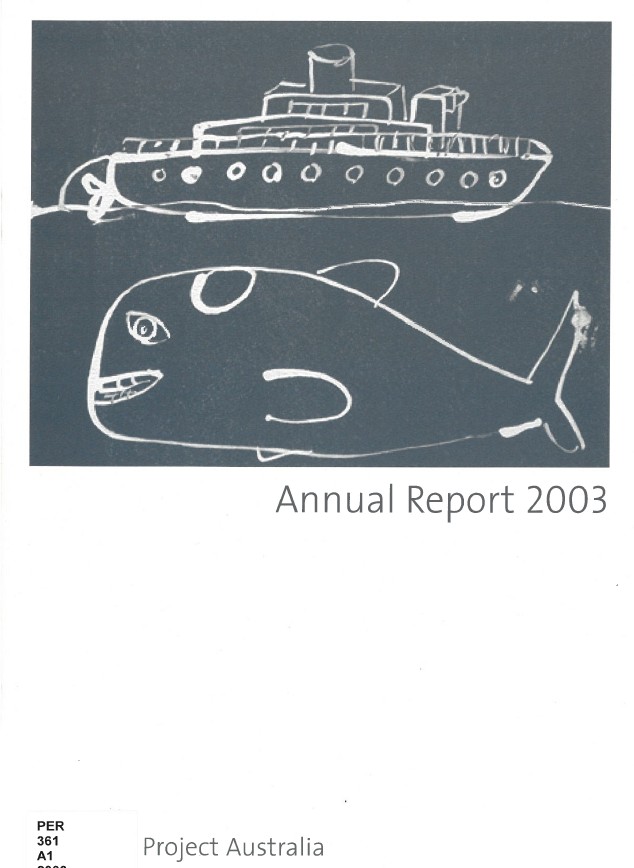 "Arts Project Australia - Annual Report 2003" Arts Project Australia - Annual Report 2003 - President’s Report, Director’s Report, Studio Manager’s Report, Exhibitions Report, Financials – reads, in part “Arts Project Australia was founded in 1974. It had the express purpose of exhibiting the art work of people with an intellectual disability in a manner that accords them the same dignity and respect as other artists.”
 - Bolshy Divas
-
 “Studio A – Emily Crockford – The Phantom – Sydney Opera House 2021” Information about the Sydney Opera House's Diversity, Inclusion & Belonging Strategy for 2021-23, and Emily Crockford's artwork "The Phantom (Sydney) Opera House" which was liscenced for the cover, along with other words by Sally M. Nangala Mulda and Jason Phu.
 -
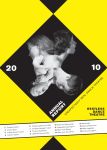 “Restless Dance – Annual Report 2010" Restless Dance Theatre Annual Report 2010 - Company History, Chair's, Artistic Director’s, Dancers’, and Company Manager Reports, Members and Board, Financials, information about productions ‘Beauty,’ ‘Next of Kin,’ other performances and workshops, Supporters
 -
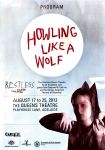 “Restless Dance – Howling Like A Wolf Program" Restless Dance Theatre 'Howling Like a Wolf' Program - reads, in part "In Howling Like A Wolf humans are both the observer and the observed. The work explores facial expressions, our body language and the way our brains process complex and subtle information. The performers have shared their experiences of connection and isolation, the joy and confusion of human interactions, and how we all prepare ourselves for "this terribly significant business of 'other people'."
 -
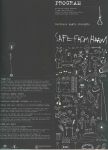 “Restless Dance – Safe From Harm Program" Restless Dance Theatre 'Safe From Harm' Program - reads, in part “Safe from Harm launches the company’s new professional and touring ensemble, and is different from the other works I have directed for Restless, which were all made with the youth ensemble with casts of at least 12 people.”
 -
 "InCite Arts - Lowdown NT Column Entry on ‘Community Mosaic Bench Project’” InCite Arts and Arts Access Central Australia announcement about Community Mosaic Bench Project, in Lowdown NT Column Entry. Entry reads, in part, “The project involved 2 curved concrete seating benches being covered with mosaic flowers, local fauna e.g., witchetty grubs, parrots, hawks and other flora and fauna representing Central Australia”
 -
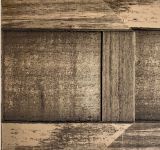 "Back to Back Theatre - Light Letters" Back to Back Theatre Light Letters - artist statements, script sketches, and other materials - reads, in part “In mid-2007 Back to Back Theatre invited schools and community groups from the Corio Bay area to enter into collaboration with the company under the direction of Marcia Ferguson. The company was very excited to welcome into the creative venture Nelson Park Schol, Norlane West Primary School, Cloverdale Community Centre and Dorthy Thompson Centre as well as collaborating local Geelong artists Leane Stein, Ross Meuller, David Dellafiora, Mark Cuthbertson and Stephen Oakes.”
 -
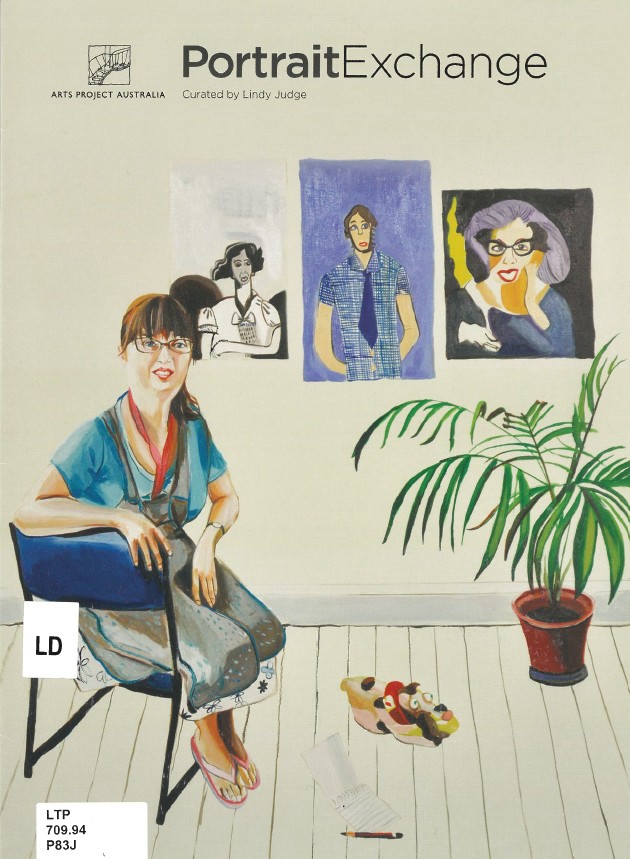 "Arts Project Australia - Portrait Exchange Exhibition 2010 - Program" Arts Project Australia - Portrait Exchange Exhibition 2010 - Program - reads, in part "Portraits are an expression of our fundamental desire to connect with each other. They are evidence of a relationship of one kind or another. It may be fleeting or established, it might even be the result of a commercial transaction. Every portrait tells a different story. Painting a portrait can be a way of paying homage to someone we admire or may be a study in technique, but this inherently intimate process always requires that a connection be made between the artist and the sitter. It is this social aspect of portraiture that was the initial focus of Portrait Exchange."
 -
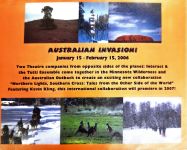 "Tutti Arts - Northern Lights Southern Cross - Promotional Flyer 2006" Tutti Arts - 'Northern Lights Southern Cross' 2006 Promotional Fyyer - Two Theatre companies from oPposite sides of the planet: Interact & the Tutti Ensemble come together in the Minnesota Wilderness and the Australian Outback to create an exciting new collaboration 'Northern Lights, Southern Cross: Tales from the Other Side of the Worid' Featuring Kevin King, this international collaboration will premiere in 2007!
 -
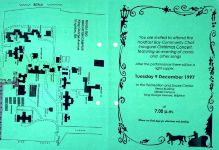 "Tutti Ensemble - Holdfast Choir - Inaugeral Christmas Concert 1997 - Program" Tutti Ensemble Holdfast Choir - Inaugeral Christmas Concert 1997 Program - reads, in part “You are invited to attend the Holdfast Bay Community Choir Inaugural Christmas Concert, featuring an evening of carols and other songs”
 -
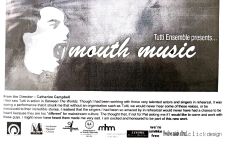 "Tutti Arts - Mouth Music - Program" Tutti Arts 'Mouth Music' 2006 Program - reads, in part "Jem has recently made a big decision, and Mouth Music is his story. Because Jem is non-verbal, the idea of speaking and not being heard is a major theme. Jem has some important things he wants to say to the world, not least that we must look after the earth and also learn a thing or two about looking after each other. Mouth Music has involved Tutti in the very roots of vocal music-making and has strong emotional resonance for anyone concerned about the voice of the individual and the state of the world. It has been a pleasure to develop this very different new work with Jem and poets.“
 -
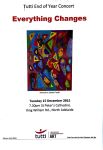 "Tutti Arts - End of Year Concert: Everything Changes - Program" Tutti Arts 'End of Year Concert- Everything Changes' 2015 Program - reads, in part "’Everythlng changes, seasons will come and go Life rearranges all that we think we know’ from The Six Swans, by Jehane Markham and Richard Chew Welcome to the 2015 Tutti Christmas Concert! The above words taken from the finale of The Six Swans, a one act opera Tutti performed with UniSA students in June this year means a great deal to Tutti as we work for social change. They also remind us of the deep meaning in the story of the birth of Jesus and the themes of redemption, hope, salvation and love associated with Christmas. Let's make Christmas 2015 a time of caring, a celebration of true emancipation of the earth from racial and ethnic hatred. Regardless of our religious ties or other belief systems, this Christmas let's all take time to envision what kind of world we want to live in, and do what we can in our own lives to restore peace, love and goodwill to Australia and the world.”
 -
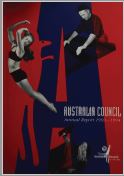 "Australia Council - Annual Report 1993-94" Australia Council Annual Report 1993-94 - discusses objectives, organisation chart, year in review, support for people with disabilities in Art and Working Life, artform development, main activities of Council and its Boards, and includes financial statements and lists of grants made including grants for programs, development of performance, visual art/crafts, media and multi arts, writers in community residence and local documentation projects as well as “Arts and Disability” research and collaboration in performance of “Love Dances (and other stories)”
 - Emiko Artemis
- Kate Larsen
- Kate Larson
- Robin Eames
-
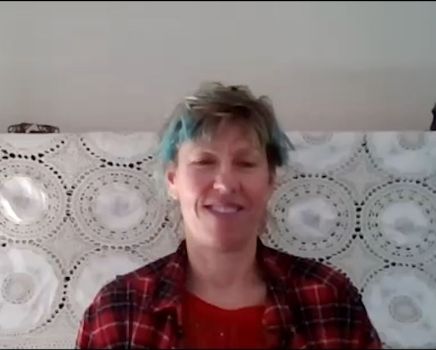 "Interview with Emiko Artemis" Dr Emiko Artemis is a visual artist with a PhD and a history of both solo and group exhibitions. Interview Summary Emiko Artemis identifies as a non-binary queer disabled visual artist. Emiko acknowledges their work essentially reflects their personal experiences with disability and comments on society. Despite interpersonal challenges due to disabilities, Emiko cherishes occasional collaborations, facilitated by clear structures or supportive relationships. Their artwork, often seen as "weird" to the public, aims to be thought-provoking rather than being particularly political. Emiko values the growing visibility of disability in the arts and the increase in acceptance of diversity in society. They proudly embrace their own identity as an integral aspect of their creative practice
 -
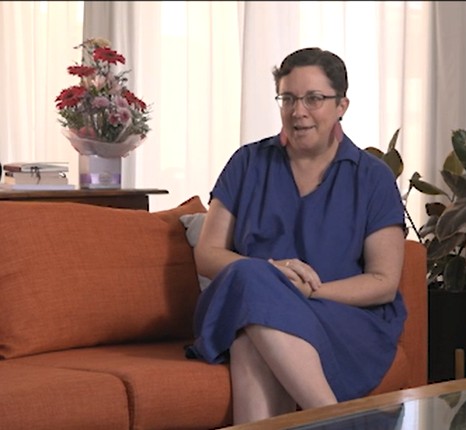 "Interview with Kate Larsen" Kate Larsen (she/her) is a writer, consultant, leader and advocate with Australian and international experience in the arts and disability sector. Interview Summary Kate Larsen (she/her) is a recognised arts and disability advocate who emphasises the importance and inherent politics of self-expression and access in the arts. A non-disabled ally, Kate was influenced to pursue a career in the sector by the profound impact of learning about the social model of disability, which sparked a commitment to creating opportunities for and by disabled individuals. Larsen's work has involved fostering leadership among disabled artists and arts workers, advocating for disability-led organisations, and driving systemic change within Australia’s arts and cultural sector. She hopes to see continued progress towards equity and representation in the arts, with the NDIS playing a crucial role, and an increased presence of disabled artists, arts workers and leaders in mainstream organisations.