-
"Bree Hadley (2018) Disability, disabled dance audiences and the dilemma of neuroaesthetic approaches to perception and interpretation. In Wood, K, Brown, A, Waelde, C, Harmon, S, Blades, H, & Whatley, S (Eds.) Dance, disability and law: Invisible difference. Intellect Ltd, United Kingdom, pp. 293-315.”
"In this chapter, I want to consider one emerging approach to spectatorship – the neuroaesthetic approach – through the lens of disability spectatorship. In the twenty-first century, neuroaesthetics is gaining traction amongst scholars looking to provide accounts of spectatorship in less story-based performing arts such as classical and contemporary dance, as well as in more story-based practices in drama, theatre and performance. ‘It would be fair to say that neuroaesthetics has become a hot field’, as Alva Noë puts it (2011). To date, though, the assumptions that underpin neuroaesthetic approaches to spectatorship have not been brought together with the assumptions that underpin the equally emergent field of disability spectatorship studies. As Carrie Sandahl (2002: 18) has noted, different cognitive, sensory and corporeal abilities result in a range of different phenomenologies, perceptual processes and perceptual preferences that can in turn produce different styles of engagement with experiences, events and objects. These differences impact on how people with disabilities produce and perceive aesthetic performances – somatically, syntactically, symbolically and socially, as disabled people hear with their eyes, see with their fingers, or perceive phenomena vicariously via the intervention of technologies or translators. Accordingly, disability spectatorship, and more detailed attention to the presence of distinctive cognitive, sensory and corporeal processes amongst disabled spectators, has the potential to complicate, extend and challenge assumptions embedded in emerging neuroaesthetic approaches to spectating."
-
 "Janice Rieger, Bree Hadley, Katherine Dionysius, Michael Whelan (2019) VIS-ABILITY: Audio Description of Karla Marchesis' artwork, 'Trashout' (2010)."
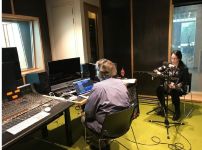
 "This is an audio description of Karla Marchesi's painting, 'Trashout' (2010), narrated by Dr Bree Hadley and recorded by Michael Whelan. This recording was produced in partnership with QUT Creative Industries Faculty for the exhibition, 'Vis-ability' at QUT Art Museum, from 11 May to 4 August 2019."
-
"Janice Rieger, Bree Hadley, Katherine Dionysius, Michael Whelan, Megan Strickfaden(2019) VIS-ABILITY: Audio Description of Karla Dicken's artworks, 'Bottom feeder I-IV' (2018)."
"This is an audio description of Karla Dickens' artworks, 'Bottom feeder I-IV' (2018), narrated by Dr Bree Hadley and recorded by Michael Whelan. This recording was produced in partnership with QUT Creative Industries Faculty for the exhibition, 'Vis-ability' at QUT Art Museum, from 11 May to 4 August 2019."
-
"Janice Rieger, Bree Hadley, Katherine Dionysius, Michael Whelan (2019) VIS-ABILITY: Audio Description of Denise Green's 'Saar elegy: Opposites' 2014."
"This is an audio description of Denise Green’s artwork, ‘Saar elegy: opposites’ (2014) narrated by Dr Bree Hadley. This recording was produced in partnership with QUT Creative Industries Faculty for the exhibition, 'Vis-ability' at QUT Art Museum, from 11 May to 4 August 2019."
-
"Janice Rieger, Bree Hadley, Katherine Dionysius, Michael Whelan (2019) VIS-ABILITY: Audio Description of Brown, Green and Cattapan's 'War and peace #7: Empire' (2011)."
"This is an audio description of Lyndell Brown, Charles Green and Jon Cattapan's artwork 'War and peace #7: Empire', narrated by Dr Bree Hadley and recorded by Michael Whelan. This recording was produced in partnership with QUT Creative Industries Faculty for the exhibition, 'Vis-ability' at QUT Art Museum, from 11 May to 4 August 2019."
-
"Bree Hadley, Katherine Dionysius, Sarah Boulton (2019) Vis-Ability: Audio descriptions. In Vis-ability: Artworks from the QUT Art Collection. QUT Art Museum, Brisbane, Qld, pp. 45-53."
"Bringing together a selection of recent acquisitions from the QUT Art Collection ,Vis-ability has been conceived as a project to broaden understanding of the lived experiences of people who are blind and people with low vision. Drawing on research in QUT's Creative Industries Faculty, Vis-ability proposes alternative ways of engaging with the collection, considering how technologies can deepen our understanding of vision and challenging our sight-driven experience of art. In this essay, QUT artist scholar and audio description author Associate Professor Bree Hadley, curator Katherine Dionysius, and blind artist and exhibition guide Sarah Boulton examine the principles, processes, and challenges of producing audio descriptions and associated engagement strategies to enable creative new forms of audio encounter with visual art works."
-
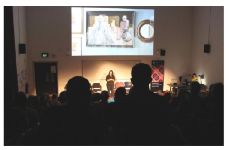 "Janice Rieger, Jasmien Herssens, Megan Strickfaden, Bree Hadley (2019) International Inclusive Film Screening, DfA Week (with films from Finland, Canada, China and Australia)."
 "The inclusive international film screening included films from Australia, Finland, Canada and China that represent different kinds of abilities, disabilities, inclusion and exclusion through material culture, architecture, urban spaces, landscapes and design. This screening was about access, inclusion and community outreach and included live audio descriptions and Auslan interpretation. The Film screening was separated into two parts with a total of 9 films screened: Part 1: ‘Seeing’ things from a Different Perspective, which included the films: Bakala, Australia (Aboriginal); Eske, (Finland); Musical Notes (Canada); Visitability #1 (Canada) Part 2: Part 2: Temporal and Embodied Encounters: Design, Disability and Slowing Down, which included the films: Smoke Time (Canada & China); Visitability #2 (Canada); Heel of a Time, Canada; Visitability #3 (Canada) ; Wandering on the Braille Trail (Australia)."
-
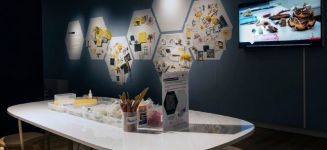 "Janice Rieger, Jasmien Herssens, Megan Strickfaden, Marianella Chamorro-Koc, Bree Hadley (2019) Vis-ability Exhibition."
 "The United Nations Convention on the Rights of Persons with Disabilities (UNCRPD, 2016) foregrounds the importance of cultural participation to realise human rights for people with disabilities. The creative industries play a critical role in supporting and shaping these social attitudes towards inclusion. Through the theoretical foundation of Design for All (EIDD Stockholm Declaration, 2004) new engagement processes involving a transdisciplinary team from Australia and around the world converged at QUT to co-design more equitable and collaborative forms of knowledge and practice around inclusion. International universities, the EU Commission and the European Institute for Design & Disability collaborated and presented Design for All for the first time in Australia, positioning QUT leadership in this field and as the first non-European member of EIDD-DfA. Co-design methods were employed through, Vis-ability workshops, Making Visible workshops, tactile artefacts and audio description work in the VisAbility Exhibition. Innovative practice was through the Inclusive Film Screening and Wondrous Googles technologies. An innovative model of engagement was created through the DfA Week program and events across sectors. Knowledge was disseminated through academic articles."
-
"Bree Hadley, Gerard Goggin, Petra Kuppers, Colette Conroy, Meagan Shand, Donna McDonald, Martin Paten, Norm Horton, Sarah Moynigan, Veronica Pardo, Caroline Bowditch, Morwenna Collett, Kerry Comerford, David Doyle, Pat Swell, Clark Crystal, Peter Stuart (2019) The NDIS and disability arts in Australia: Opportunities and challenges. Australasian Drama Studies, 74, pp. 9-38."
"In Australia, disabled people’s participation in the arts has historically been afforded by means of direct-to-organisation grants that arts, community services or disability services arms of government award to arts organisations, charities or disability service organisations, who then deliver programmes. The introduction of the National Disability Insurance Scheme (NDIS) is creating wide-reaching changes for disability arts practice in Australia. We undertake a first step in addressing the need for research into how the NDIS will alter the landscape of disability arts practice in Australia. We highlight a set of questions that all performing and creative arts industry stakeholders will need to respond to, in order to ensure that the excellent work done in disability arts in Australia to date can continue in the new climate that the NDIS brings."
-
"Bree Hadley, Donna McDonald, Sarah Austin, Kath Duncan, Gerard Goggin, Lachlan MacDowall, Veronica Pardo, Eddie Paterson, with collaborators Dave Calvert, Jori De Coster, Shawn Goh, Alice Fox, Ann M. Fox, Andy Kempe, Petra Kuppers, Justin Lee, Alex Lubet, Sarah Meisch Lionetto, Ann Millett-Gallant, Laura Misener, Bronwyn Preece, Megan Strickfaden, Joanne Tay, Matthew Reason, Nancy Quinn, and Sarah Whatley (2019) Conclusion: practicing interdependency, sharing vulnerability, celebrating complexity - the future of disability arts, culture, and media research. In Hadley, B & McDonald, D (Eds.) The Routledge handbook of disability arts, culture, and media. Routledge, United Kingdom, pp. 362-372."
"In this chapter, the authors conclude The Routledge Handbook of Disability Art, Culture, and Media studies by reflecting on the past, present, and potential future of disability art practice debated throughout the book. Based on research currently underway in the work of many of the Australian contributors, and including reflections from the global contributors, this concluding chapter reflects on what the disability arts, culture, and media practice and research of the future might look like, do, and achieve in the public sphere."
-
"Bree Hadley (2019) Disability arts in an age of austerity. In Hadley, B & McDonald, D (Eds.) The Routledge handbook of disability arts, culture, and media. Routledge, United Kingdom, pp. 347-361."
"Is the current “age of austerity” (Summers 2009) impacting on art, culture, and media practices by and about people with disabilities, and, in particular, on art-based protest practices by people with disabilities? In recent years, much has been written about austerity as neo-liberal economic, political, social, and ideological agenda (Harvey 2005; Barnett 2010; Seymour 2014). Much has been written about the way groups effected by local and global governmental shifts towards austerity are protesting, presenting themselves, and being represented by others (Fritsch 2013; Goodley, Lawthom, & Runswick-Cole 2014; Runswick- Cole & Goodley 2015; della Porta 2015; Kokoli & Winter 2015; Beresford 2016; Dodd 2016; Giugni & Grasso 2016; Berry 2017). The question of whether disabled artists are adapting their practices to address these changing cultural circumstances has received less attention (Hadley 2017) and is thus the topic I focus on in this chapter."
-
"Bree Hadley, Donna McDonnald (2019) Introduction: disability arts, culture, and media studies - mapping a maturing field. In Hadley, B & McDonald, D (Eds.) The Routledge handbook of disability arts, culture, and media. Routledge, United Kingdom, pp. 1-18.”
Reads, in part "In this book, an internationally recognised collection of established and emerging scholars,
artists, and activists from across the US, UK, Europe, Asia, and Australasia come together to trace the development of disability arts, culture, and media studies in recent decades, flag current interests, and forecast future concerns."
-
”Bree Hadley, Donna McDonnald (Eds.) (2019) The Routledge Handbook of Disability Arts, Culture, and Media. Routledge International Handbooks. Routledge, London; New York.”
“In the last 30 years, a distinctive intersection between disability studies – including disability rights advocacy, disability rights activism, and disability law – and disability arts, culture, and media studies has developed. The two fields have worked in tandem to offer critique of representations of disability in dominant cultural systems, institutions, discourses, and architecture, and develop provocative new representations of what it means to be disabled. Divided into 5 sections:- Disability, Identity, and Representation; Inclusion, Wellbeing, and Whole-of-life Experience; Access, Artistry, and Audiences; Practices, Politics and the Public Sphere; Activism, Adaptation, and Alternative Futures - this handbook brings disability arts, disability culture, and disability media studies – traditionally treated separately in publications in the field to date – together for the first time.”
-
"Bree Hadley (2019) Advocacy, allies, and 'allies of convenience' in performance and performative protest. In Grehan, H (Ed.) The Routledge companion to theatre and politics (Routledge Theatre and Performance Companions). Routledge, United Kingdom, pp. 85-88.”
"Though allies have always played a role in the production of political performance, analysis of the work of disabled artists, women artists, queer artists, and artists of colour has yet to be combined with analysis of the work of allies addressing the same issues. In this chapter, I consider the practice of allies in a specific context, social media performance, as a newly emerging platform for political activism. After tracing the way allies are typically involved in political performance about, with, and by marginalised people and communities, I point to complexities arising when activists, campaigners, entertainers, and pranksters use new online platforms in performance that purport to support the same cause.
-
"Australia Council for the Arts (2022) Australia Council releases Towards Equity: a research overview of diversity in Australian arts."
Reads, in part "The Australia Council for the Arts have released their critical new report Towards Equity: A research overview of diversity in Australia’s arts and cultural sector. This overview gathers published and unpublished data and research on representation within the arts and cultural sector in Australia."
-
"Carriageworks (2015) NSW Arts and Disability Partnership Launched at Carriageworks Including $100,000 Support for Two Major New Works. Carriageworks, 30 January 2015"
Reads, in part "Sydney, Australia: The NSW Minister for Disability Services, Minister John Ajaka MLC, today launched an extension of the NSW Arts & Disability Partnership, announcing funding of $475,000 for 2015 to support four programs that promote social inclusion through the arts and disability sector. The Partnership includes $100,000 support for Carriageworks to commission two major new works developed by artists with disability in collaboration with NSW arts companies and artists."
-
“Kate Larsen (2012) Disability Leadership: If You're Gonna Talk the Talk .... ABC: Ramp Up, March 30. https://www.abc.net.au/ram pup/articles/2012/03/30/3467 452.htm.”
Reads, in part "Now, I love my job. I'm good at it. I think that I've been useful here. But on the same day I accepted the position last February I also did something else. I gave notice of my resignation, and undertook to hand over the organisation by the end of 2012. The reason? Because I believe that Arts Access Australia should be led by a person with disability."
-
"Australia Council for the Arts (2018) Creating Pathways: Insights on support for artists with disability. 19 September 2018"
Reads, in part "This report brings together findings and insights from a range of research undertaken in 2017–18 to inform the Council’s approach to future support for artists with disability."
-
"Australia Council for the Arts (2018) Arts and Disability a Priority as Australia Council Commits
Significant New Funding. 24 September 2018."
Reads, in part "The Australia Council has committed $750k over three years to support sustainable careers and to recognise the artistic excellence of artists with disability."
-
"Bree Hadley (2020) Allyship in disability arts: Roles, relationships, and practices. Research in Drama Education, 25(2), pp. 178-194.”
"In this article, I propose that investigation of allies, ally skills, and allyship in disability arts is overdue. I articulate some of ways in which non-arts approaches to allyship need to be adapted to meet the needs of disabled artists, given the aesthetic as well as professional and social dimensions of allyship distinctive to disability arts. In doing so, I highlight the need for new theory, terminology, and frameworks to define the different approaches to allyship, developed by different artsworkers, operating in different roles, across the different domains of disability arts and/or arts and disability practice."
-
”Hadley, Bree, Batch, Morgan, & Whelan, Michael (2021) The entitled ally: Authorship, consultation, and the 'right' to stage autistic people's stories. Disability and Society, 36(9), pp. 1489-1509.”
"Theatre has a long tradition of presenting disabled characters as plot devices to tell someone else’s story. A recent production, All in a Row, resulted in heated debate around this issue. This article examines not the play itself, but the conflict between those who objected to the play’s representation of autism, and its creators, who defended their choices by citing their disability-adjacent identities and processes of consultation. For critics, the fact that the creators did not take the community’s concerns seriously was a source of trauma. This article uses this conflict to draw out lessons about how we might better negotiate the right to tell disability stories and strengthen frameworks to support that negotiation. We propose a decision tree diagram to assist artists in understanding the meaning, role, and most importantly the potential consequences of consultation – up to and including a community saying ‘no’ to an artist’s planned representation."
-
"Bree Hadley (2021) What's in a name? The politics of labeling in disability performance. In Rai, Shirin, Gluhovic, Milija, Jestrovic, Silvija, & Saward, Michael (Eds.) The Oxford Handbook of Politics and Performance. Oxford University Press, New York, NY, pp. 531-543.”
-
"Bree Hadley, Janice Rieger (2021) Co-designing choice: objectivity, aesthetics and agency in audio-description. Museum Management and Curatorship, 36(2), pp. 189-203.”
"The ‘Vis-ability’ exhibition, presented at the QUT Art Museum in 2019 was an exhibition curated with clear social inclusion goals from the outset. Through it, the museum sought to develop innovative, cost effective, and readily replicable techniques to allow blind and low vision visitors and artists to engage with the institution and its collections. The results affirm the benefits of offering blind and low vision visitors a spectrum of engagement choices, and also affirm that blind and low vision artists and visitors have capacity to make a critical contribution in co-designing that spectrum of choices. This exhibition and its use of multisensorial elements offers a useful prompt to museums to engage this community more fully in co-designing inclusion in the future."
-
"Bree Hadley (2021) Ex/centric Fixations Project (theatrical play). In Sefel, John Michael, Slamcik Lassetter, Amanda, & Summerville, Jill (Eds.) At the Intersection of Disability and Drama: A Critical Anthology of New Plays. McFarland Publishers, Jefferson, USA, pp. 317-344.”
"The Ex/Centric Fixations Project is a postdramatic performance work which renders the feeling of otherness visceral for spectators, without anchoring it any specific singlular experience of otherness, with the text unfolding with the musical flow and rhythm of a fugue state."
-
"Bree Hadley (2022) A ‘Universal Design’ for audiences with disabilities? In Reason, Matthew, Connor, Lynne, Johanson, Katia, & Walmsley, Ben (Eds.) Routledge Companion to Audiences and the Performing Arts. Routledge, Abingdon, Oxon, pp. 177-189.”
“Understanding of how to create inclusive performance experiences for spectators with disabilities remains nascent in research, policy, and practice. In this chapter, I survey the state of knowledge in this field – or, as it turns out, fields, given that specialist knowledge of sign language interpretation for d/Deaf spectators, audio description for blind spectators, and relaxed performance for neurodiverse spectators, has developed separately, without intersection. I then investigate recent efforts to create inclusive aesthetics that incorporate accessibility features into performance work, as an integral part of the aesthetic, rather than as interpretations, captions, or descriptions alongside the work. I examine why this ‘Universal Design’ approach has been embraced with enthusiasm, both by disabled producers and spectators, and by non-disabled producers and spectators.”